Background and what happened
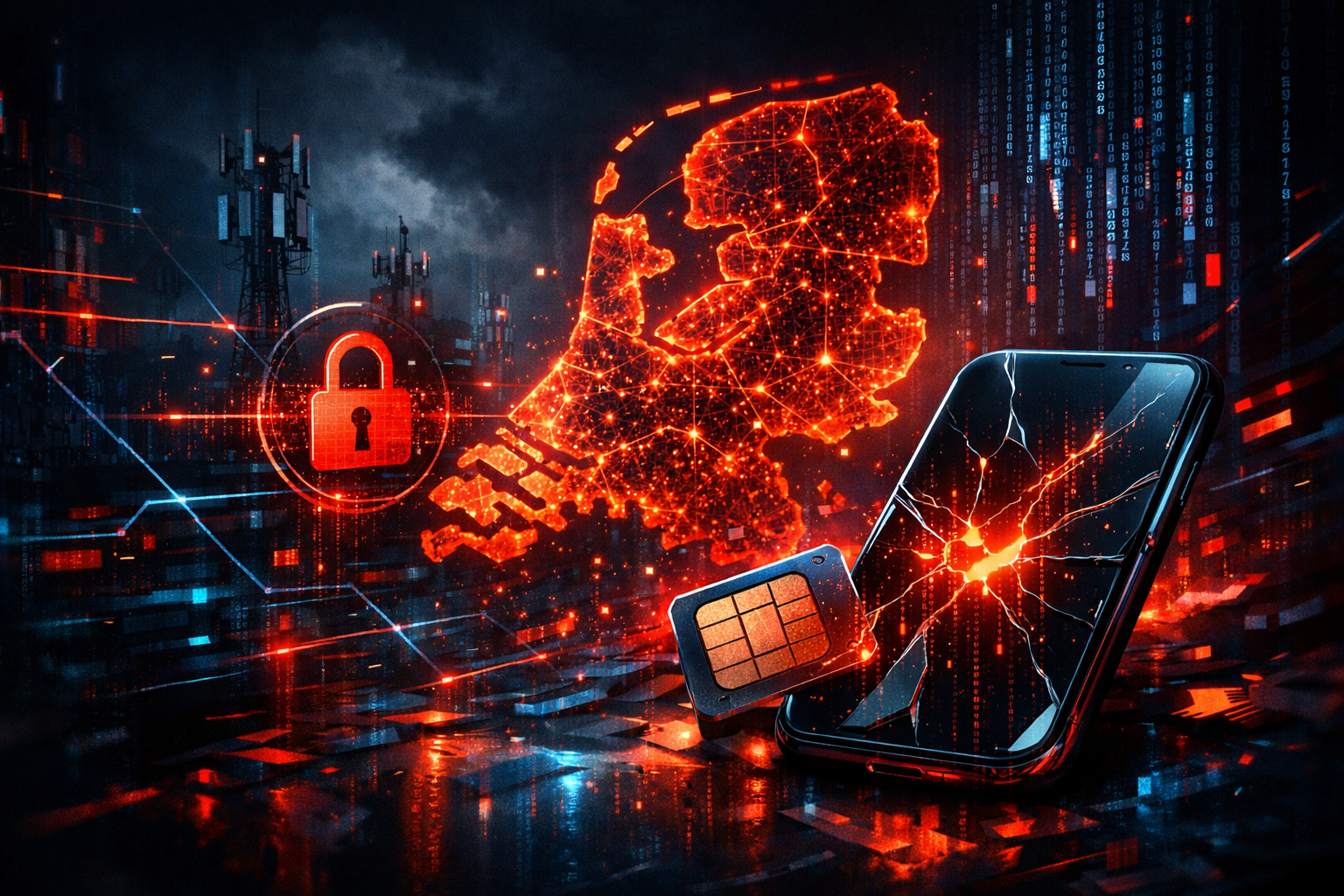
Dutch telecom provider Odido has disclosed a data breach affecting more than six million customers, according to reporting by Infosecurity Magazine. While the company has not, at the time of writing, publicly tied the incident to a named threat actor, malware family, or specific software flaw, the scale alone makes this one of the most significant consumer data security incidents to hit the Dutch telecom sector in recent years [1].
Odido is one of the Netherlands’ major telecom operators, serving mobile, broadband, and bundled customers. That matters because telecom providers sit on large stores of identity-linked information: names, addresses, phone numbers, email addresses, customer IDs, account metadata, and often billing records. Even when highly sensitive financial or authentication data is not involved, telecom records can still be weaponized for fraud, social engineering, and account takeover attempts [1].
The public reporting so far suggests a classic breach scenario rather than a network outage or destructive attack. In other words, the central issue is unauthorized access to customer data. Under the EU’s General Data Protection Regulation, organizations facing a personal-data breach must assess the risk to individuals and notify regulators without undue delay where required. In the Netherlands, that would typically involve the Autoriteit Persoonsgegevens, the Dutch Data Protection Authority [2].
Because details remain limited, several core questions are still unanswered: what exact categories of data were exposed, how the attackers got in, whether data was exfiltrated, and whether the breach touched only a customer database or a wider set of internal systems.
Why telecom breaches matter
Telecom companies are unusually attractive targets. They hold identity-rich datasets and operate sprawling environments that often include legacy systems, customer relationship management platforms, billing systems, support portals, cloud infrastructure, and third-party integrations. That mix creates both value for attackers and complexity for defenders.
In practical terms, a telecom breach can create downstream risks that go well beyond spam. A criminal armed with a customer’s name, phone number, address, and provider relationship can craft highly believable phishing emails, SMS lures, or support scams. They may impersonate the provider, claim there is a billing issue, or try to harvest one-time passcodes and account recovery details. In some cases, telecom-related personal data can also support SIM-swap or number-porting fraud, where attackers try to seize control of a victim’s phone number to intercept verification codes tied to banking, email, or social media accounts.
This is why sector breaches often produce a long tail of harm. The initial compromise may be over quickly, but the data can circulate in criminal markets for months or years. Fraudsters do not need full payment card details to profit; accurate customer records are enough to improve the success rate of phishing, identity fraud, and account recovery abuse.
Technical details: what is known and what is not
At this stage, the technical picture is still incomplete. No public reporting cited in the initial coverage identifies a CVE, exploit chain, ransomware operation, or malware toolkit tied to the Odido incident [1]. There are also no public indicators of compromise, such as malicious IP addresses, domains, file hashes, or YARA rules, that defenders could use to hunt for related activity.
That leaves analysts looking at the most plausible access paths seen in telecom and large-enterprise breaches:
Credential theft or phishing: Attackers may have stolen employee or contractor credentials through phishing, infostealer malware, or password reuse. Once inside, valid credentials can provide quiet access to customer management systems.
Compromise of an internet-facing portal: Admin panels, CRM interfaces, remote access gateways, and API endpoints remain common entry points when poorly secured or exposed.
Third-party or vendor compromise: Telecom operations depend on a large supplier ecosystem. A breach in a support, cloud, or software partner can become a breach in the primary operator.
Cloud or database misconfiguration: In some large-scale incidents, the problem is not code execution but overexposed storage, weak access controls, or badly segmented datasets.
Insider misuse: Although there is no evidence of that here, insider access remains a recurring risk in environments where support and billing teams can view customer records.
Until Odido or investigators release more detail, it would be speculative to assign a root cause. Still, the likely focus areas for follow-up reporting are straightforward: whether passwords or tokens were exposed, whether the breach involved active and former customers, whether support systems were touched, and whether the attacker merely viewed data or actually exfiltrated it.
One additional point matters from a defensive perspective: if passwords were not involved, customers should not assume they are safe. Telecom breach fallout often works through social engineering rather than direct credential reuse. That makes privacy and account hygiene central to the response. Using stronger account protections and, where appropriate, a privacy tool such as a VPN service on public networks can reduce some exposure to opportunistic interception, though it does not undo a provider-side breach.
Impact assessment
The headline number, more than six million affected customers, is severe on its own [1]. In a country the size of the Netherlands, that means a very large share of households may know someone affected, if they are not affected themselves. The incident is therefore not just a corporate security issue but a broad consumer privacy event.
Who is affected: The primary affected group is Odido’s customer base, which may include mobile subscribers, broadband users, households with bundled services, and possibly former customers if retained records were stored in the impacted environment [1]. Business customers could also be affected if enterprise account data was held in the same systems, though that has not been confirmed.
What harm may follow: The most immediate risk is targeted phishing and smishing. Customers may receive messages that appear to come from Odido, debt collectors, delivery services, banks, or government agencies, using real personal details to appear credible. Fraudsters may also attempt account recovery abuse, impersonate customer support, or pressure victims into revealing codes and passwords.
How severe is it: The severity depends heavily on the data categories involved. If the breach is limited to basic contact and account data, the main danger is fraud enablement. If billing details, government ID information, or authentication data were included, the risk rises sharply. At present, public reporting does not confirm those more sensitive categories [1].
What it means for Odido: The company now faces a familiar set of consequences: incident response costs, forensic investigation, customer notification efforts, potential regulatory scrutiny under GDPR, reputational damage, and possible customer churn. Regulators will likely look at whether Odido had appropriate technical and organizational measures in place and whether data minimization, access controls, and breach detection were adequate [2].
For the wider telecom sector, the breach is another reminder that customer identity data remains one of the most monetizable assets in cybercrime. Attackers do not need to disrupt networks to cause harm; stealing the right records at scale can be just as profitable.
How to protect yourself
If you are an Odido customer, or if you have been one in the past, assume your data could be used in scams and take practical precautions now.
Be skeptical of calls, emails, and texts: Treat unsolicited messages about bills, SIM issues, account verification, or refunds with caution. Do not click links or share one-time passcodes. If a message appears urgent, contact Odido through its official website or app, not through the message itself.
Change your Odido password if advised, and avoid password reuse: If Odido recommends a reset, do it immediately. Even if passwords were not reportedly exposed, changing reused credentials on other services is wise. Use a password manager and unique passwords for email, banking, and telecom accounts.
Enable multi-factor authentication where available: MFA can block many account takeover attempts. Prioritize your email account first, since email is often the gateway to password resets elsewhere.
Watch for SIM-swap warning signs: Sudden loss of mobile service, unexpected SIM activation messages, or failed login alerts on banking and email services can indicate trouble. Contact your provider immediately if your number stops working unexpectedly.
Monitor financial and online accounts: Review bank activity, email security alerts, and account recovery notifications. Criminals often use breached data to support broader identity fraud.
Limit what you share with support agents: Real providers will not ask for full passwords or one-time codes over the phone. If someone calls claiming to be from support, hang up and call back using an official number.
Use secure connections on public Wi-Fi: Public networks can expose you to additional risks during account management. If you often connect on the go, a privacy tool such as hide.me VPN can help protect traffic from local snooping, though it is not a substitute for strong account security.
Stay alert for official notifications: Odido may provide more precise guidance as the investigation develops, including what data was affected and whether any customer action is required.
What to watch next
The next phase of this story will hinge on disclosure quality. Customers and regulators need clear answers on the scope of the data involved, the initial access vector, whether third parties were implicated, and what remediation steps Odido has taken. If the company confirms that only limited personal data was exposed, the risk profile changes. If more sensitive identity or authentication data was involved, the incident becomes substantially more serious.
For now, the main takeaway is simple: a breach affecting millions of telecom users creates a fertile environment for fraud. Even without proof of password theft or direct financial exposure, the combination of scale and identity-linked data makes this an incident worth close attention from Dutch consumers, regulators, and the broader telecom industry [1][2].