Background and what happened
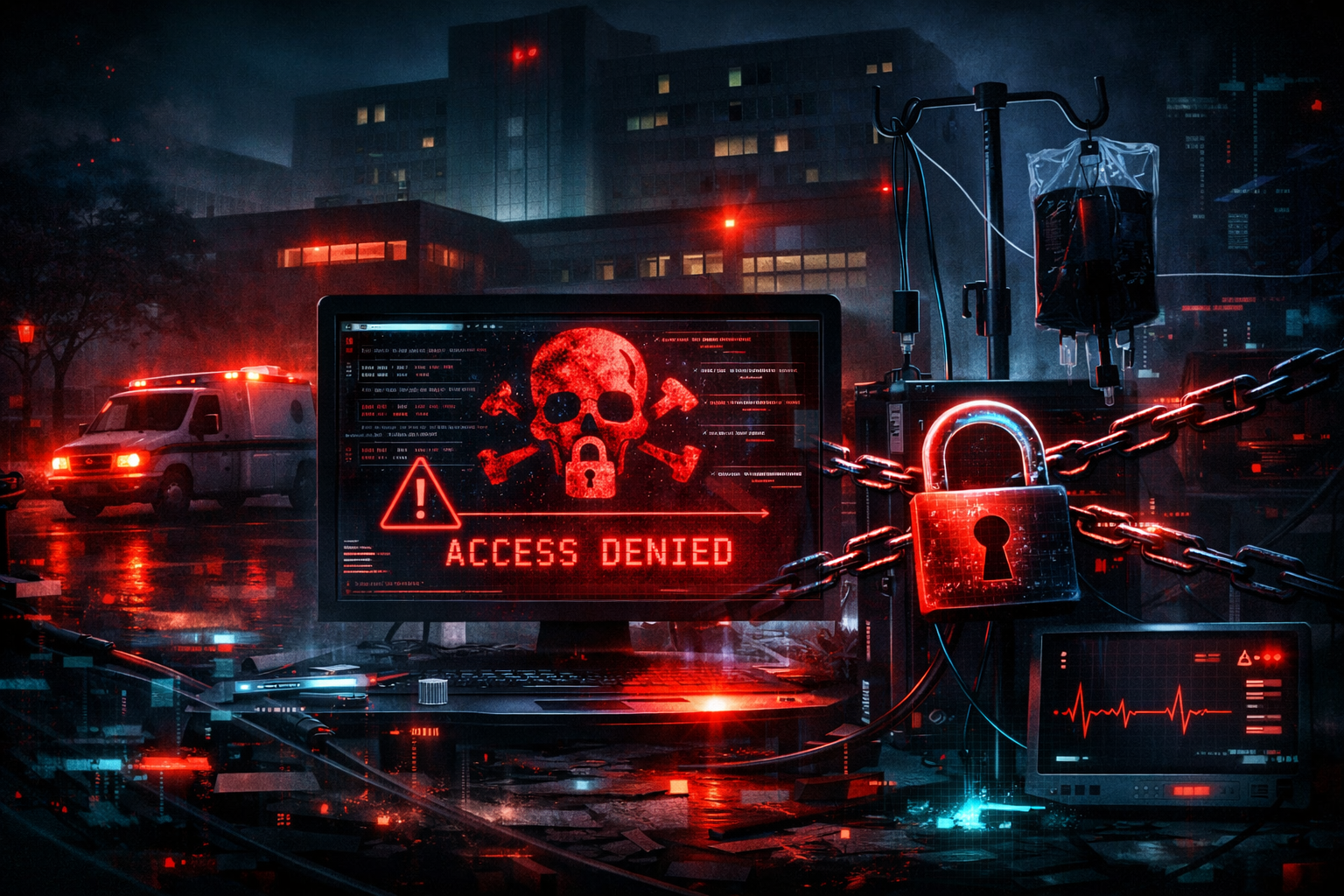
The University of Mississippi Medical Center (UMMC), a major academic health system in the state, was still dealing with significant disruption days after a ransomware attack first reported last Thursday, according to Infosecurity Magazine. Early reporting indicates parts of the organization remained offline while response and recovery work continued, a pattern that often signals a serious incident affecting core systems rather than a short-lived outage [1].
At the time of reporting, UMMC had not publicly identified the ransomware strain, the initial intrusion method, or whether attackers stole data before deploying encryption. That uncertainty is common in the first phase of hospital incident response. Security teams typically focus first on containment, forensic preservation, restoring critical services, and validating whether clinical operations can continue safely before they disclose technical specifics [1][2].
Healthcare organizations are especially vulnerable to ransomware because they depend on uninterrupted access to electronic health records, scheduling systems, imaging, lab platforms, communications tools, and connected administrative services. When those systems go down, the problem is not limited to IT inconvenience; it can affect care delivery, billing, referrals, and patient communications. Recent incidents at Change Healthcare and Ascension showed how cyberattacks can ripple far beyond a single server or department, sometimes forcing manual workflows for days or weeks [3][4].
Why healthcare remains a prime ransomware target
Federal agencies have warned for years that hospitals and health systems are attractive extortion targets because downtime creates immediate pressure to recover. The FBI, CISA, and the Department of Health and Human Services have repeatedly noted that threat actors exploit weak remote access controls, phishing, unpatched internet-facing systems, and poor network segmentation to gain a foothold and move laterally [2][5].
That pressure is amplified in academic medical centers like UMMC, which often combine clinical care, teaching, research, and complex third-party integrations. Such environments can include legacy devices, specialized medical systems, vendor-maintained applications, and broad identity relationships across staff, students, contractors, and partner institutions. Each connection can increase operational complexity and expand the attack surface.
The broader trend is well documented. HHS has tracked continuing growth in large healthcare breaches and cyber incidents, while multiple high-profile ransomware cases have shown that restoration can be slow even for well-resourced organizations [6]. In practical terms, the UMMC case fits a familiar pattern: a healthcare provider suffers a disruptive cyberattack, systems are taken offline to contain spread, and public details remain limited while recovery proceeds.
Technical details: what is known and what is likely
Publicly disclosed technical details remain sparse. No CVE, malware family, or named threat group had been tied to the UMMC incident in the initial reporting [1]. No indicators of compromise, ransom note details, or evidence of exfiltration were released. That means any technical assessment has to distinguish carefully between confirmed facts and common ransomware tradecraft.
Based on how hospital ransomware incidents usually unfold, several scenarios are plausible. Initial access often comes through phishing, reused or stolen credentials, exposed remote access services, compromised VPN or gateway appliances, or vulnerable edge devices. Once inside, attackers commonly perform credential harvesting, privilege escalation, and lateral movement using legitimate administrative tools before encrypting virtual machines, file shares, and key servers. In many modern attacks, data theft happens before encryption as part of a double-extortion playbook [2][5].
If UMMC took systems offline proactively, that may indicate responders were trying to stop propagation across interconnected environments. In healthcare, segmentation is often uneven, and ransomware can spread from administrative networks into systems that support registration, scheduling, internal messaging, and clinical workflows. Even where electronic health record platforms remain intact, dependencies such as authentication, printing, file transfer, and interface engines can still create major slowdowns.
Another technical unknown is whether backup systems were affected. Recovery time depends heavily on whether backups are isolated, immutable, and recent. If attackers reached backup infrastructure or domain controllers, restoration becomes slower and riskier because organizations must verify that recovered systems are not being reintroduced with persistence still in place. HHS and CISA guidance has repeatedly stressed offline backups, multifactor authentication, and network segmentation as core defensive measures for hospitals [2][7].
There is also the question of data theft. In many current ransomware cases, encryption is only one part of the extortion model. Attackers increasingly steal protected health information, employee records, financial data, or internal documents to pressure victims with the threat of public leaks. Until UMMC or regulators confirm otherwise, it remains too early to say whether this incident is solely operational or also a reportable data breach under HIPAA.
Impact assessment
The most immediate impact appears to be operational. If parts of UMMC remained offline into the following week, staff likely had to rely on downtime procedures, including paper charting, delayed scheduling, alternative communications, and manual coordination for some services. That does not necessarily mean all patient care stopped, but it raises the risk of bottlenecks and slower decision-making [1][3].
Patients are among the most directly affected groups. They may encounter delays in appointments, test results, referrals, prescription processing, portal access, and billing. Clinicians and support staff face a different burden: they must continue care while working around system outages, often with less complete or less convenient access to records. In a large academic center, students, researchers, and partner organizations may also experience disruption if shared systems or communications channels are affected.
Severity in healthcare incidents is measured by more than data exposure. Patient safety is the central concern. HHS has warned that cyber incidents can interfere with clinical decision-making, medication management, diagnostics, and care coordination [6][7]. Even when hospitals activate established downtime procedures, manual workarounds are slower and more error-prone than normal electronic workflows.
The second layer of impact is legal and financial. If forensic investigation later shows that patient or employee information was exfiltrated, UMMC could face HIPAA notification obligations, regulatory scrutiny, litigation risk, credit monitoring costs, and long-tail reputational damage. For a medical center, recovery expenses can also include incident response retainers, system rebuilding, overtime, third-party remediation, and business interruption losses.
Finally, there is strategic impact. Each major healthcare ransomware event reinforces the need for stronger identity controls, tested recovery plans, and better separation between clinical and administrative systems. It also adds to the policy debate over minimum cybersecurity requirements for hospitals and whether current incentives are enough to improve resilience across the sector.
What defenders should watch for next
Several details will determine how serious this incident ultimately becomes. First is attribution: whether a known ransomware group claims responsibility or whether law enforcement links the attack to a broader campaign. Second is disclosure: whether UMMC confirms data theft, names affected systems, or provides a restoration timeline. Third is scope: whether the incident was contained to a subset of the environment or touched domain-wide infrastructure, backups, or clinical support systems.
Observers should also watch for any filing with HHS’s Office for Civil Rights breach portal if protected health information was compromised, as well as statements from state officials or federal agencies involved in response. In many healthcare incidents, the public picture becomes clearer only after several days or weeks, once forensic teams can separate encrypted assets from stolen data and determine exactly when the intrusion began.
How to protect yourself
For healthcare organizations, the UMMC incident is another reminder to focus on the basics that most often determine whether ransomware becomes a contained outage or a full operational crisis.
Segment critical systems. Separate clinical systems, identity infrastructure, administrative networks, and backup environments so attackers cannot move freely across the enterprise [2][7].
Enforce multifactor authentication everywhere possible. Remote access, privileged accounts, vendor accounts, and administrator consoles should all require MFA. This matters especially for exposed gateways and any VPN service used by staff or contractors [2][5].
Harden remote access and edge devices. Patch internet-facing appliances quickly, disable unused services, restrict RDP exposure, and monitor authentication logs for impossible travel, unusual login times, and repeated failed attempts [5].
Protect backups from the production domain. Maintain offline or immutable backups, test restoration regularly, and ensure backup credentials are not shared with normal administrative accounts [7].
Practice downtime procedures. Hospitals should rehearse paper workflows, communications fallbacks, and clinical continuity plans so staff can function safely if core systems go offline [6].
Monitor for data exfiltration, not just encryption. Modern ransomware crews often steal files first. Network monitoring, egress controls, and anomaly detection can help identify extortion activity earlier.
Reduce credential risk for individuals. Staff should use unique passwords, enable MFA, and be wary of phishing links and fake login prompts. For personal security on public networks, basic privacy protection measures can reduce exposure, though they are no substitute for enterprise security controls.
Communicate clearly with patients and staff. During a cyber incident, confusion creates its own harm. Organizations should publish service updates, alternate contact methods, and guidance on scams that may follow breach news.
Bottom line
UMMC’s continued outage after a reported ransomware attack highlights a hard truth about healthcare cybersecurity: even when public details are scarce, prolonged downtime alone can signal a serious and costly event. Until investigators determine how the attackers got in, whether data was stolen, and how far the intrusion spread, the full consequences will remain unclear. But the broader lesson is already visible. In hospitals, ransomware is not just a data security issue; it is an operational and patient-safety problem that can disrupt care long after the initial intrusion is detected [1][2][6].