Introduction: The Unseen Front Line
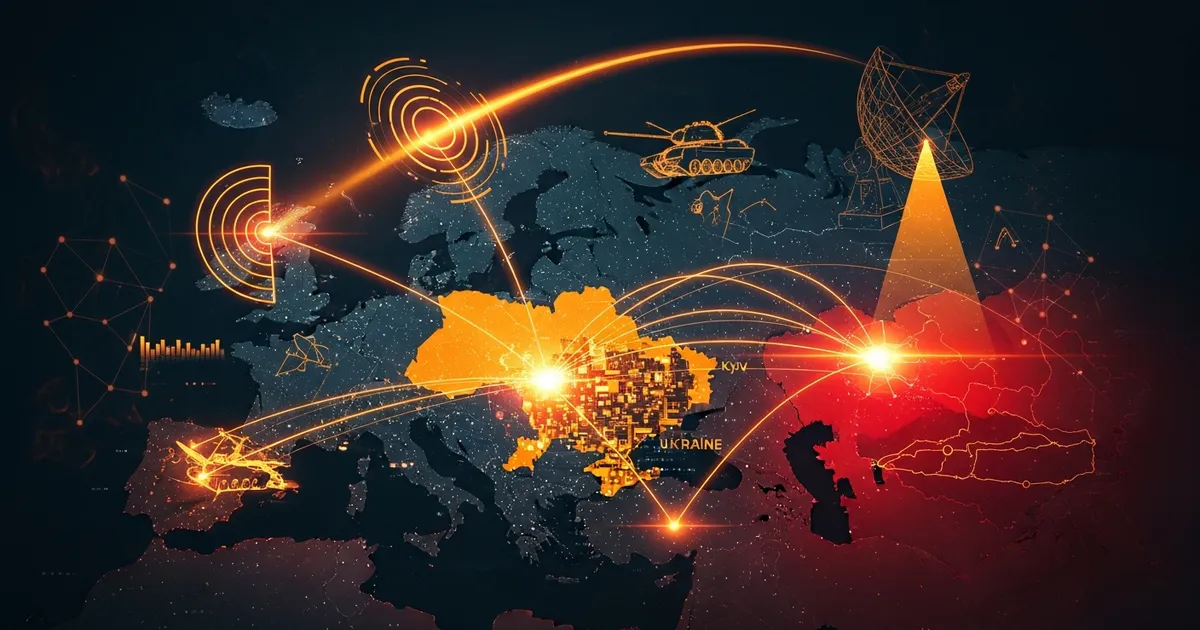
A recent Reddit thread titled "/r/WorldNews Live Thread: Russian Invasion of Ukraine Day 1499" serves as a stark, numerical reminder of the protracted physical conflict in Ukraine. But behind the headlines of troop movements and artillery duels, an equally consequential war is being waged in cyberspace. Since long before the full-scale invasion in February 2022, Russia has used Ukraine as a testing ground for some of the most destructive cyber weapons ever developed, creating a blueprint for modern hybrid warfare.
This analysis dissects the key components of Russia's cyber campaign, from the malware that crippled power grids to the spillover events that cost global corporations billions, offering a look into the digital dimension of a conflict that has reshaped our understanding of national security.
A Decade of Digital Aggression
The cyber conflict did not begin in 2022. Its roots trace back to Russia's 2014 annexation of Crimea. What followed was a systematic escalation of digital attacks designed to destabilize and demoralize.
In December 2015, the world witnessed a grim first: a cyberattack, attributed to the Russian state-sponsored group Sandworm, successfully caused a power outage. Using the BlackEnergy malware, attackers remotely commandeered industrial control systems at a Ukrainian power company, plunging over 230,000 residents into darkness during winter (CERT-UA). This was no longer theoretical; it was proof that code could turn off the lights.
A year later, they struck again. This time, a more sophisticated piece of malware called Industroyer (or CrashOverride) was deployed against a Kyiv transmission station. Unlike BlackEnergy, Industroyer was purpose-built to speak the language of industrial control systems, allowing it to directly manipulate circuit breakers and cause another major blackout (ESET Research). It was a clear signal of Russia's intent to target critical national infrastructure.
The most infamous attack came in June 2017. A piece of malware known as NotPetya was unleashed through a compromised update for a popular Ukrainian accounting software, M.E.Doc. Disguised as ransomware, NotPetya was, in fact, a destructive wiper designed to permanently destroy data. It spread uncontrollably beyond Ukraine's borders, leveraging the potent EternalBlue exploit. The fallout was global, crippling multinational corporations like Maersk, Merck, and FedEx and causing an estimated $10 billion in damages worldwide, making it the most financially destructive cyberattack in history.
The 2022 Escalation: Cyber Operations as an Instrument of War
As Russian troops massed on Ukraine's borders in early 2022, a parallel digital offensive was already underway. In January, the WhisperGate wiper hit Ukrainian government agencies, followed by massive Distributed Denial of Service (DDoS) attacks that knocked government and banking websites offline.
On the very day of the invasion, February 24, 2022, a sophisticated attack crippled the Viasat KA-SAT satellite network. The culprit was a new wiper, dubbed AcidRain, which was pushed to thousands of satellite modems, rendering them inoperable. The attack, attributed to Russia's GRU, not only disrupted Ukrainian military communications at a pivotal moment but also had significant spillover effects, knocking out internet service for thousands of users across Europe and disabling remote monitoring for over 5,800 wind turbines in Germany (Viasat, CISA).
Since the invasion, Russia has maintained a relentless tempo, deploying a family of new wipers—HermeticWiper, CaddyWiper, Prestige, and others—in a continuous effort to disrupt Ukrainian government, logistics, and infrastructure. These operations are often coordinated with kinetic military actions, demonstrating a mature integration of cyber capabilities into conventional warfare.
Technical Profile of the Aggressor
Russian state-sponsored groups, particularly the GRU-linked Sandworm (also known as APT28 or Fancy Bear) and the FSB-linked Gamaredon, have demonstrated a wide range of Tactics, Techniques, and Procedures (TTPs).
- Attack Vectors: Initial access is frequently gained through classic but effective methods like spear-phishing campaigns and the exploitation of unpatched, public-facing applications. The NotPetya incident remains a textbook example of a devastating supply chain attack.
- Malware Arsenal: The primary characteristic of Russia's arsenal in this conflict is its destructive nature. Wipers are not designed for espionage or financial gain; their sole purpose is to destroy data and render systems useless. Tools like Industroyer show a deep understanding of specialized Operational Technology (OT) environments, a capability few threat actors possess.
- Blended Operations: Cyberattacks are rarely isolated. They are frequently combined with disinformation campaigns to sow confusion and panic, and with conventional military strikes to maximize disruption. This hybrid approach is a core component of Russian military doctrine.
Impact and Global Implications
The direct impact on Ukraine has been severe, targeting everything from power and telecommunications to banking and government services. However, the conflict's cyber dimension has implications that extend far beyond Ukraine's borders.
Microsoft has called the conflict "the most significant cyberwar in history," noting that Russian cyberattacks have increasingly targeted NATO countries providing aid to Ukraine (Microsoft). This broadening scope serves as a warning that allies are not mere spectators. The TTPs honed against Ukrainian targets are directly applicable to critical infrastructure in the United States and Europe.
The conflict has also highlighted the critical role of the private sector in national defense. Companies like Microsoft, Google, and Amazon have provided invaluable threat intelligence and cloud infrastructure support to help Ukraine withstand the digital onslaught. SpaceX's rapid deployment of its Starlink satellite internet service after the Viasat attack was a pivotal moment, demonstrating how commercial technology can directly counter a nation-state's military objectives.
How to Protect Yourself
While few organizations face the intensity of a nation-state assault, the TTPs used against Ukraine are a masterclass in what organizations everywhere must defend against. The lessons learned provide a clear roadmap for bolstering defenses.
- Assume You Are a Target: The indiscriminate spread of NotPetya proved that attacks can have unintended victims. All organizations, particularly those in critical sectors, should operate with a heightened sense of alert.
- Master the Fundamentals: Aggressive patch management to close known vulnerabilities, strong identity and access controls with multi-factor authentication (MFA), and network segmentation to limit an attacker's lateral movement are non-negotiable basics.
- Plan for the Worst: Develop and regularly test a comprehensive incident response plan. This includes having offline, immutable backups that can be restored quickly after a destructive attack. Know who to call and what steps to take before the crisis hits.
- Enhance Visibility: Implement robust logging and monitoring across your networks. You cannot defend against what you cannot see. Endpoint Detection and Response (EDR) tools are essential for identifying malicious activity that evades traditional antivirus software.
- Secure Communications: For individuals and organizations handling sensitive information, using a trusted VPN service can provide an essential layer of encryption, protecting data in transit from eavesdropping.
- Foster a Security Culture: Train employees to recognize phishing attempts and other social engineering tactics. A vigilant workforce remains one of the most effective defenses against initial intrusion.
The cyber war in Ukraine is not just Ukraine's fight. It is a live-fire demonstration of the threats facing all modern, digitized societies. The resilience shown by Ukrainian defenders, bolstered by international and private-sector support, offers vital lessons in collective defense for the challenges ahead.