Introduction: The conflict's second front
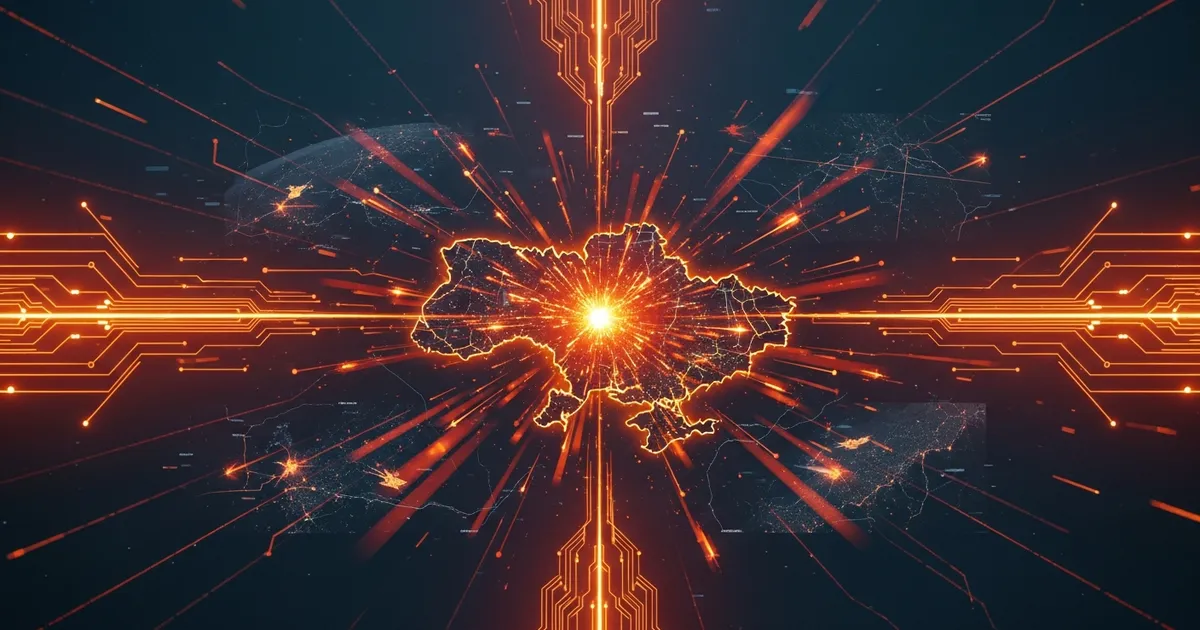
The war in Ukraine is not fought solely with tanks and artillery; it is a seminal case study in modern hybrid warfare, where kinetic military operations are inextricably linked with a relentless campaign in cyberspace. For more than a decade, and with a dramatic escalation since the full-scale invasion in February 2022, Ukraine has been the primary target and testing ground for some of Russia's most advanced state-sponsored cyber capabilities. These operations have targeted everything from the national power grid to government networks, demonstrating the strategic importance of the digital domain in contemporary conflict.
A timeline of digital aggression
The cyber conflict predates the 2022 invasion by many years, marking a long and sustained digital assault. The initial surge began with the 2014 annexation of Crimea, featuring DDoS attacks and website defacements. However, the severity quickly escalated.
In December 2015, the world witnessed the first publicly acknowledged cyberattack to cause a power outage. A Russian state-sponsored group known as Sandworm (linked to the GRU) used BlackEnergy malware to attack Ukrainian power grids, plunging parts of the Ivano-Frankivsk region into darkness. They repeated this a year later, using more sophisticated malware named Industroyer (or CrashOverride) to cause another blackout in Kyiv. This malware was specifically designed to interact with industrial control systems (ICS), signaling a dangerous new capability.
The most infamous incident was the June 2017 NotPetya attack. Disguised as ransomware, its true purpose was destructive. It was unleashed through a compromised update for a Ukrainian accounting software, M.E.Doc, and quickly spread globally. NotPetya crippled major corporations like Maersk, Merck, and FedEx, causing an estimated $10 billion in damages worldwide. Western governments, including the U.S. and U.K., publicly attributed the attack to Russia.
In the weeks leading up to the February 2022 invasion, a new wave of attacks began. Dozens of Ukrainian government websites were defaced, accompanied by the deployment of WhisperGate, a "wiper" malware designed to destroy data and render systems unusable. Just hours before ground troops crossed the border, a cyberattack against Viasat's KA-SAT satellite network disrupted internet services for the Ukrainian military and thousands of civilians across Europe. This was immediately followed by the deployment of more wipers, including HermeticWiper, IsaacWiper, and CaddyWiper, in a coordinated effort to sow chaos.
The technical anatomy of the attacks
Russian state-sponsored actors have employed a diverse and sophisticated toolkit. Several key groups are consistently identified by threat intelligence firms like Mandiant and Microsoft.
- Sandworm (APT28/Fancy Bear): Attributed to Russia's GRU, this group is known for its aggressive and destructive attacks on critical infrastructure, being the force behind BlackEnergy, Industroyer, and NotPetya.
- APT29 (Cozy Bear): Linked to Russia's SVR (Foreign Intelligence Service), this actor typically focuses on stealthy, long-term espionage against government, diplomatic, and research targets.
- Gamaredon (Primitive Bear): Attributed to Russia's FSB, this high-volume group relentlessly targets Ukrainian government and defense entities for intelligence gathering.
Their primary weapons are destructive malware. Unlike ransomware, which encrypts data for financial gain, wiper malware simply erases it permanently. HermeticWiper, for instance, corrupts the Master Boot Record (MBR) of a system, making it impossible to boot. Attackers gain initial access through common vectors like spear-phishing emails and exploiting known software vulnerabilities. The NotPetya attack demonstrated their proficiency with supply chain attacks, a particularly insidious method where legitimate software is compromised to distribute malware to its users.
Impact assessment: from Kyiv to the global economy
The targets in Ukraine have been comprehensive, reflecting a strategy aimed at crippling the nation's ability to function. Government ministries, banks, power companies, railways, and media organizations have all been hit. The Viasat attack was a clear attempt to degrade military command and control at the most critical moment of the invasion. These attacks directly impact civilians, leaving them without power, internet access, or banking services.
The conflict has also confirmed the risk of global spillover. NotPetya remains the most costly cyberattack in history, a stark reminder that digital weapons do not respect national borders. The Viasat hack also affected internet users in other European countries. Pro-Russian hacktivist groups like KillNet have launched DDoS attacks against government websites in nations supporting Ukraine, including the U.S., Germany, and Lithuania, extending the digital conflict to NATO's doorstep.
Microsoft has noted the unprecedented nature of the conflict, highlighting the tight coordination between Russia's cyber operations and its kinetic military strikes. For example, cyberattacks on regional authorities often preceded incoming missile attacks. At the same time, Ukraine's defense has been remarkably effective, largely due to a groundbreaking collaboration between its government agencies, military, and a global coalition of private cybersecurity companies and allied nations. This public-private partnership has become a new model for national cyber defense.
How to protect yourself
While the conflict focuses on nation-state actors, the tactics, techniques, and procedures (TTPs) they use often trickle down to the broader cybercrime ecosystem. Organizations and individuals can take concrete steps to improve their defenses.
- Implement Multi-Factor Authentication (MFA): This is one of the most effective single actions you can take. Even if an attacker steals your password, MFA prevents them from accessing your account.
- Maintain a Rigorous Patching Schedule: Many attacks, including NotPetya's propagation via the EternalBlue exploit (CVE-2017-0144), rely on unpatched vulnerabilities. Keep operating systems, browsers, and applications updated.
- Adopt the 3-2-1 Backup Strategy: Keep at least three copies of your data, on two different types of media, with one copy stored off-site. This is your best defense against destructive wipers and ransomware. Test your backups regularly to ensure they can be restored.
- Increase Phishing Awareness: Train employees and yourself to recognize suspicious emails. Look for unusual sender addresses, urgent requests, and unexpected attachments. Be wary of any email that prompts you to enter credentials.
- Secure Remote Connections: For organizations, ensure that remote access tools like VPNs are fully patched and properly configured. For individuals concerned about online tracking and securing their connection, using a reputable VPN service can add a critical layer of encryption and privacy protection.
- Segment Your Network: For businesses, network segmentation can limit an attacker's ability to move laterally. This is especially important for protecting critical operational technology (OT) networks from intrusions originating on the IT network.
Conclusion: lessons from a digital war
The war in Ukraine has provided a clear and sobering view of the role of cyber operations in modern statecraft. It has demonstrated that destructive attacks are a core component of military strategy, that critical infrastructure is a primary target, and that the digital fallout can have global consequences. It has also shown the power of collective defense, where government and private industry unite to fend off a common adversary. The lessons learned on this digital battlefield will shape cybersecurity policy and practice for years to come.