The first shot was a line of code
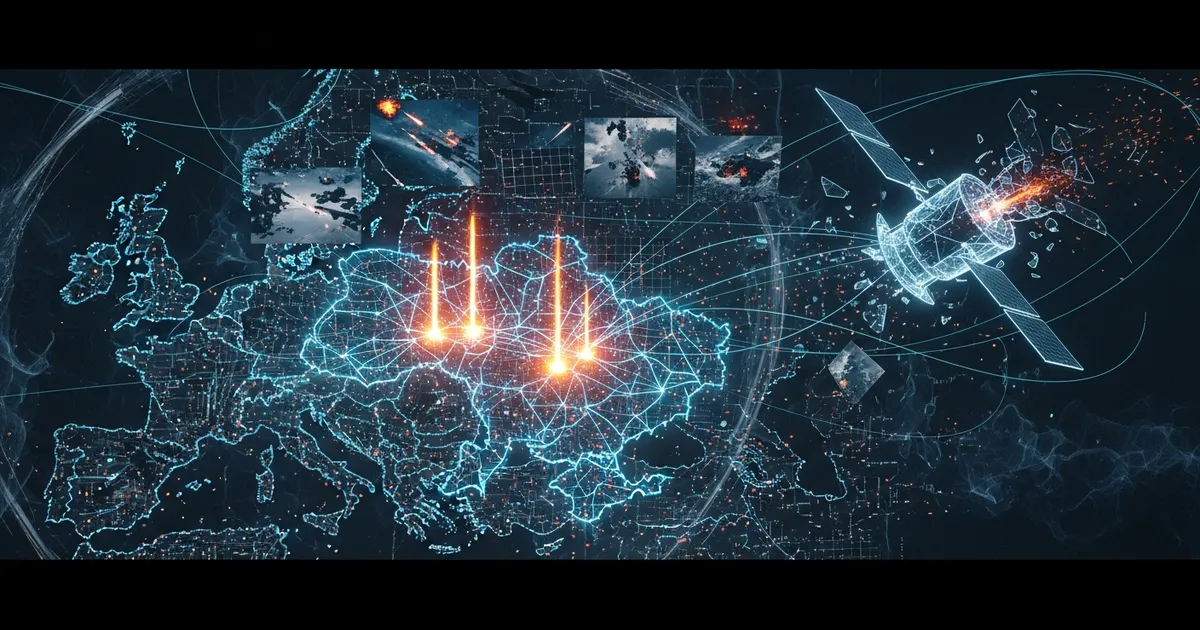
On February 24, 2022, as Russian military forces prepared to cross the Ukrainian border, a different kind of invasion was already underway. This one was silent, invisible, and executed not with missiles, but with malicious code. In the pre-dawn hours, tens of thousands of satellite internet terminals across Ukraine and Europe suddenly went dark. This was no ordinary network outage; it was a targeted, destructive cyberattack on the KA-SAT network, operated by American communications company Viasat. The incident stands as one of the most significant cyber operations in modern military history, a calculated strike designed to blind and deafen a nation on the brink of war.
The attack served as a stark demonstration of how deeply integrated cyber operations have become with conventional military strategy. It wasn't a sideshow or a parallel effort; it was the opening salvo, intended to cripple Ukrainian command and control and sow chaos just as physical hostilities commenced. Months later, a coalition of nations including the United States, United Kingdom, and the European Union would formally attribute the attack to Russia’s Main Intelligence Directorate (GRU), specifically the infamous unit known as Sandworm.
Technical deep dive: A misconfigured VPN and a wiper named AcidRain
The Viasat attack was not a feat of exotic, zero-day exploitation. Instead, it was a methodical intrusion that exploited a foundational security weakness. According to Viasat’s own incident report, the attackers gained their initial foothold by compromising a VPN appliance. This appliance provided remote access to the trusted management segment of the KA-SAT network. Once inside this privileged environment, the attackers had the keys to the kingdom.
This initial access vector underscores a fundamental security principle: the network perimeter is only as strong as its weakest link. A properly configured and monitored VPN service is a critical tool for remote access, but a misconfiguration can turn it from a shield into an open door. From their foothold, the attackers executed a series of destructive commands targeting the SurfBeam2 and SurfBeam2+ modems used by customers across the continent.
The payload they delivered was a custom-made piece of malware later analyzed and named "AcidRain" by researchers at SentinelOne. AcidRain is a wiper, a class of malware with a single, devastating purpose: to destroy data and render systems inoperable. Unlike ransomware, there is no financial motive and no possibility of recovery. AcidRain was an efficient digital demolition tool. It recursively scoured the modem’s file systems and known storage device paths, overwriting key data and ultimately corrupting the device's flash memory. This action effectively “bricked” the modems, making them unable to boot and requiring physical replacement.
Impact assessment: From Ukrainian defense to German wind farms
The immediate and intended target was Ukraine. The attack successfully knocked out tens of thousands of Viasat terminals in Ukraine and across Europe, disrupting internet access for civilians, businesses, and government entities. While Viasat’s high-security government services used a different network, the KA-SAT system was a vital communication channel for many, including some military units relying on it for backup connectivity. The timing, just hours before the invasion, was clearly aimed at creating a communications blackout to hamper Ukraine’s initial defensive response.
But the impact of AcidRain spilled far beyond the conflict zone, highlighting the interconnected and often unpredictable nature of global infrastructure. In Germany, 5,800 wind turbines operated by Enercon suddenly lost their remote monitoring and control capabilities. The turbines themselves continued to generate power, but they were disconnected from the central management system, which relied on Viasat modems for communication. This spillover event served as a powerful warning about the cascading risks of cyberattacks on shared infrastructure.
The disruption wasn't limited to Germany. Thousands of other customers in Poland, Italy, France, and across Central Europe also lost internet connectivity. The economic cost included not only the loss of service but also the immense logistical challenge for Viasat of shipping and replacing tens of thousands of bricked modems across a continent.
How to protect yourself
The Viasat attack offers critical lessons for organizations and individuals on mitigating the risk of destructive cyberattacks and their cascading consequences.
For organizations and critical infrastructure operators:
- Harden the Perimeter: The initial entry point was a misconfigured VPN. Regularly audit and harden all internet-facing devices, including firewalls, remote access gateways, and VPN concentrators. Enforce multi-factor authentication (MFA) on all remote access connections without exception.
- Implement Network Segmentation: A flat network is an attacker’s playground. Segment networks to isolate critical operational technology (OT) and management systems from corporate IT networks. A breach in one segment should not provide immediate access to all others. This containment strategy can be the difference between a limited incident and a Viasat-level catastrophe.
- Understand Supply Chain Risk: For Enercon and thousands of other businesses, Viasat was a third-party supplier. Organizations must conduct due diligence on the security practices of their critical vendors. Ask hard questions about their incident response plans, network security, and resilience.
- Plan for Destruction, Not Just Disruption: Standard disaster recovery plans often focus on data restoration from backups. A wiper attack that destroys hardware requires a different playbook. Maintain an inventory of critical hardware, establish relationships with suppliers for rapid replacement, and develop plans to operate in a degraded state.
For individuals:
- Secure Your Home Network: Ensure your home router's firmware is up to date, change the default administrator password, and use a strong, unique password for your Wi-Fi network (WPA2 or WPA3).
- Use Secure Communication Channels: In any environment, rely on applications that provide end-to-end encryption. This ensures that even if the network you are using is compromised, the content of your messages remains private.
The Viasat attack was more than a technical failure or a security incident. It was a strategic act of war that blurred the line between digital and physical conflict. It demonstrated that in the 21st century, a military campaign can begin not with a bang, but with the silent death of a modem’s status light, plunging thousands into darkness before the first shot is even fired.