Hybrid warfare's digital battlefield
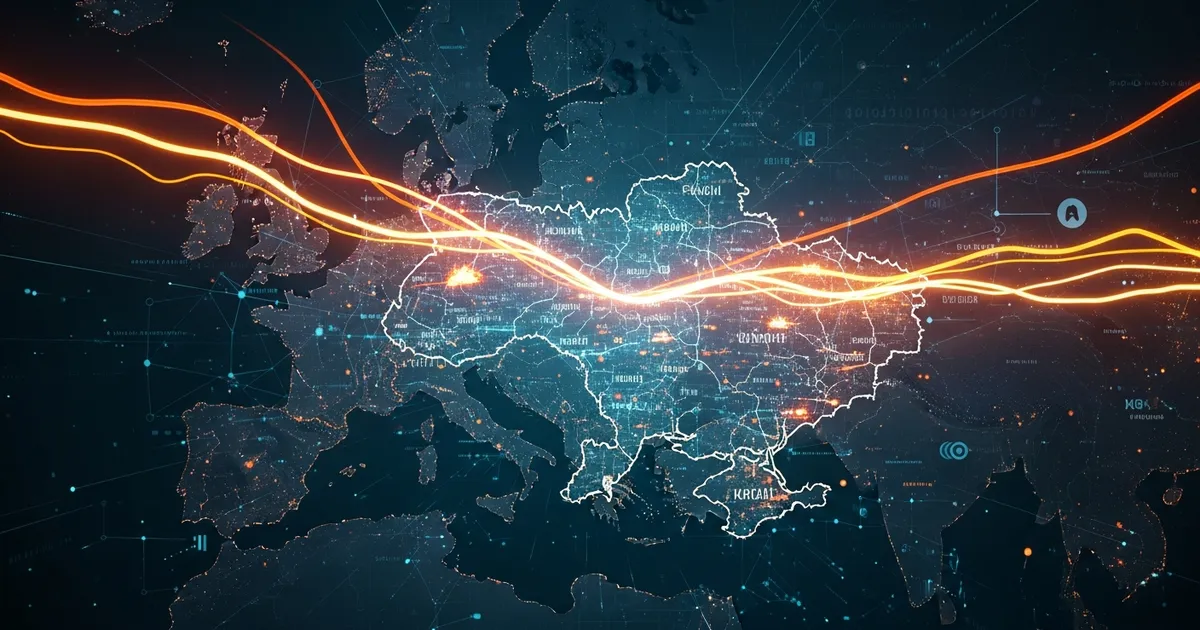
While the world watches the kinetic military operations in Ukraine, a parallel and persistent war is being waged in cyberspace. The Russian invasion has been accompanied by a relentless campaign of cyberattacks targeting Ukraine's critical infrastructure, government agencies, and civilian services. This digital offensive is not a new phenomenon but the culmination of years of state-sponsored cyber aggression designed to destabilize, disrupt, and demoralize. Analysis of these operations reveals a sophisticated, multi-pronged strategy that has had significant consequences both within Ukraine and across the globe.
A history of digital aggression
The groundwork for the current cyber conflict was laid long before 2022. Russian state-sponsored actors, particularly the advanced persistent threat (APT) group known as Sandworm (linked to Russia's GRU military intelligence agency), have used Ukraine as a testing ground for cyber warfare capabilities for nearly a decade. In December 2015, the BlackEnergy malware was deployed against Ukrainian power distribution companies, causing the first-ever publicly acknowledged blackout resulting from a cyberattack. A year later, a more sophisticated tool, Industroyer (or CrashOverride), was used in another attack on Kyiv's power grid.
The most infamous precursor was the 2017 NotPetya attack. Disguised as ransomware, NotPetya was, in fact, a destructive wiper malware spread through a compromised update for a popular Ukrainian accounting software, M.E.Doc. While Ukraine was the primary target, the malware's worm-like capabilities allowed it to spread indiscriminately across the globe, causing an estimated $10 billion in damages. It crippled international corporations like shipping giant Maersk, pharmaceutical company Merck, and FedEx's European subsidiary TNT Express, demonstrating the potential for catastrophic global spillover from a regional cyber conflict.
The 2022 digital blitz
In the weeks and hours leading up to the February 24, 2022, invasion, the intensity of cyber operations escalated dramatically. Ukrainian government websites were defaced and hit with distributed denial-of-service (DDoS) attacks. Destructive wiper malware, designed solely to erase data and render systems inoperable, was deployed in waves. These included WhisperGate, HermeticWiper, IsaacWiper, and CaddyWiper, each targeting different sectors of the Ukrainian government and economy.
Perhaps the most significant single event of the initial invasion was the attack on Viasat's KA-SAT satellite network. Just hours before ground troops moved, attackers exploited a misconfigured management interface to deploy a wiper malware dubbed AcidRain. The attack successfully disrupted satellite communications used by the Ukrainian military and government. However, its effects were not contained. Thousands of civilian internet users across Europe lost connectivity, and the remote monitoring for 5,800 wind turbines in Germany was knocked offline. In April 2022, the US, UK, and EU formally attributed the attack to Russia.
The technical arsenal of an APT
The tactics, techniques, and procedures (TTPs) used by Russian actors are diverse and adaptable. The core of their destructive campaigns relies on wiper malware, which overwrites the Master Boot Record (MBR) and corrupts files, making recovery nearly impossible. Unlike ransomware, there is no decryption key and no financial motive; the goal is pure disruption and destruction.
Initial access is often gained through familiar vectors. Phishing and spear-phishing campaigns trick users into executing malicious attachments or revealing credentials. Attackers also exploit known vulnerabilities in public-facing applications and servers that have not been patched. The NotPetya attack exemplifies a more sophisticated approach: the supply chain compromise. By infiltrating a trusted software vendor, the attackers turned a legitimate software update into a delivery mechanism for their malware.
Once inside a network, attackers use tools to move laterally, escalate privileges, and deploy their payloads. In the case of NotPetya, it famously used the EternalBlue exploit—the same vulnerability leveraged by the WannaCry ransomware—to spread rapidly within networks.
The 'cyber paradox' and an unprecedented defense
Despite the intensity and sophistication of the attacks, many experts have noted what has been called the "cyber paradox." The anticipated "cyber Armageddon"—a complete shutdown of Ukraine's critical infrastructure—has not materialized. While attacks have been damaging, they have not delivered a strategic knockout blow. According to Ciaran Martin, former CEO of the UK's National Cyber Security Centre, this outcome speaks to "Ukraine's resilience and the robust international support it has received."
Since 2014, Ukraine has significantly hardened its digital defenses. This effort was supercharged by an unprecedented level of public-private partnership following the 2022 invasion. Cybersecurity firms like Microsoft, Mandiant (now part of Google), and ESET have provided direct, on-the-ground support and proactive threat intelligence. Microsoft's Threat Intelligence Center, for example, has published extensive reports detailing Russian cyber activity, helping defenders anticipate and block attacks. This collaboration between governments and the private sector has been a defining feature of the conflict's cyber dimension, providing a new model for collective defense.
How to protect yourself
While the conflict is between nation-states, the global nature of cyberspace and the use of indiscriminate tools mean that organizations and individuals worldwide are at risk. The lessons learned from Ukraine offer a clear blueprint for improving defensive posture.
- Patch Management: Many attacks succeed by exploiting known, unpatched vulnerabilities. Maintaining a rigorous and timely patching schedule for all software and systems is a foundational security control.
- Multi-Factor Authentication (MFA): Enforcing MFA across all services, especially for remote access and administrative accounts, makes it significantly harder for attackers to use stolen credentials.
- Network Segmentation: Dividing networks into smaller, isolated zones can limit an attacker's ability to move laterally. If one part of the network is compromised, segmentation can prevent the infection from spreading, containing the damage.
- Employee Training: A well-trained workforce is the first line of defense against phishing. Regular training on how to spot and report suspicious emails is essential.
- Incident Response Plan: Have a well-documented and practiced plan for what to do when an attack occurs. This includes isolating affected systems, engaging forensic experts, and communicating with stakeholders.
- Data Protection: For individuals and remote workers, securing personal and corporate data is paramount. Using strong encryption and ensuring secure internet connections, for instance through a reputable hide.me VPN, can help protect data from interception on untrusted networks.
The cyber war in Ukraine has provided a stark illustration of how digital conflict is integrated into modern warfare. It has underscored the vulnerability of critical infrastructure, the risk of global spillover, and the vital importance of cyber resilience. The lessons in collective defense, forged through international and public-private cooperation, will shape cybersecurity strategy for years to come.