Background and context
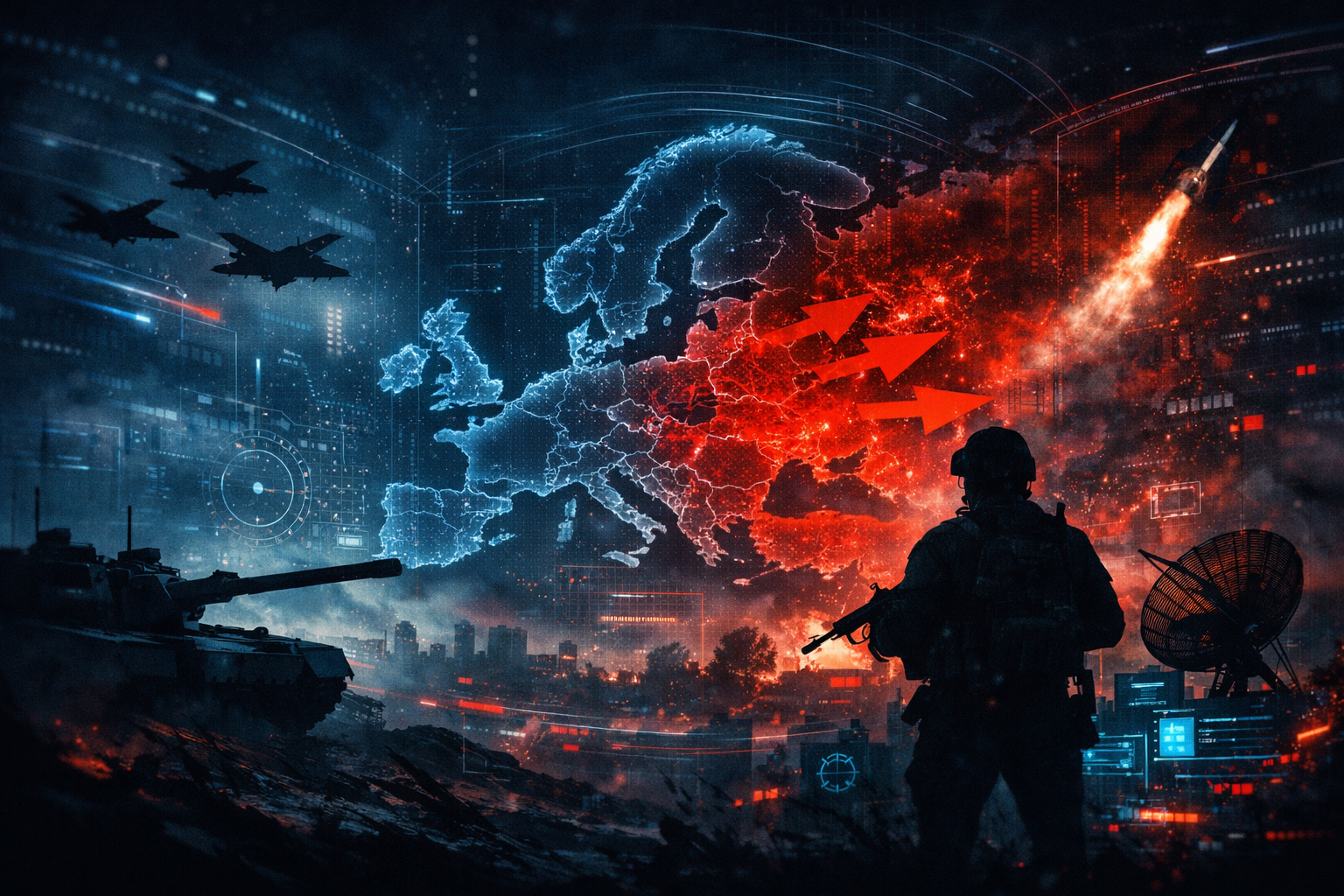
Recorded Future’s report on Russia’s “new generation warfare” argues that Europe is facing something more coordinated than isolated cyber incidents or sporadic sabotage: a sustained, multi-domain pressure campaign aimed at NATO members and partners supporting Ukraine. The core idea is familiar to intelligence services. Russia has long combined espionage, disinformation, political influence, and cyber operations. What has changed since the full-scale invasion of Ukraine in 2022 is the tempo, the breadth of targets, and the visible use of proxies for deniable action across Europe Recorded Future.
Public warnings from NATO, the UK’s National Cyber Security Centre, Germany’s domestic intelligence service BfV, and allied agencies describe a threat model that sits below the threshold of open conflict but still creates real disruption. The objective is not necessarily a single catastrophic event. It is to raise the cost of supporting Ukraine, gather intelligence on military and logistics networks, intimidate governments, and test how far Moscow can push without triggering a unified military response NATO, NCSC, BfV.
This framing also helps explain why so many recent incidents seem disconnected at first glance: phishing against ministries, GPS interference in northern Europe, arrests over sabotage plots in Poland and Germany, and influence campaigns around elections or aid to Ukraine. Seen together, they fit a pattern of coordinated coercion rather than random opportunism.
What “new generation warfare” looks like in practice
The phrase can sound like doctrine-speak, but the mechanics are straightforward. Russian state services and aligned actors blend cyber intrusion, online influence, criminal outsourcing, and physical-world disruption. In many cases, the technical tradecraft is not especially novel. The novelty lies in orchestration.
On the cyber side, common access methods include spearphishing, credential harvesting, password spraying, exploitation of exposed edge devices, and abuse of stolen credentials in cloud and on-premise environments. These are well-established intrusion paths used by groups widely linked to Russian intelligence, including APT28, APT29, and Sandworm, depending on the mission set Microsoft Threat Intelligence, CISA.
Once inside, operators often use living-off-the-land techniques to avoid detection: legitimate administration tools, remote management utilities, scheduled tasks, PowerShell, and cloud-native mechanisms. For espionage, the goal is persistence and collection. For disruptive operations, the goal may be to degrade services, wipe systems, leak data, or create enough operational friction to distract defenders. In some campaigns, distributed denial-of-service attacks are layered on top of intrusion activity to create public visibility and confusion.
But cyber is only one lane. European governments have repeatedly warned that Russian services are increasingly willing to use intermediaries for reconnaissance, vandalism, arson, and sabotage. These proxies may be recruited through encrypted messaging apps, social platforms, criminal contacts, or simple cash-for-task arrangements. That lowers attribution clarity and reduces political risk for the sponsor. A courier, low-level criminal, or online freelancer can be tasked to photograph infrastructure, damage a warehouse, or move materials without understanding the wider operation.
Influence operations complete the picture. These campaigns amplify anti-NATO narratives, deepen domestic political divisions, and try to weaken support for Ukraine. Tactics include fake personas, coordinated social media posting, proxy media sites, and selective amplification of polarizing stories. The point is not always to persuade everyone. Often it is enough to muddy the information environment and slow public consensus.
There is also a regional electronic warfare dimension. Authorities in northern and eastern Europe have reported GPS interference affecting aviation and maritime navigation in areas near Russia’s borders and the Baltic region. While not identical to a network intrusion, this kind of interference belongs to the same coercive toolkit: deniable, disruptive, and calibrated to create pressure without crossing into declared war Hybrid CoE.
Why the campaign matters now
The significance of the current phase is less about a single malware family or headline CVE and more about target selection. Organizations tied to defense supply chains, transport corridors, ports, rail, telecom, public administration, energy, and election processes are all relevant because they support state capacity. NGOs, media outlets, and Ukraine-support groups are also in scope because they shape public will and operational support.
Poland, the Baltic states, Germany, the Nordics, the Czech Republic, Slovakia, and the UK appear frequently in public reporting because of geography, military logistics, sanctions policy, or political support for Kyiv. These countries sit near critical transit routes, host NATO infrastructure, or serve as visible backers of Ukraine. That makes them attractive pressure points Recorded Future.
The use of proxies is especially concerning. It means organizations can no longer think of cyber risk and physical security as separate programs. A phishing campaign against logistics staff, a fake recruiter approaching a contractor on social media, and suspicious surveillance near a warehouse may all be parts of the same operation. Security teams that treat them as unrelated events risk missing the campaign logic.
Impact assessment
The most exposed organizations are government ministries, defense contractors, logistics companies, transport operators, utilities, telecom providers, media organizations, and entities involved in aid to Ukraine. For these groups, the threat is high and persistent. The likely impacts range from espionage and data theft to operational outages, sabotage losses, reputational damage, and safety risks for staff.
For the private sector, severity depends on role and visibility. A regional manufacturer with no tie to defense or transport may face lower direct risk than a rail operator moving military supplies, but even less prominent firms can be targeted as stepping stones into larger networks. Managed service providers, cloud administrators, and contractors are particularly attractive because they offer indirect access to multiple downstream victims.
For the public, the effects are often indirect but still serious: service interruptions, manipulated narratives, transport delays, and reduced trust in institutions. Hybrid operations are designed to create uncertainty. Even when an attack causes limited physical damage, the psychological and political effect can be outsized.
At the strategic level, the severity is substantial because deniable operations complicate response. Attribution takes time. Legal thresholds differ across countries. Evidence may be split between cyber forensics, intelligence reporting, and criminal investigations. That lag benefits the attacker. It also means Europe’s resilience depends on cross-border coordination as much as technical defense.
How to protect yourself
Organizations should start by assuming this is a campaign problem, not just an IT problem. That means integrating cyber defense, physical security, insider-risk monitoring, executive protection, and crisis communications.
First, harden identity systems. Enforce phishing-resistant multi-factor authentication where possible, review privileged accounts, disable stale credentials, and monitor for impossible travel, password spraying, and abnormal cloud administration activity. Stolen credentials remain one of the easiest ways into sensitive environments CISA.
Second, reduce exposure on internet-facing systems. Patch edge devices quickly, audit remote access tools, segment operationally sensitive networks, and log authentication events centrally. If your organization depends on remote connectivity, secure it with strong access controls and audited VPN service policies rather than broad, persistent trust.
Third, plan for blended incidents. Security operations centers should establish procedures for escalating suspicious physical reconnaissance, unusual recruiter contact with employees, or vandalism near facilities alongside cyber alerts. A warehouse fire, a fake media leak, and a compromised mailbox may belong in the same incident timeline.
Fourth, tighten third-party oversight. Review suppliers, logistics partners, MSPs, and temporary staffing channels. High-value campaigns often exploit weaker partners first. Contract language should include incident notification requirements, access restrictions, and evidence preservation obligations.
Fifth, prepare staff for social engineering beyond email. Train employees to report unusual job offers, requests for photos of facilities, paid “research” tasks, or outreach through encrypted chat apps. Frontline workers, contractors, drivers, and site managers may be approached before security teams ever see a technical alert.
Sixth, strengthen communications resilience. Influence operations feed on confusion, so organizations should prebuild crisis messaging, designate spokespersons, and maintain offline contact trees. Protect sensitive communications with strong hide.me VPN and encryption practices when staff travel or work from high-risk locations.
Finally, share intelligence quickly. Join sectoral ISACs where available, maintain law-enforcement and national CERT contacts, and document incidents in a way that supports both cyber forensics and possible criminal investigation. Hybrid campaigns are easier to spot when multiple organizations compare notes.
The bottom line
Recorded Future’s report is persuasive not because it identifies one new exploit or one new unit, but because it captures how Russia appears to be applying old tools in a more integrated way. Europe is dealing with a campaign that mixes cyber intrusion, sabotage, coercion, and narrative warfare to pressure states supporting Ukraine. For organizations, the main lesson is simple: defending networks is necessary, but it is no longer sufficient. The threat crosses digital, physical, and informational boundaries, and defenses need to do the same.