A war of attrition on two fronts
Recent military analysis suggests that Russia's kinetic war in Ukraine has entered a phase of attrition, with front lines moving little despite immense costs. While headlines may speak of a stalled ground campaign, this assessment dangerously overlooks a parallel, unceasing conflict: the digital war. In cyberspace, Russia’s offensive has not paused. Instead, it has adapted and intensified, serving as a persistent tool of state power aimed at destabilizing Ukraine from within, regardless of battlefield developments.
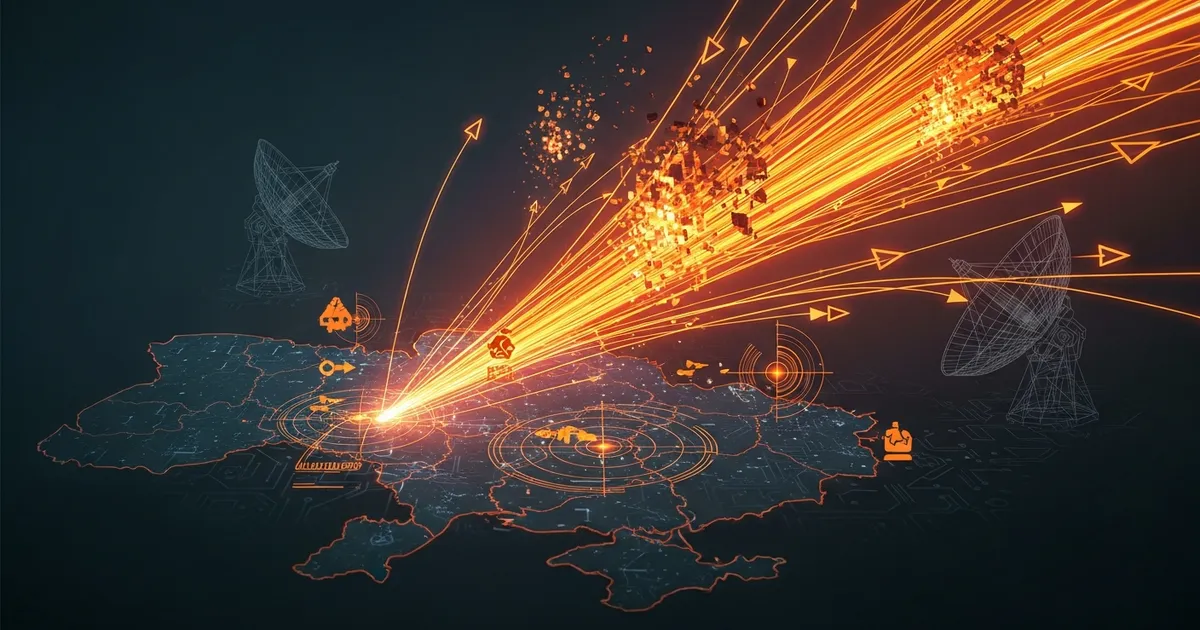
This ongoing cyber campaign, waged by sophisticated state-sponsored threat actors, continues to target Ukraine's critical infrastructure, government services, and military command. As the physical war grinds on, the digital front remains a dynamic and crucial theater of operations, offering Moscow strategic advantages that territory alone cannot provide.
The technical anatomy of a persistent cyber campaign
Since the hours preceding the February 2022 invasion, Russia has deployed a full spectrum of cyber capabilities against Ukraine. This effort is not monolithic but is carried out by distinct Advanced Persistent Threat (APT) groups, each with specific mandates and toolsets. Chief among them are groups attributed to Russia's GRU military intelligence agency, such as Sandworm (also known as APT28), and those linked to its foreign intelligence service, like APT29 (Cozy Bear).
Their methods are a textbook of modern cyber warfare, combining disruption, destruction, and espionage:
- Destructive Wiper Malware: Unlike ransomware, which holds data hostage for a fee, wiper malware's sole purpose is destruction. Groups have deployed multiple families of wipers, including WhisperGate, AcidRain, and CaddyWiper, to irrevocably erase data on targeted networks. The goal is to cripple government agencies and private companies, sowing chaos and impeding their ability to function.
- Attacks on Industrial Control Systems (ICS): Russian actors have repeatedly shown their intent to disrupt physical infrastructure. The attempted attack with Industroyer2 malware in April 2022 targeted a Ukrainian energy provider, echoing the successful attacks on the nation's power grid in 2015 and 2016. These operations aim to turn off the lights and heat for Ukrainian citizens, a potent psychological weapon.
- Espionage and Intelligence Gathering: Spear-phishing campaigns remain a primary vector for initial access. Threat actors craft convincing emails, often impersonating legitimate Ukrainian or international organizations, to trick victims into revealing credentials or downloading malicious payloads. Once inside a network, their goal is to maintain persistent access to exfiltrate sensitive military, political, and economic intelligence.
- Supply Chain Compromise: In a more sophisticated approach, attackers compromise trusted third-party software vendors or service providers. By inserting malicious code into legitimate software updates, they can gain access to thousands of downstream targets at once, a technique that demonstrates long-term strategic planning.
This multi-pronged digital assault is deeply integrated with military objectives. The infamous Viasat satellite network hack, which occurred on the very day of the invasion, was designed to disrupt Ukrainian military communications as Russian troops crossed the border. It serves as a prime example of the synchronized nature of this hybrid war.
Impact assessment: A nation in the crosshairs
The targets of Russia's cyber campaign span the entirety of Ukrainian society. While early predictions of a complete cyber-induced collapse of Ukraine's infrastructure did not materialize—largely due to Ukraine's remarkable resilience—the impact has been severe and widespread.
The December 2023 attack on Kyivstar, Ukraine's largest telecommunications operator, is a stark illustration. Attributed to Sandworm, the destructive attack wiped thousands of virtual servers and PCs, disrupting mobile and internet services for millions of Ukrainians for days. The timing was significant, occurring during a period of reported ground-war stagnation, demonstrating Russia's ability to inflict massive civilian and economic damage through cyber means alone.
The affected entities include:
- Critical Infrastructure: The energy, telecommunications, and financial sectors are under constant threat of disruption.
- Government and Military: Ministries and defense networks are prime targets for espionage and sabotage to degrade command and control.
- Civilians: Citizens are affected not only by service outages but also by pervasive disinformation campaigns designed to erode morale and trust in their government.
According to reports from Ukraine's State Service of Special Communications and Information Protection (SSSCIP), the country has been fending off thousands of cyber incidents since the full-scale invasion began. Experts at Microsoft and Mandiant have highlighted the adaptability of Russian actors, who constantly refine their tactics in response to Ukraine's evolving defenses.
How to protect yourself
While the conflict's primary targets are within Ukraine, Russian APT groups operate globally, targeting allies of Ukraine for espionage and influence operations. The tactics refined in this conflict are being adopted by other threat actors worldwide. Organizations and individuals must remain vigilant.
For Organizations:
- Assume Breach Mentality: Operate under the assumption that an attacker will eventually get in. Focus on rapid detection, response, and resilience. Implement robust logging and monitoring across all systems.
- Network Segmentation: Isolate critical systems, especially operational technology (OT) and industrial control systems (ICS), from corporate IT networks to contain the blast radius of an attack.
- Multi-Factor Authentication (MFA): Enforce MFA on all accounts, especially for remote access and privileged users. This is one of the most effective single measures to prevent unauthorized access from stolen credentials.
- Patch Management: Aggressively patch known vulnerabilities, particularly in internet-facing systems like VPNs and email servers, as these are common entry points for state-sponsored actors.
- Incident Response Plan: Develop and regularly test an incident response plan. Ensure that roles are clearly defined and that backups are isolated and tested for recoverability.
For Individuals:
- Phishing Awareness: Be skeptical of unsolicited emails and messages, even if they appear to be from a trusted source. Verify requests for sensitive information through a separate communication channel.
- Strong, Unique Passwords: Use a password manager to create and store complex, unique passwords for every online account.
- Information Literacy: Be a critical consumer of news and information. Disinformation is a key component of this conflict. Rely on multiple, reputable sources to verify information before sharing.
- Secure Your Connection: Enhance your online privacy by using strong encryption. A reputable VPN service can help protect your data, especially when using public or untrusted Wi-Fi networks.
The war in Ukraine has become a defining moment for cyber warfare, demonstrating that even when tanks and artillery fall silent, the digital conflict continues to shape the strategic reality on the ground.