Introduction: The Unseen Front Line
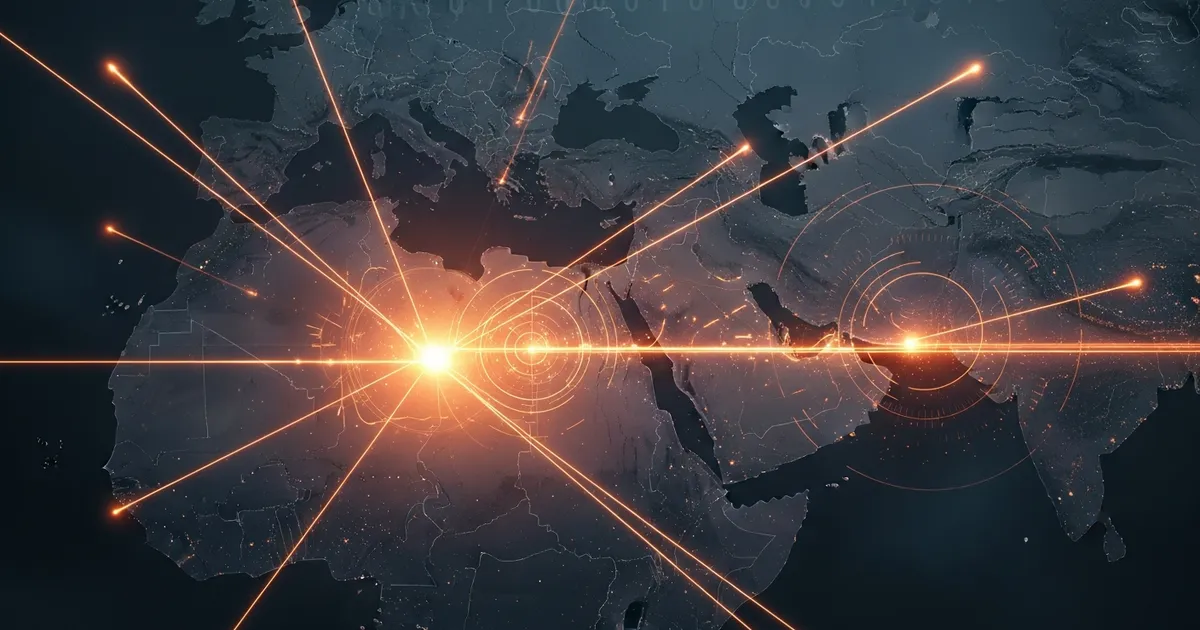
When geopolitical tensions between nations like the United States, Israel, and Iran escalate, the focus is often on the visible, kinetic aspects of conflict. But behind the headlines of missile strikes and retaliatory actions, a parallel, more clandestine war is being waged. This conflict unfolds not on land, sea, or air, but across the global digital infrastructure that underpins modern society. Every military escalation is now shadowed by a flurry of activity in cyberspace, where nation-state actors seek to disrupt, disable, and disorient their adversaries.
This analysis moves beyond the headlines to examine the well-documented cyber capabilities and historical tactics of the key players involved. Based on years of documented cyber incidents, we can anticipate the digital strategies that accompany physical force, targeting everything from national power grids to the personal devices of citizens.
Background: A Decade of Digital Skirmishes
The cyber conflict between Iran and the US/Israel coalition is not new; it is a long-simmering war of attrition that occasionally boils over. The 2010 discovery of Stuxnet is often cited as the watershed moment. This highly sophisticated computer worm, widely attributed to a joint US-Israeli effort, was designed to physically sabotage centrifuges at Iran's Natanz uranium enrichment facility by manipulating industrial control systems (ICS). Stuxnet demonstrated that code could be used to create tangible, real-world destruction, effectively crossing the Rubicon of cyber warfare (Source: Zetter, WIRED).
In the years that followed, Iran significantly ramped up its own offensive cyber capabilities. Retaliatory campaigns, such as Operation Ababil in 2012-2013, launched massive Distributed Denial-of-Service (DDoS) attacks against major US financial institutions, costing them tens of millions of dollars in remediation (Source: U.S. Department of Justice). More destructively, Iranian-linked threat actors have repeatedly deployed wiper malware. The Shamoon attacks, starting in 2012 against Saudi Aramco and recurring in later variants, were designed not to steal data, but to erase it completely, destroying tens of thousands of hard drives and bringing business operations to a standstill.
Technical Details: The Actors and Their Arsenals
Understanding the digital battlefield requires knowing the combatants and their preferred weapons. Cybersecurity firms and government agencies have tracked several state-sponsored Advanced Persistent Threat (APT) groups linked to each nation.
Iran's Cyber Proxies
Iran often operates through a constellation of APT groups, each with different specializations. Key groups include:
- APT33 (Elfin): This group has a history of targeting aerospace, energy, and petrochemical sectors in the US, Saudi Arabia, and South Korea. They are known for deploying destructive wiper malware, including variants of Shamoon and a newer strain called Narilam.
- APT34 (OilRig): Focused primarily on espionage, APT34 targets financial, government, and energy sectors, particularly in the Middle East. Their toolkit often includes custom backdoors like POWBAT and QUADAGENT, delivered via spear-phishing emails with malicious attachments.
- APT35 (Charming Kitten / Phosphorus): This group specializes in credential harvesting and surveillance. They are notorious for their sophisticated spear-phishing campaigns targeting academics, journalists, and government officials, often creating convincing fake login pages for services like Google and Microsoft.
Their collective Tactics, Techniques, and Procedures (TTPs) frequently involve exploiting known, unpatched vulnerabilities in public-facing infrastructure like VPN servers and Microsoft Exchange. This approach allows for rapid, wide-scale access with minimal investment in developing zero-day exploits (Source: CISA).
US and Israeli Capabilities
The offensive cyber capabilities of the United States (primarily via the NSA and US Cyber Command) and Israel (via Unit 8200) are considered among the most advanced in the world. Their operations are characterized by a high degree of stealth, sophistication, and a focus on strategic objectives.
- Zero-Day Exploits: Unlike Iranian groups that often rely on publicly known vulnerabilities, these actors have the resources to discover and weaponize previously unknown software flaws (zero-days), as exemplified by Stuxnet.
- Supply Chain Attacks: They have demonstrated the ability to compromise software and hardware during the manufacturing or distribution process, allowing them to embed surveillance or disruption tools deep within a target's infrastructure.
- ICS/SCADA Expertise: Their primary focus in a conflict scenario often involves targeting an adversary's critical national infrastructure (CNI). This includes disrupting power grids, telecommunications, transportation networks, and military command-and-control systems.
Impact Assessment: The Civilian Digital Crossfire
While military and government networks are primary targets, the impact of this cyber warfare extends deep into the civilian sphere. The interconnectedness of modern infrastructure means that an attack on one sector can have cascading effects across society.
Critical Infrastructure at Risk: An attack on a nation's power grid could leave millions without electricity. A compromise of a water treatment facility could endanger public health. An attempted hack of a Florida water treatment plant in 2021, and a cyberattack on Israeli water systems in 2020 attributed to Iran, highlighted the very real threat to these essential services (Source: Council on Foreign Relations).
Economic Disruption: The private sector is a prime target. Attacks on financial institutions can undermine economic stability, while intellectual property theft from technology and defense firms can erode a nation's competitive advantage. Destructive wiper attacks against corporations aim to inflict direct economic pain.
Psychological Operations: Nation-states use disinformation and propaganda to sow chaos, erode trust in institutions, and influence public opinion. During a conflict, these campaigns intensify, flooding social media with false narratives and targeting citizens with tailored messaging to create panic and division. Protecting one's personal data and online activity with tools like a VPN service can help reduce some forms of tracking and data collection used for targeting in such campaigns.
How to Protect Yourself and Your Organization
During heightened geopolitical tensions, organizations and individuals in involved nations—and their allies—must assume they are potential targets. Proactive defense is the only viable strategy.
For Organizations and Businesses:
- Patch Aggressively: Iranian APTs have a proven track record of exploiting known CVEs. Prioritize patching for internet-facing systems, especially VPNs, firewalls, and web servers. CISA maintains a catalog of known exploited vulnerabilities that should be a primary focus.
- Enforce Multi-Factor Authentication (MFA): MFA remains one of the most effective controls for preventing account takeovers resulting from credential theft. Enforce it on all critical accounts and services, especially for remote access.
- Assume Breach and Segment Networks: Operate with a mindset that an attacker is already inside. Use network segmentation to limit lateral movement, making it harder for an intruder who compromises one system to access critical assets elsewhere on the network.
- Develop and Test an Incident Response Plan: Know who to call and what to do when an incident occurs. A well-rehearsed plan can significantly reduce the dwell time of an attacker and minimize the damage from an attack.
For Individuals:
- Practice Phishing Awareness: Be extremely skeptical of unsolicited emails or messages, especially those that create a sense of urgency or ask for credentials. Verify the sender through a separate communication channel if you are unsure.
- Use Strong, Unique Passwords: Combine a password manager with strong, randomly generated passwords for each of your online accounts. Enable MFA wherever it is offered.
- Keep Your Devices Updated: Regularly update your operating system, web browser, and applications. These updates often contain critical security patches that protect you from known exploits.
- Scrutinize Your Information Sources: Be aware of the high potential for disinformation. Rely on multiple, reputable news sources to verify information before sharing it. Strong personal encryption and privacy hygiene can help protect personal data that might otherwise be used to tailor targeted messaging.