Background and context
SideWinder is a long-running cyber-espionage group that multiple security firms have tracked for years as a persistent threat to government and strategic-sector organizations across Asia and nearby regions. Public reporting has repeatedly linked the actor to operations against ministries, military-linked entities, telecom providers, maritime organizations, and energy targets, with researchers broadly describing its interests as aligned with South Asian geopolitical priorities [Dark Reading; Kaspersky; BlackBerry].
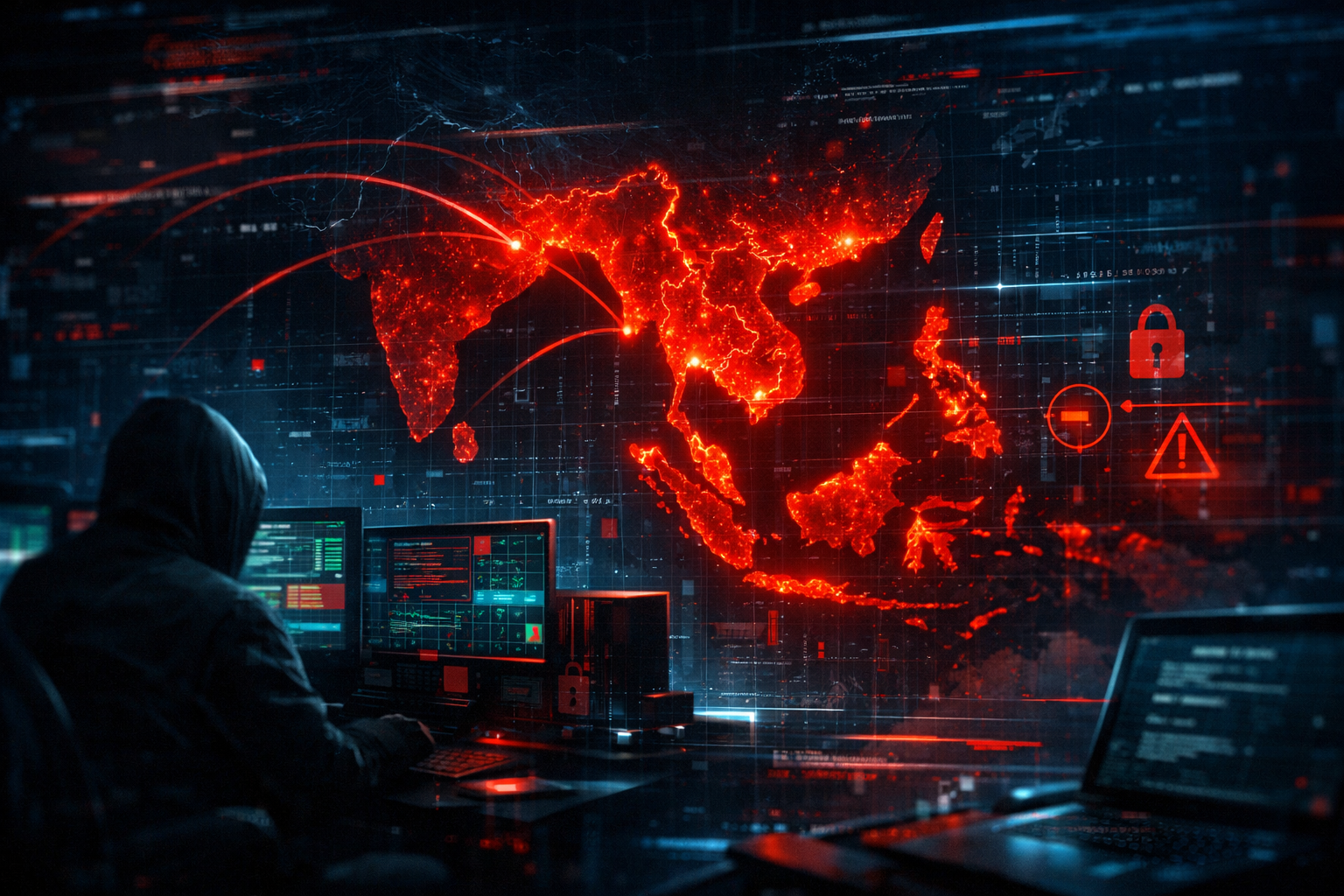
The latest reporting indicates that SideWinder has widened its focus across Southeast Asia, targeting governments, telecommunications providers, and critical infrastructure organizations through carefully crafted spear-phishing campaigns, exploitation of older software flaws, and fast-changing command-and-control infrastructure [Dark Reading]. That target mix matters. Government networks hold diplomatic and policy intelligence, telecom firms can expose communication patterns and metadata, and infrastructure operators offer insight into nationally significant systems.
What makes SideWinder notable is not flashy malware or a steady stream of zero-day exploits. Instead, the group has built a reputation for getting results with methods that are cheaper, repeatable, and still highly effective: convincing lures, document-based infection chains, and disciplined operational maintenance [Kaspersky; BlackBerry]. The campaign is a reminder that espionage actors do not need cutting-edge exploits when many targets still leave older attack paths open.
How the campaign works
According to current and historical reporting, SideWinder commonly starts with spear-phishing emails tailored to the recipient’s role or sector. These messages often impersonate official correspondence or reference policy, administrative, or strategic topics likely to interest the target. The goal is to get the victim to open an attachment or follow a link that triggers the next stage of compromise [Dark Reading; Kaspersky].
That next stage has often involved malicious Microsoft Office files or related document formats. Researchers have previously tied SideWinder activity to exploit chains using older Office vulnerabilities such as CVE-2017-11882, CVE-2017-0199, and CVE-2018-0802—bugs that remain useful because many organizations still have unpatched systems, legacy workflows, or weak controls around document handling [Kaspersky; Microsoft]. These flaws can allow code execution when a user opens a crafted file, sometimes without requiring macros in the traditional sense.
From there, SideWinder has been observed deploying malware loaders or backdoors designed to establish persistence and communicate with remote infrastructure. The exact malware families and indicators can vary by campaign, but the operating pattern is consistent: gain an initial foothold, collect information, maintain access, and quietly exfiltrate intelligence of strategic value [Dark Reading; BlackBerry].
One of the group’s most effective tradecraft choices is infrastructure rotation. Researchers say SideWinder frequently changes domains, servers, and supporting network assets, which shortens the useful life of blocklists and complicates incident response [Dark Reading]. Static defenses that rely on known bad IPs or domains often struggle against an actor that can quickly stand up new infrastructure on rented servers or cloud-hosted systems.
This also reduces the cost of burn-and-rebuild operations. If defenders discover one node, the actor can move to another with limited disruption. For blue teams, that means detection has to focus less on a single indicator and more on behavior: unusual document execution chains, suspicious child processes spawned by Office applications, outbound connections to newly registered domains, and credential activity that does not fit the user’s normal profile.
Why old vulnerabilities still work
SideWinder’s continued success with older flaws is one of the most important lessons from this campaign. Security teams often focus on new vulnerabilities because they attract headlines and emergency patching cycles. But publicly known bugs from 2017 and 2018 still appear in active intrusion chains because patching is uneven, especially across large public-sector and infrastructure environments with mixed software estates, legacy dependencies, and limited maintenance windows [Microsoft; CISA].
In practical terms, an espionage actor does not need an expensive exploit if a target still accepts weaponized documents and has outdated Office components sitting on user endpoints. Add a convincing lure and a recipient under time pressure, and the intrusion path becomes cheap and dependable. That is particularly relevant in government and telecom settings, where external document exchange is routine and staff often handle policy papers, notices, and attachments from outside organizations.
The campaign also highlights a basic truth about targeted phishing: technical sophistication and operational effectiveness are not the same thing. A threat actor can use relatively familiar tools and still achieve deep access if it understands the target’s workflows better than the target understands its own exposure.
Impact assessment
The organizations most at risk are government agencies, telecom operators, and critical infrastructure providers in Southeast Asia, along with related sectors such as defense, maritime logistics, energy, and foreign affairs bodies [Dark Reading; Kaspersky]. These are not random victims. They are institutions that hold strategic information about state decision-making, communications, supply chains, and infrastructure operations.
For government entities, the likely impact includes theft of internal correspondence, diplomatic materials, policy drafts, travel records, procurement data, and identity information tied to officials or contractors. For telecom providers, the risk extends to sensitive network diagrams, subscriber-related metadata, lawful intercept systems, roaming arrangements, and credentials that can support broader surveillance or follow-on intrusions. For infrastructure operators, attackers may seek architectural details, vendor relationships, maintenance schedules, and access pathways that support long-term intelligence collection [ENISA; Dark Reading].
Attribution remains described as suspected rather than definitive in public reporting, but the pattern fits a state-aligned espionage mission more than criminal monetization. There is no primary indication that SideWinder’s objective is disruptive sabotage. The more immediate concern is covert collection and persistent access. That said, persistent access to telecom and infrastructure networks can create future leverage in a crisis, even if the current mission is intelligence gathering rather than destructive action.
Severity is therefore high for affected organizations, even without ransomware or public service outages. Espionage intrusions can stay hidden for long periods, undermine sensitive negotiations, expose national planning, and weaken trust in core institutions. For citizens, the impact is indirect but real: compromised ministries and operators can expose personal data, communication records, and the integrity of public administration.
Defensive lessons for Southeast Asia and beyond
There is a broader regional lesson here. Southeast Asia has become a major focus for strategic cyber collection because it sits at the intersection of trade, maritime routes, regional diplomacy, defense relationships, and critical communications infrastructure. Threat groups do not need to breach every target. They only need enough footholds in the right ministries, providers, and operators to build a useful intelligence picture over time.
SideWinder’s methods also show why defenders should not over-index on “advanced” malware signatures while underestimating document-borne threats, stale software, and weak email controls. A campaign using known vulnerabilities can still be highly adaptive if the operator rotates infrastructure quickly and continually tunes its phishing lures to current events and institutional routines.
How to protect yourself
Organizations in at-risk sectors should start with disciplined patching of legacy Microsoft Office and Windows components, especially systems that still expose vulnerabilities such as CVE-2017-11882 and CVE-2017-0199 [Microsoft; CISA]. If patching is delayed by operational constraints, isolate those systems, reduce document-handling privileges, and monitor them more aggressively.
Harden email security controls. Use attachment sandboxing, block or quarantine high-risk file types, disable automatic external content retrieval in Office documents where possible, and flag emails that spoof government or partner domains [CISA; ENISA]. Security teams should also watch for Office applications spawning unusual child processes such as cmd.exe, powershell.exe, or mshta.exe.
Reduce the attack surface on endpoints. Disable unnecessary Office features, restrict macros, enforce application control policies, and limit users’ local admin rights. Endpoint detection rules should look for remote template injection, Equation Editor exploitation patterns, and execution chains involving temporary files or script interpreters.
Because SideWinder rotates infrastructure quickly, network defenders should monitor outbound traffic for newly registered domains, rare destinations, and beaconing patterns rather than relying only on static deny lists. DNS logging, proxy visibility, and TLS inspection where appropriate can help uncover low-volume command-and-control traffic. Sensitive users should use phishing-resistant multifactor authentication and secure remote access, along with strong encryption for data in transit and at rest.
Staff awareness still matters, especially for ministries, telecom operations centers, and executive offices that regularly receive external attachments. Training should focus on realistic spear-phishing cues: context-rich lures, document requests tied to current events, and messages that push urgency or authority. For personnel who travel or work remotely in higher-risk environments, additional privacy protection measures may help reduce exposure on untrusted networks.
Finally, incident response teams should assume that a single malicious document may not be the whole event. If one phishing attempt lands, investigate for credential theft, mailbox access, persistence mechanisms, and lateral movement. In espionage cases, the visible alert is often just the entry point to a much longer operation.