A bold claim on the global stage
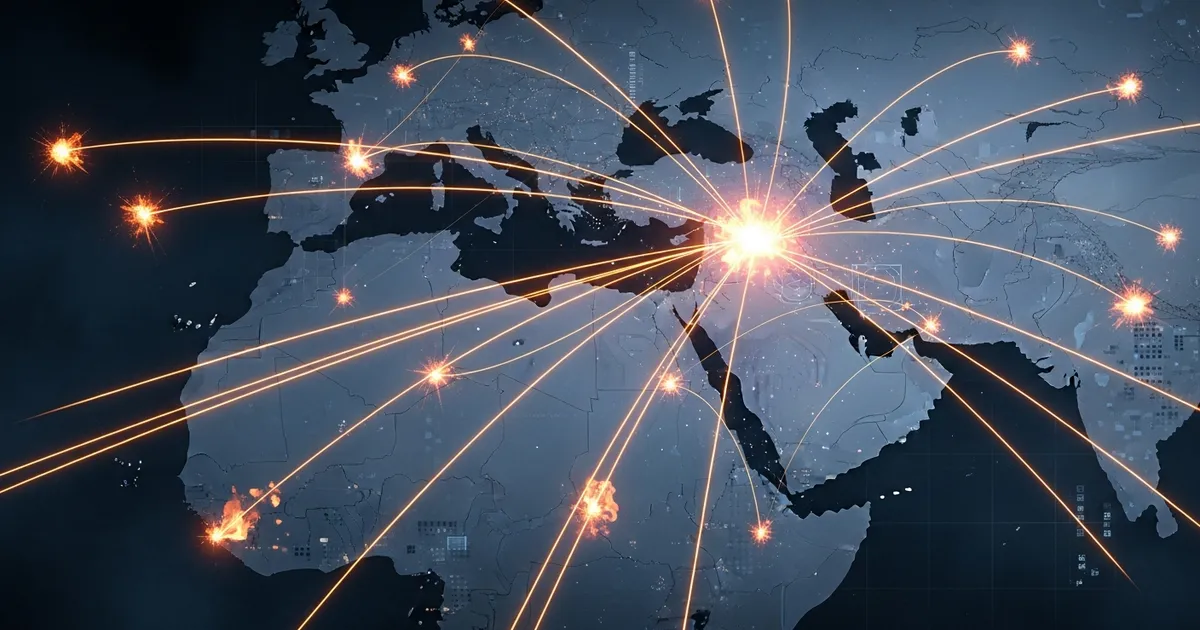
In a statement that blurred the lines between distant battlefields, Ukrainian President Volodymyr Zelenskyy announced that his country’s forces had successfully intercepted Iranian-made Shahed drones “in the skies of the Middle East.” Speaking at the Halifax International Security Forum, Zelenskyy didn't just report a military success; he delivered a calculated strategic message. Ukraine, he implied, is no longer just a recipient of military aid but an exporter of invaluable, battle-hardened security expertise. (1)
The claim, made in early December 2023, was conspicuously light on details—no specific country, date, or operational context was provided. This ambiguity has led analysts to interpret the announcement as much a piece of strategic communication as a military debrief. It serves to frame the fight against Iranian drone proliferation as a global concern, directly linking Russia's war in Ukraine with the security instability simmering across the Middle East. By positioning Ukraine as a key player in countering this threat, Zelenskyy aims to forge stronger alliances and underscore his nation's value to international security partners.
Technical analysis: The hunter and the hunted
The conflict in Ukraine has become a live-fire laboratory for modern warfare, particularly in the domain of unmanned aerial vehicles (UAVs). The primary target in Zelenskyy’s claim, the Iranian Shahed-136 (and its smaller variant, the 131), is not a sophisticated piece of high-tech weaponry. It is a slow, loud, propeller-driven loitering munition—a so-called “suicide drone”—designed for affordability and mass deployment. Its strength lies not in its individual capability but in its ability to be launched in swarms to overwhelm and saturate air defense systems.
Ukraine’s “interceptor know-how” is a direct result of fending off thousands of these attacks. Their strategy is not monolithic but a multi-layered, adaptive defense network that combines different systems for maximum efficiency:
- High-End Systems: Advanced Western surface-to-air missile (SAM) systems like the NASAMS and IRIS-T are highly effective but use expensive missiles. They are typically reserved for protecting critical infrastructure and high-value targets.
- Mobile Fire Groups: A uniquely Ukrainian innovation, these are agile units in pickup trucks equipped with heavy machine guns, small-caliber anti-aircraft cannons (like the German-provided Gepard), and powerful searchlights. They are a cost-effective solution for downing low-flying Shaheds, especially at night.
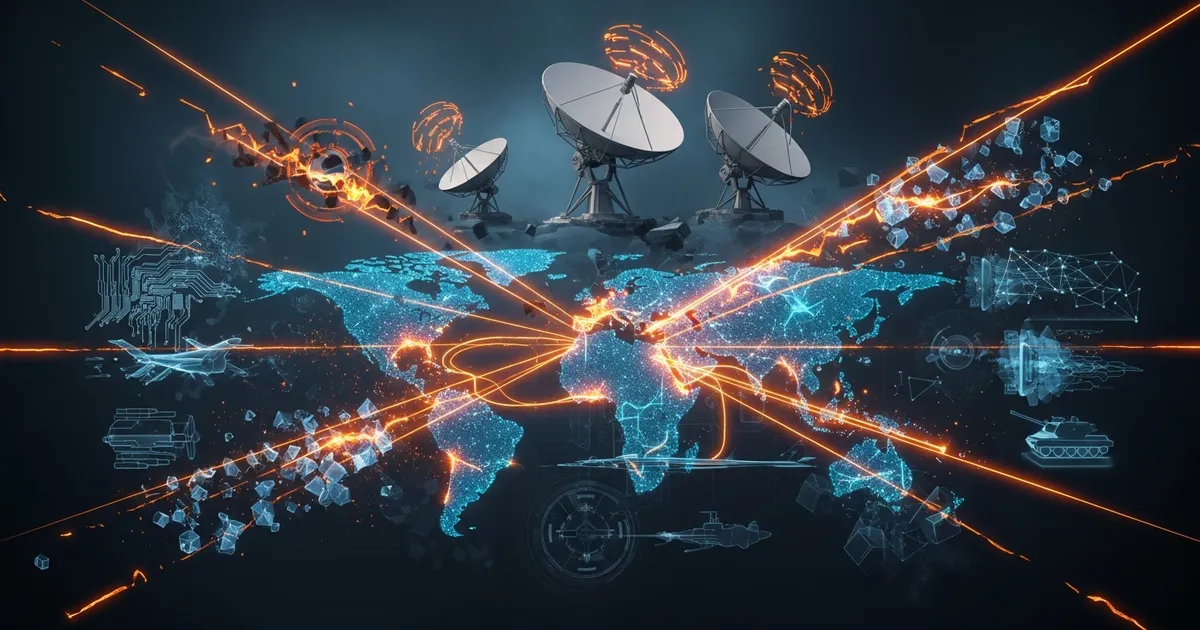
- Electronic Warfare (EW): This is a critical non-kinetic defense. EW systems are used to jam the drones' satellite navigation signals (GPS/GLONASS), causing them to lose their way and crash far from their intended targets. This is a direct intersection of cyber and physical warfare.
- Intelligence and Warning Systems: Ukraine has developed a sophisticated sensor and intelligence network, likely aided by NATO partners, to provide early warnings of incoming drone swarms. This data allows air defense assets to be positioned effectively.
While this incident involves kinetic force, the underlying capabilities are deeply rooted in data and signals intelligence. The ability to detect, track, and jam a Shahed is fundamentally an information problem. Reports from outlets like The Wall Street Journal from as early as October 2023 indicated that Ukraine was already sharing intelligence with Israel on Iranian drone tactics and vulnerabilities, suggesting a foundation for deeper cooperation. (2) This level of international data sharing requires secure, resilient communication channels built on strong encryption to prevent interception by adversaries.
Impact assessment: Ripples across regions
Zelenskyy’s statement, whether fully verifiable or not, creates significant geopolitical and military ripples that extend far beyond a single downed drone.
For Ukraine, the impact is overwhelmingly positive. It elevates the country's status from a nation under siege to a proven security provider. This narrative is powerful for securing ongoing military and financial aid, as it frames support for Ukraine as an investment in global stability. It also opens doors for new defense partnerships with Middle Eastern nations concerned about Iranian aggression.
For Iran, the claim is a direct challenge to the reputation and effectiveness of its burgeoning drone export industry. Iranian drones have become a key tool of its foreign policy, supplied to proxies like the Houthis in Yemen, Hezbollah in Lebanon, and various militias in Iraq and Syria. Evidence that battle-tested Ukrainian methods can neutralize these weapons in a new theater undermines their perceived value and could spur greater international efforts to disrupt Iran's production and supply chains.
For the Middle East, it introduces a new variable into the region's complex security dynamics. An unnamed country benefiting from Ukrainian expertise would signal a willingness to engage non-traditional partners to counter Iran. While no nation has stepped forward to confirm the claim—likely to avoid direct confrontation with Tehran—the possibility alone may encourage regional powers to reassess their counter-drone strategies and seek out proven tactics.
How to protect yourself
While individuals are not the direct targets of nation-state drone warfare, the principles derived from Ukraine's success offer valuable lessons for organizations and governments operating in a world of proliferating asymmetric threats.
For National Security Organizations:
The primary lesson is the power of adaptive, multi-layered defense. Over-reliance on a single, high-cost solution is a recipe for failure against low-cost, massed threats. The Ukrainian model demonstrates the need to integrate sophisticated air defense, cost-effective kinetic interceptors, and robust electronic warfare capabilities. Furthermore, fostering a culture of rapid innovation and establishing coalitions for real-time threat intelligence sharing are paramount. An adversary's tactics are constantly evolving, and defensive postures must evolve faster.
For Corporations and Individuals:
The broader takeaway is about understanding the convergence of physical and digital threats. Geopolitical conflicts that seem distant can have direct cyber consequences, from state-sponsored phishing campaigns to disruptive attacks on critical infrastructure. Maintaining situational awareness of global events is no longer optional. On a practical level, protecting your digital footprint from state-sponsored surveillance and data collection is essential. Employing tools that enhance digital privacy, such as a reputable VPN service, can help shield personal and professional communications from prying eyes in a tense global environment.
Ultimately, Zelenskyy's claim is a testament to the fact that in modern conflict, experience is one of the most valuable assets a nation can possess. By offering to share this hard-won knowledge, Ukraine is attempting to turn its greatest struggle into its most potent diplomatic tool.