Background and context
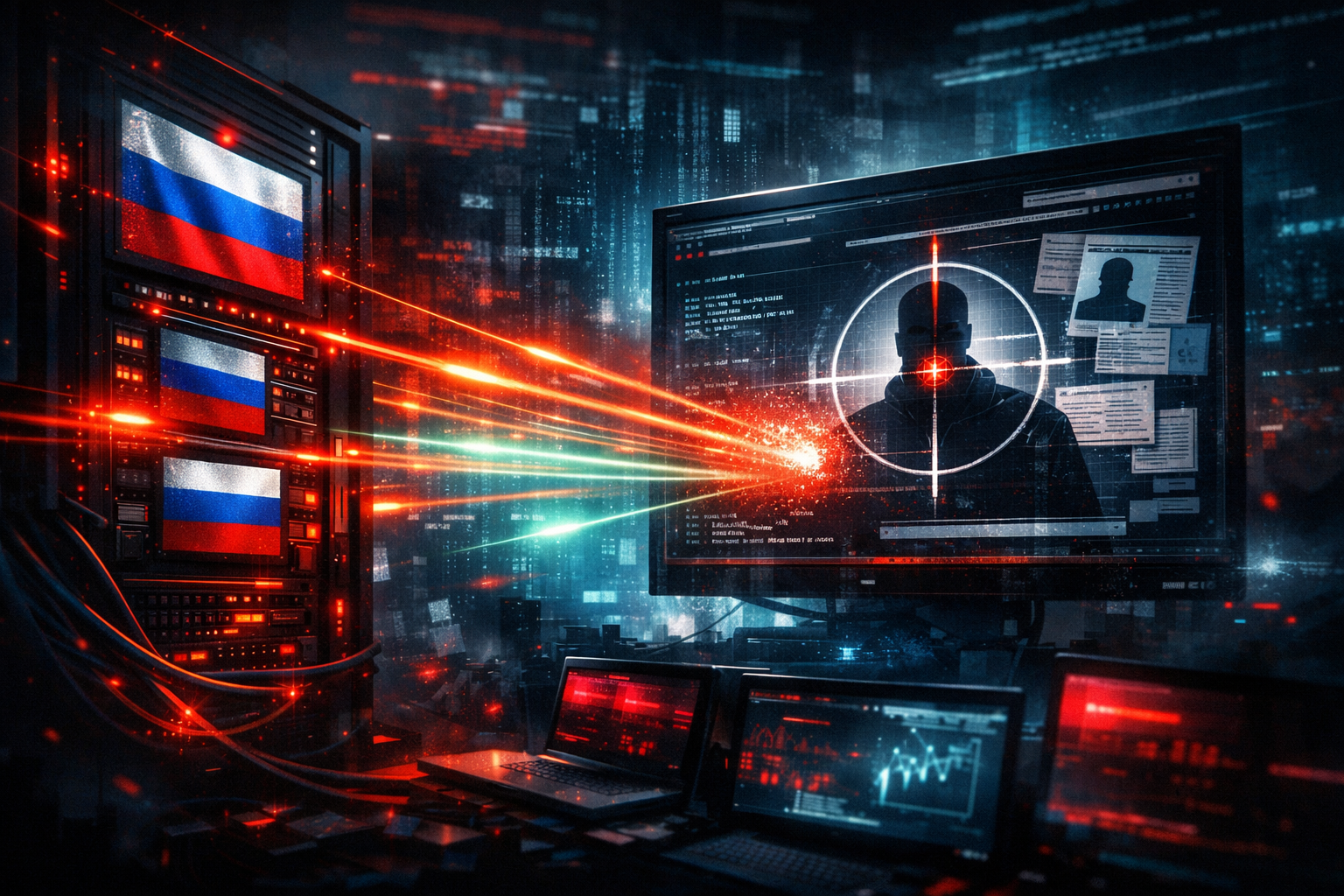
A website linked to the publication of personal information about U.S. Immigration and Customs Enforcement personnel has reportedly been knocked offline or degraded by distributed denial-of-service attacks, with observed traffic routed through Russian servers, according to Infosecurity Magazine reporting. The incident follows a wider controversy involving Department of Homeland Security-related data and the appearance of a site used to expose ICE personnel.
That sequence matters. This is not a single event but a chain: first, a breach or leak involving sensitive government-related information; then the publication of personal details in a doxxing context; then retaliatory disruption aimed at the site hosting or indexing that information. Each stage raises a different security question. The breach concerns data protection and access control. The doxxing raises privacy, harassment, and physical safety risks. The DDoS phase shows how quickly politically charged incidents can spill into open infrastructure conflict.
Doxxing campaigns against public officials and law-enforcement personnel have long been treated as more than a reputational problem. When names, home addresses, phone numbers, relatives, or location details are published, the risk extends beyond online abuse to stalking, intimidation, and operational compromise. The U.S. Cybersecurity and Infrastructure Security Agency has separately warned that doxxing can expose victims to harassment, identity fraud, and threats to personal safety CISA.
The DDoS component, by contrast, is less about stealing data and more about denying access. In some cases, that can be framed as retaliation against a harmful site. In others, it can serve to erase visibility, destroy evidence access, or simply intensify a campaign of harassment from another direction. Either way, it demonstrates how cyber tactics are being used to shape public narratives around leaked data.
What we know about the attack
Based on the available reporting, the affected site was subjected to a distributed denial-of-service attack rather than a fresh intrusion exploiting a software flaw. No public evidence has tied the incident to a specific CVE or newly disclosed vulnerability. That distinction is important: a DDoS attack aims to overwhelm a service with enough requests or traffic to make it inaccessible, not necessarily to break into it.
There are several plausible ways such an attack could have been carried out. A volumetric attack would flood the target with raw bandwidth, often using a botnet of compromised devices. An application-layer or Layer 7 HTTP flood would instead mimic legitimate web requests at a scale that exhausts server resources. Reflection or amplification techniques could also be involved, where attackers abuse misconfigured internet services such as DNS, NTP, or CLDAP to multiply traffic directed at the victim. Cloudflare’s DDoS threat reporting and technical explainers describe these patterns as common across modern campaigns Cloudflare.
At this stage, however, there are major attribution caveats. “Via Russian servers” does not mean the operators were Russian. It may only indicate that traffic was observed coming from infrastructure hosted in Russia, routed through Russian virtual private servers, or relayed through compromised systems located there. Security teams routinely warn against equating server geography with actor identity. The U.S. National Security Agency and CISA have both emphasized in broader guidance that infrastructure-based attribution on its own is weak and easily manipulated CISA advisories.
That is especially true in DDoS cases. DDoS-for-hire services, rented VPS nodes, open proxies, and botnets built from infected consumer devices all make it easy to obscure origin. Attackers often choose infrastructure in foreign jurisdictions specifically because it complicates takedown efforts and public interpretation.
Technical details in plain terms
For informed readers, the technical picture likely looks like this: the target site received enough malicious or semi-malicious traffic to overwhelm its upstream bandwidth, web server capacity, or reverse proxy. If the traffic was high-volume and geographically distributed, it may have come from a botnet or a rented stresser service. If requests were tailored to expensive endpoints, search functions, or dynamic pages, the attack may have been designed to maximize server-side workload with relatively modest bandwidth.
Absent packet captures, ASN data, or log excerpts, there are no public indicators of compromise to validate exact methods. Useful telemetry would include source IP concentrations, request headers, repeated user-agent strings, spikes in SYN packets or HTTP GETs, and whether the attack targeted static content or backend-intensive pages. If reflection was involved, investigators would also look for abnormal DNS or NTP response patterns directed at the target.
One underappreciated point is that DDoS can be used as both a blunt instrument and a distraction. Security researchers often note that outage-causing attacks can coincide with attempts to move, mirror, or suppress controversial content. In a case like this, the attack may have been intended to silence publication, retaliate against the site operator, or complicate preservation of evidence and public scrutiny.
Defenders facing this sort of activity usually turn to upstream scrubbing, anycast distribution, rate limiting, web application firewall rules, and content delivery network protections. For organizations handling sensitive material or facing harassment threats, adding DDoS mitigation and traffic filtering before a crisis starts is often the difference between a short disruption and a prolonged outage. Using strong privacy protection practices for administrators can also reduce exposure if site operators themselves become targets.
Impact assessment
The direct victim of the DDoS is the doxxing-linked website itself, which may have suffered downtime, degraded performance, or increased hosting costs. But the broader impact is more complicated because the site reportedly contained personal information about ICE personnel. If the attack interrupted access to that data, some observers may view the outage as a form of countermeasure. That does not make the tactic lawful, safe, or strategically harmless.
The most serious harm still centers on the exposed individuals. ICE personnel and potentially their family members face privacy and safety concerns if identifying data remains online or has already been copied elsewhere. Doxxing content rarely disappears when one site goes down; mirrors, screenshots, reposts, and data-sharing channels can preserve it indefinitely. That means a successful DDoS against the original host may have limited effect on the underlying exposure problem.
DHS and ICE also face institutional consequences. Incidents like this raise questions about data minimization, employee privacy protections, and how government systems classify and store personally identifiable information. If the original breach involved sensitive personnel data, even indirectly, agencies may need to review segmentation, access logging, insider-risk controls, and downstream sharing practices.
For the wider public, the severity is moderate from a service-availability perspective but high from a precedent perspective. Politically charged breach stories increasingly follow a familiar arc: data exposure, public naming and shaming, retaliatory cyberattacks, and claims of foreign infrastructure involvement. That pattern normalizes cyber harassment as a tool of political conflict.
Why the Russian server detail matters — and why it may mislead
The Russian-server angle is likely to attract the most attention, but it should be handled carefully. Russian hosting has appeared in many cybercrime investigations, including botnet operations, bulletproof hosting, and proxy infrastructure. That makes it relevant context, not proof. Attack traffic routed through Russia could reflect criminal hosting options, compromised systems in that region, or deliberate false-flagging.
In practical terms, defenders should focus less on nationality and more on capability: what traffic patterns were observed, how resilient the mitigation was, whether the attack evolved over time, and whether it was paired with other malicious activity. Overstating attribution too early can distort response priorities and public understanding.
How to protect yourself
For agencies, operators, and individuals affected by breach-linked doxxing incidents, the most useful steps are defensive and immediate:
Reduce exposed personal data. Audit what employee information is publicly reachable through websites, PDFs, procurement records, social media, and data broker listings. Remove or redact unnecessary details where legally possible. CISA recommends limiting publication of personal identifiers and monitoring for unauthorized disclosures CISA.
Prepare for DDoS before an incident. Public-facing sites that may attract activist, retaliatory, or politically motivated attention should use CDN-based DDoS protection, upstream scrubbing, rate limits, autoscaling where available, and tested failover procedures. Logging should be retained long enough to support forensic review.
Separate sensitive systems from public infrastructure. A public web portal should not share unnecessary dependencies with internal identity systems, HR databases, or investigative platforms. Network segmentation limits the damage if attackers shift from disruption to intrusion.
Harden administrator accounts. Enforce phishing-resistant MFA, rotate credentials, restrict admin interfaces by IP or identity-aware proxy, and monitor for credential stuffing or password reuse. Doxxing campaigns often spill over into direct targeting of staff.
Monitor for reposted data. If personal information has been exposed once, assume it may reappear. Track paste sites, mirror domains, forums, and social channels for copies. Legal takedown requests and platform reporting can help, though they rarely solve the problem alone.
Protect personal communications. Individuals at elevated risk should review social media exposure, remove public location details, and use secure messaging and strong device settings. For those concerned about network privacy on public connections, a trusted VPN service can reduce routine exposure, though it is not a fix for doxxing already in circulation.
Coordinate physical and digital safety. Where law-enforcement or public-official data has been exposed, agencies should consider threat briefings, home-address removal efforts, family awareness guidance, and escalation channels for credible threats.
Bottom line
The reported DDoS against the ICE doxxing-linked site is best understood as the latest move in a broader escalation cycle, not an isolated outage. The underlying danger remains the exposure of personal information tied to government personnel. The DDoS adds another layer: disruption, retaliation, and a reminder that once sensitive data enters a political conflict, technical attacks often follow. The routing of traffic through Russian servers is notable, but not definitive attribution. What matters most is that this case shows how a breach can cascade into harassment, infrastructure attacks, and long-term safety concerns for the people whose data is caught in the middle.