Background and context
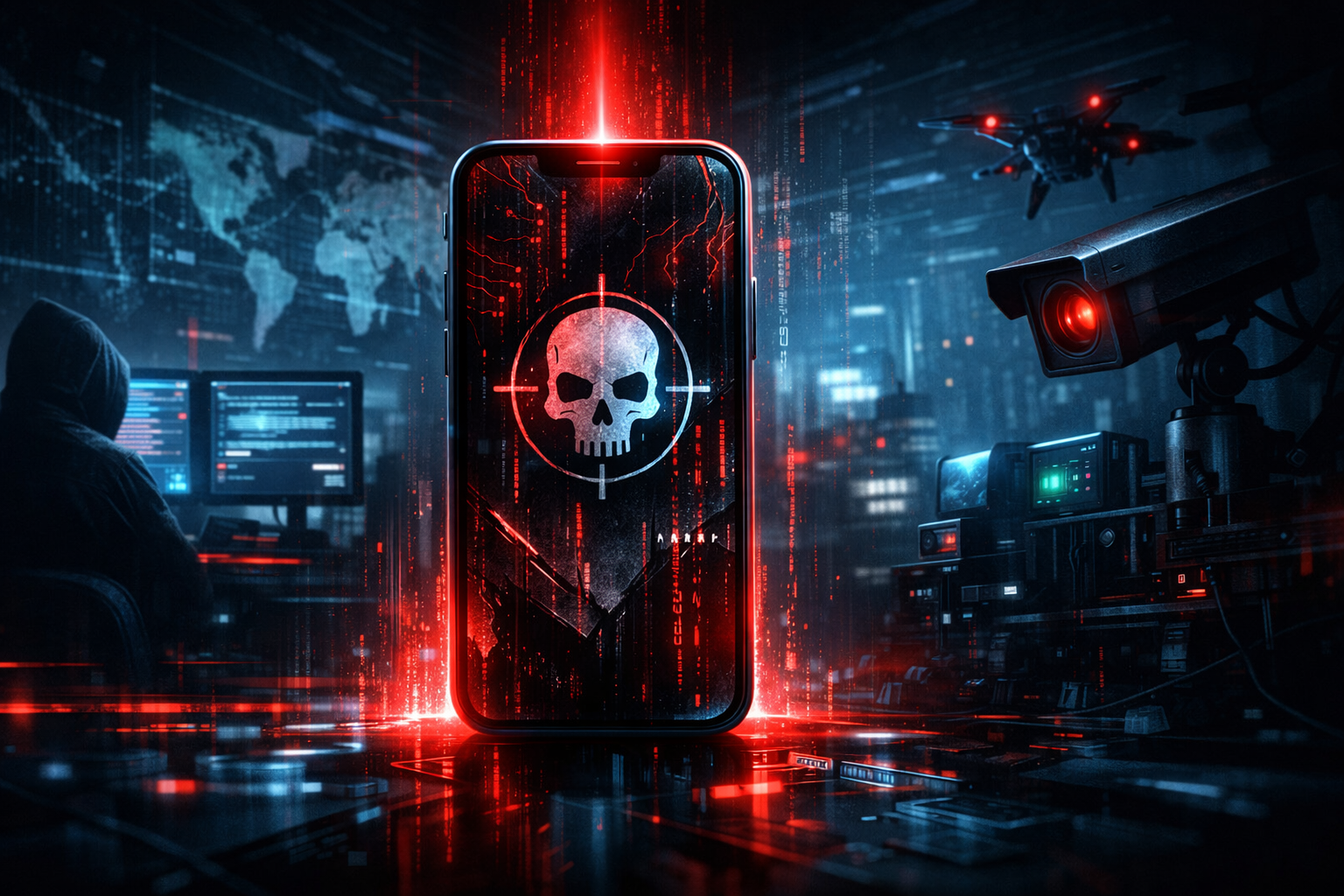
SecurityWeek reports that a previously undocumented iOS exploit kit called DarkSword is being used by state-sponsored hackers and spyware vendors to compromise Apple devices for surveillance purposes, chaining six iOS vulnerabilities to achieve full device compromise [SecurityWeek]. While public details remain limited, the claim is significant because it places DarkSword within the same commercialized surveillance ecosystem that has shaped major investigations into Pegasus, mercenary spyware, and exploit brokerage over the last several years [Citizen Lab; Google TAG; Apple Threat Notifications].
This matters because modern iPhone exploitation is no longer best understood as the work of a single elite intelligence service hoarding rare zero-days. Public reporting and technical investigations have shown a more distributed market: exploit developers, spyware vendors, infrastructure operators, and government customers all play roles in a supply chain for mobile intrusion [Google TAG; Citizen Lab]. If DarkSword is indeed being reused by both government-linked operators and commercial spyware firms, that would suggest not just a one-off offensive tool, but a reusable platform for targeted surveillance.
Apple has spent years hardening iOS with stronger sandboxing, memory protections, code-signing enforcement, Lockdown Mode, and rapid security responses [Apple Platform Security; Apple Lockdown Mode]. Yet repeated disclosures from Apple, Citizen Lab, Amnesty International, and Google show that high-end attackers still find paths to compromise, especially when they can chain multiple bugs together and tailor operations against a small set of high-value targets [Amnesty International; Citizen Lab; Google TAG].
What DarkSword appears to do
According to SecurityWeek, DarkSword chains six vulnerabilities and leads to full compromise of an iPhone [SecurityWeek]. The article summary does not publicly identify the vulnerabilities by CVE, and that limitation is important. Without CVEs, exploit traces, or a vendor write-up, outside analysts cannot independently assess whether the chain relies on zero-days, n-days, or a mix of both. Still, the description is consistent with how advanced iOS exploit chains have worked in past spyware cases.
In practical terms, a six-bug chain usually means attackers are solving several separate problems in sequence. An initial bug may provide code execution through a browser, messaging component, or media parser. A second stage might escape the app sandbox. Another vulnerability could elevate privileges toward kernel-level control. Additional flaws may bypass code-signing checks, disable security controls, or improve reliability across iOS versions [Apple Platform Security; Amnesty International].
That is why “full device compromise” is such a consequential phrase. On iOS, meaningful surveillance generally requires more than a single app-level foothold. Attackers want access to messages, call metadata, photos, microphone and camera functions, location data, tokens that unlock cloud-connected services, and the ability to monitor activity with minimal user-visible signs. A complete chain can turn a phone into a portable intelligence sensor [Citizen Lab; Amnesty International].
The public summary does not say whether DarkSword is zero-click or requires user interaction. That distinction affects risk modeling. Zero-click chains, often delivered through messaging or content parsing, are especially dangerous because victims may never tap a link or open a file. Click-based delivery is less potent operationally, but still highly effective against carefully selected targets using themed lures or malicious web content [Citizen Lab; Google TAG].
Why the commercial angle is so important
The most revealing part of the report may be the claim that DarkSword is used by both state-sponsored actors and spyware vendors [SecurityWeek]. That points to a market structure rather than a single campaign. Google’s Threat Analysis Group has repeatedly described a commercial surveillance sector in which vendors develop or acquire exploit chains and then provide them to government customers, directly or indirectly [Google TAG]. Citizen Lab has documented similar patterns through infrastructure analysis, victim notifications, and forensic investigations [Citizen Lab].
This model changes the threat picture. Instead of one government needing its own research team for every mobile exploit, a vendor can package access as a service. That lowers the barrier for states that want advanced surveillance without building a mature offensive cyber program from scratch. It also means a successful exploit chain can spread operationally across multiple customers, regions, and campaigns.
For Apple users, that creates a hard reality: the strongest attacks are often not aimed at the general public, but at a narrow target set where the payoff is political or strategic. Apple itself has said its mercenary spyware notifications concern attacks that are exceptionally sophisticated, costly, and directed at specific individuals because of who they are or what they do [Apple Threat Notifications].
Technical assessment and likely attack path
Because the DarkSword reporting is still sparse, any technical assessment must be framed carefully. Based on prior iOS surveillance cases, a likely chain would include some combination of the following stages:
Initial access: exploitation through Safari/WebKit, iMessage, attachment parsing, images, fonts, PDFs, or another content-handling surface. WebKit and message parsing have repeatedly appeared in Apple security updates and spyware investigations [Apple Security Releases; Citizen Lab].
Sandbox escape: iOS relies heavily on app isolation. To move from one compromised process into broader system access, attackers usually need a sandbox bypass or logic flaw in interprocess communication [Apple Platform Security].
Privilege escalation: kernel vulnerabilities remain central to many advanced chains because they enable broad control over the device, inspection of protected data, and suppression of normal restrictions [Amnesty International; Apple Security Releases].
Defense bypass: surveillance tooling may need to work around code-signing, pointer authentication-related mitigations, or other integrity checks. Even when persistence is limited, a chain can still provide extensive short-term access for data collection and exfiltration [Apple Platform Security].
Payload delivery: once the chain succeeds, operators can deploy spyware modules or execute commands to collect messages, photos, credentials, and sensor data. In some cases, spyware is designed to be ephemeral and leave fewer forensic traces [Citizen Lab; Amnesty International].
That last point is central to incident response. Many iPhone compromises do not look like traditional malware infections on desktop systems. Victims may see no pop-ups, no battery warning tied directly to the intrusion, and no obvious rogue app. The absence of visible symptoms does not mean the absence of compromise.
Impact assessment
The likely direct targets are not random consumers, but people whose devices can yield intelligence value: journalists, dissidents, activists, opposition figures, diplomats, government officials, executives, lawyers, and civil society workers [Citizen Lab; Apple Threat Notifications]. For those groups, the severity is extreme. A full iPhone compromise can expose communications, movement, meetings, source networks, and personal relationships. For a journalist, that can burn confidential sources. For a diplomat, it can expose negotiation strategy. For an activist, it can create physical danger.
For enterprises and government agencies, the risk is also substantial. Senior staff often use iPhones to access email, collaboration platforms, cloud documents, and multifactor authentication prompts. A compromised device can become a bridge into broader organizational systems, even if the original operation is framed as personal surveillance.
For average users, the immediate risk is lower than in mass malware campaigns. DarkSword, as described, appears to be a high-cost targeted capability rather than broad criminal tooling [SecurityWeek; Apple Threat Notifications]. But the existence of such kits still matters to everyone because techniques pioneered in elite surveillance operations can later influence criminal tradecraft, and patched vulnerabilities often reveal classes of weakness that defenders need to understand.
Users concerned about monitoring may also look to stronger network privacy and encrypted traffic hygiene; in some cases, a reputable VPN service can reduce exposure on untrusted networks, though it will not stop a device-level zero-day exploit.
How to protect yourself
Update iPhones and iPads immediately. Apple security releases frequently patch exploited flaws in WebKit, the kernel, and core services. Install iOS updates as soon as practical, and enable automatic updates where possible [Apple Security Releases].
Turn on Lockdown Mode if you are at elevated risk. Apple introduced Lockdown Mode specifically to reduce the attack surface available to mercenary spyware by restricting certain message attachments, web technologies, and inbound invitations [Apple Lockdown Mode]. It is not necessary for every user, but for journalists, activists, and officials, it is one of the most meaningful hardening steps available.
Take Apple threat notifications seriously. If Apple warns that you may have been targeted by mercenary spyware, do not dismiss it as spam. Follow Apple’s guidance, preserve the device, and seek specialized forensic help [Apple Threat Notifications].
Separate high-risk work from everyday use. If your role makes you a likely surveillance target, consider using dedicated devices for sensitive communications, reducing the number of apps installed, and limiting exposure to unknown links, files, and invitations. Device minimization reduces attack surface.
Use secure communications, but understand the limits. End-to-end encrypted apps help protect data in transit, and strong device passcodes matter. Privacy tools such as hide.me VPN may also improve network privacy in some situations. But if an attacker fully compromises the phone itself, they can often access data before or after encryption is applied.
Watch for forensic support options. Groups such as Amnesty International’s Security Lab and Citizen Lab have helped investigate suspected spyware cases, and organizations with high-risk staff should establish response procedures before an incident occurs [Amnesty International; Citizen Lab].
Harden account security around the phone. Review Apple ID security, remove unknown devices from your account, use a long alphanumeric passcode, enable strong multifactor protections, and audit which apps have access to sensitive data and permissions.
The bigger picture
DarkSword, if further confirmed with technical details, would be another sign that iPhone exploitation has become a serviceable product inside a surveillance economy. The headline issue is not just six vulnerabilities chained together. It is the apparent reuse of that capability across state-linked operators and commercial spyware vendors [SecurityWeek; Google TAG]. That suggests a mature market where intrusion expertise can be packaged, sold, and redeployed against people whose phones contain political, diplomatic, or strategic value.
Apple has made iOS harder to break into than it was years ago, but the DarkSword report underlines a difficult truth: hardening raises attacker costs, yet it does not eliminate the incentives that drive the spyware trade. As long as governments and contractors are willing to pay for covert mobile access, iPhones will remain among the most valuable targets in offensive cyber operations.