Background and context
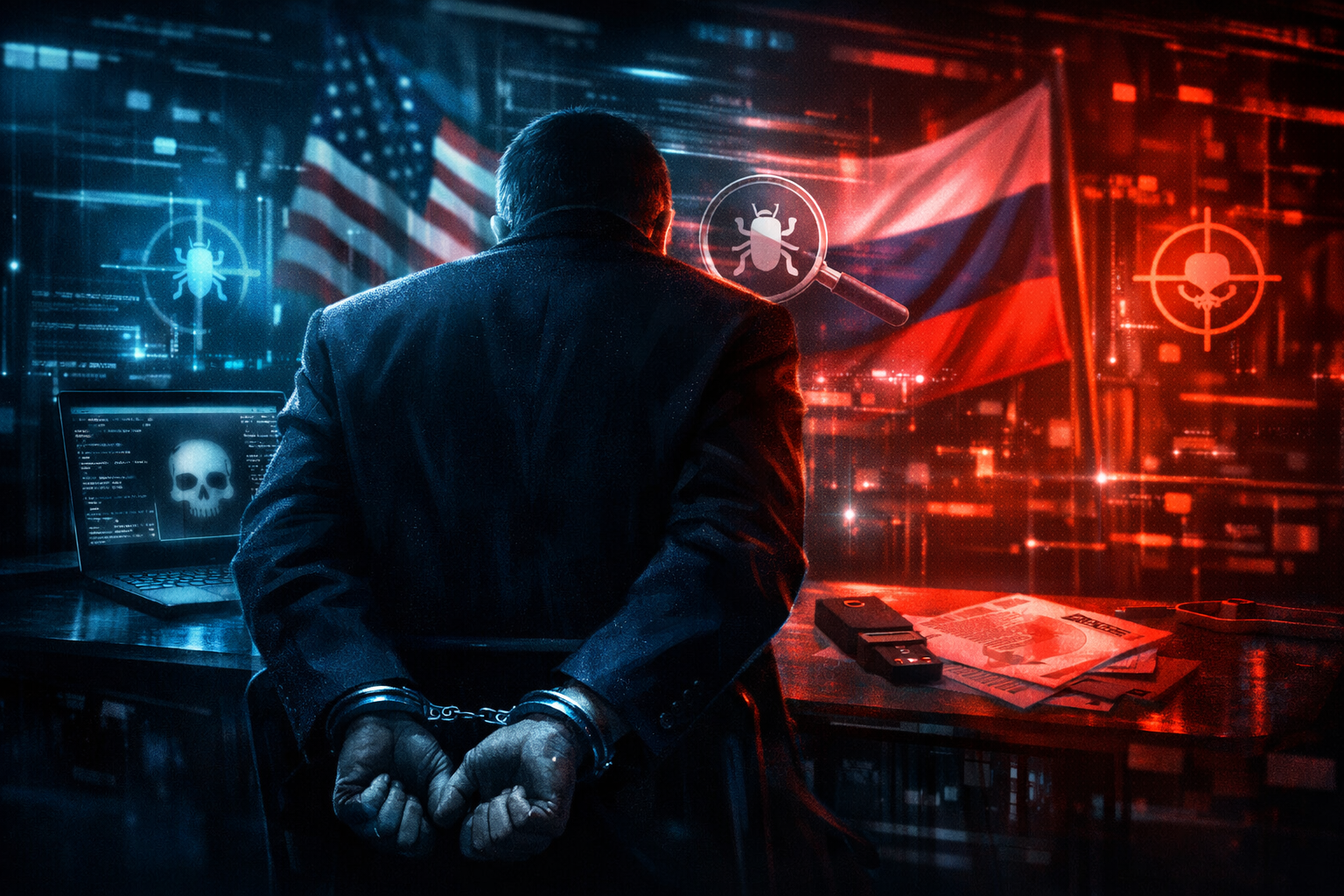
A former general manager at L3Harris Trenchant, a cyber-intelligence and vulnerability research unit within L3Harris Technologies, has been sentenced to seven years and four months in federal prison after admitting he stole and sold zero-day exploits to a Russian broker, according to the U.S. Department of Justice. Prosecutors said Peter Williams took eight zero-day exploits and transferred them out of a trusted defense-contractor environment, where they were later sold onward to a Russian buyer DOJ. Reuters reported that Williams pleaded guilty before sentencing in Washington, D.C., making the case one of the clearest recent examples of insider theft involving offensive cyber capabilities rather than conventional trade secrets alone Reuters.
The story matters well beyond one defendant. Defense contractors occupy a sensitive position in the U.S. cyber ecosystem: they often build, test, and maintain exploit research, tooling, and vulnerability intelligence for government customers. When that work is diverted to a foreign broker, the damage is not limited to intellectual property loss. It can affect intelligence operations, expose unpatched software flaws to hostile actors, and reduce any temporary advantage the original discoverer had over a target set.
Infosecurity Magazine highlighted the sentence as part of a broader trend toward tougher treatment of cyber cases with national-security implications, especially where insider access is involved Infosecurity Magazine. That framing fits the facts here: this was not an outside intrusion, ransomware attack, or phishing campaign. It was misuse of legitimate access by a senior insider entrusted with highly sensitive research.
What was stolen, technically speaking?
A zero-day vulnerability is a software flaw unknown to the vendor or not yet patched, leaving defenders with no warning window once the bug is discovered by an attacker. In this case, public documents describe the stolen material as zero-day exploits, not just bug reports. That distinction matters. An exploit usually means working code, a method, or a chain that can reliably trigger the vulnerability and gain some form of unauthorized access, code execution, privilege escalation, or persistence.
Neither the DOJ nor mainstream reporting has publicly identified the affected products, CVE numbers, or exploit chains involved DOJ. That is common in cases touching active investigations or intelligence equities. Disclosing the technical details could reveal whether the vulnerabilities were still usable, whether vendors had patched them, or whether the exploits had already been deployed in the wild.
Still, the broad contours are clear. Williams allegedly had privileged access to proprietary exploit research through his role at Trenchant. Instead of an external attacker breaching the contractor’s network, the “attack path” was insider exfiltration: access, copying, transfer, and sale. From a defender’s point of view, that is one of the hardest classes of incidents to stop because the user may appear authorized at each step. Traditional perimeter defenses are less useful when the person taking the data already has credentials, knows internal processes, and understands what is valuable.
This also suggests the stolen material may have included more than a standalone proof-of-concept. In exploit-development environments, useful artifacts can include vulnerability notes, exploit reliability tweaks, target-specific payload logic, chaining guidance, debugging output, and operational caveats. Even if a buyer receives incomplete material, a capable broker or state-linked customer can often weaponize it further.
Why the Russian broker connection raises the stakes
The DOJ said the exploits were sold to a Russian broker and then resold to a Russian customer DOJ. Public reporting has not consistently identified the intermediary or end customer, but the chain itself is significant. The global market for zero-days already operates in a murky space where government buyers, private brokers, and offensive security vendors overlap. Once an exploit leaves its original owner and enters a brokered market, control over its eventual use drops sharply.
That is where the case shifts from corporate theft to a counterintelligence problem. A zero-day sold to a hostile or sanctioned ecosystem can be used for espionage, network intrusion, surveillance, or pre-positioning inside critical systems. If the vulnerabilities were current and unpatched at the time of transfer, the buyer may have gained a period of exclusive access against selected targets. Even after a flaw becomes known or patched, the research can remain valuable for understanding a product family, developing variant exploits, or identifying adjacent weaknesses.
The case also underscores how exploit markets reward provenance less than capability. Buyers want reliability, stealth, and exclusivity. That creates incentives for insiders with access to high-value research to monetize it quietly. In environments handling sensitive cyber tooling, the risk is not just theft by an employee under financial stress or ideological grievance, but deliberate resale into foreign offensive ecosystems.
Impact assessment
Direct victim: L3Harris and its Trenchant unit appear to have been the immediate victim of the theft. The company lost proprietary exploit research developed in a sensitive defense context Reuters.
National-security impact: The broader victim set may include U.S. government customers and intelligence programs that relied on the secrecy or controlled handling of those exploits. Zero-days derive value from scarcity. Once sold abroad, that value can flip into risk for the original holder and any targets exposed by the same flaws.
Potential downstream targets: Because the affected products have not been named, it is impossible to identify likely operational victims. But if the exploits were suitable for common enterprise or consumer software, the pool of exposure could be large. If they targeted niche systems used by governments or contractors, the impact could be narrower but strategically more serious.
Severity: From a policy perspective, this is a high-severity incident even without public indicators of compromise. The theft involved weaponizable cyber capabilities, a trusted insider in a senior role, and a foreign resale path tied to Russia. That combination puts the case closer to the theft of strategic capability than to ordinary source-code misappropriation.
Industry-wide implications: Defense contractors, vulnerability research shops, and firms handling advanced offensive security work should expect renewed scrutiny around compartmentalization, logging, need-to-know access, and insider-risk controls. The sentence signals that prosecutors are prepared to treat exploit theft as a serious national-security offense, not merely an employment dispute or IP case DOJ.
What this says about insider threat defenses
Many organizations focus heavily on stopping external attackers while underestimating the danger posed by authorized users. In exploit-development environments, that is a costly blind spot. The people with the most legitimate access are often the same people best positioned to identify, package, and sell sensitive material.
Stopping that kind of abuse usually requires a blend of controls rather than a single tool. Examples include tight role-based access, segmented repositories, mandatory approvals for export or transfer of exploit artifacts, immutable audit logs, behavioral analytics for unusual copying activity, and data-loss prevention tuned for code and research files. Encryption of sensitive repositories and transfer channels can help protect data at rest and in transit, though it does not solve the problem of an authorized user deciding to steal what they can already read. For organizations handling especially sensitive cyber research, layered access control matters more than perimeter hardening alone.
There is also a human factor. Seniority can reduce scrutiny. A general manager or technical lead may face fewer friction points than a junior analyst because colleagues assume trustworthiness. Cases like this show why insider-risk programs must apply to executives and high-performing specialists as much as to everyone else.
How to protect yourself
For most readers, this case is a reminder that zero-day trading and insider theft can eventually affect ordinary organizations and users, even when the original crime happened inside a defense contractor. If stolen exploits enter hostile hands, they may later be used against businesses, agencies, or individuals running vulnerable software.
Patch quickly and consistently. Zero-days are dangerous because there is no patch at first, but many eventually become known and fixed. Fast patch cycles reduce the window in which a stolen exploit remains useful.
Prioritize internet-facing systems. Remote access gateways, VPN concentrators, email servers, browsers, and endpoint management tools are frequent high-value targets. Keep them updated first. If you rely on a VPN service, make sure the underlying software and appliance firmware are current.
Use defense in depth. Even if a zero-day exists, multi-factor authentication, network segmentation, least-privilege access, and endpoint detection can limit what an attacker does after initial compromise.
Monitor for unusual internal behavior. For enterprises, insider threat is not only a government problem. Watch for bulk downloads, odd repository access, unusual archive creation, and transfers that do not match an employee’s normal pattern.
Protect sensitive research and code. Organizations handling proprietary security research should isolate high-value projects, enforce approvals for export, and keep strong logging around code access. Additional privacy protection for remote staff should be paired with strict identity controls and reviewable access records.
Have a disclosure and response plan. If you suspect sensitive exploit material or vulnerability research has been stolen, legal, security, and incident-response teams need a playbook for containment, vendor coordination, and possible government notification.
The bigger picture
The sentencing of Peter Williams is notable not because it reveals a new malware family or named exploit chain, but because it exposes a weak point in the cyber-industrial base: trusted insiders with access to high-value offensive research. The case joins a line of incidents showing that the most sensitive cyber capabilities can be lost not only through espionage or external compromise, but through straightforward theft by people already inside the room.
For governments and contractors, the lesson is uncomfortable but clear. Advanced cyber capability is only as secure as the controls governing who can see it, copy it, and move it. For everyone else, the case is a reminder that exploit markets are not abstract policy debates. When zero-days are diverted into hostile hands, the consequences can spread far beyond the original seller and buyer.