Introduction: The War Beyond the Battlefield
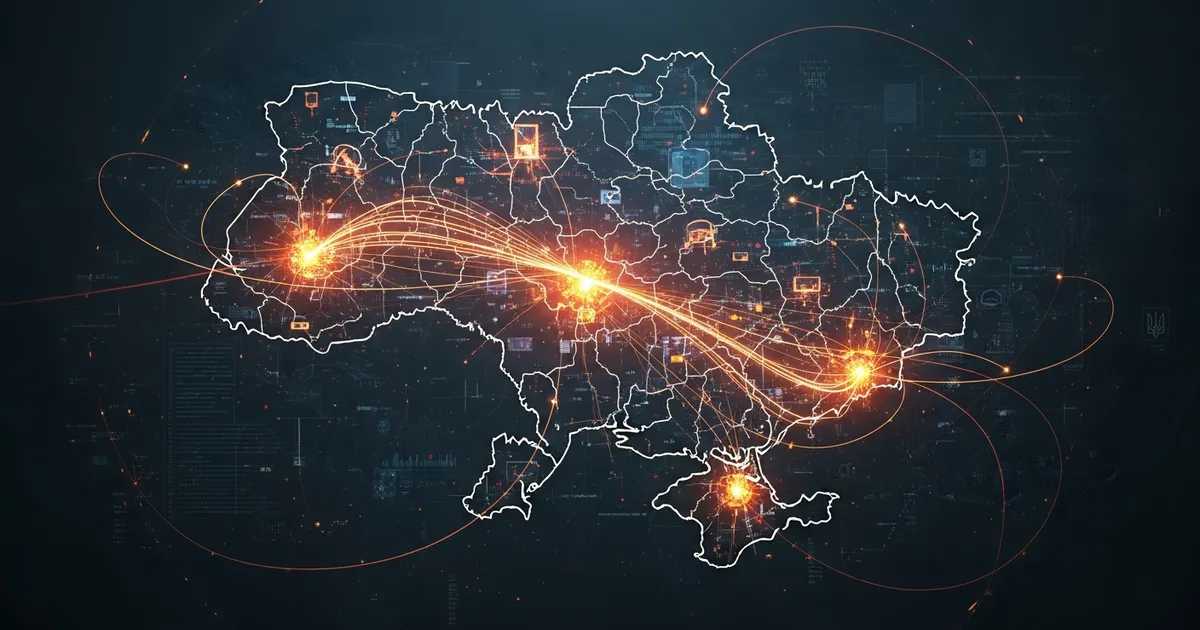
While the world watches the kinetic conflict in Ukraine, a parallel war is being fought across digital networks. This is not a new front; it is an escalation of a years-long campaign. Since Russia's full-scale invasion in February 2022, and for nearly a decade prior, Ukraine has been the epicenter of state-sponsored cyber warfare. This conflict has served as a real-world testbed for the most advanced cyber-physical attack techniques, providing critical lessons for nations and organizations worldwide.
Background: A Decade of Digital Sieges
Russia's cyber aggression against Ukraine did not begin in 2022. It is a well-documented pattern of behavior intended to destabilize the country. In 2015, the world witnessed the first-ever confirmed cyberattack to take down a power grid, when the BlackEnergy malware plunged parts of western Ukraine into darkness. A year later, a more sophisticated attack using the Industroyer malware targeted a transmission station in Kyiv. (Source: Council on Foreign Relations)
The most infamous precursor was the 2017 NotPetya attack. Disguised as ransomware, it was in fact a destructive "wiper" designed to permanently destroy data. Unleashed via a compromised Ukrainian accounting software, it quickly spilled beyond Ukraine's borders, causing an estimated $10 billion in damages globally and crippling multinational corporations like Maersk and Merck. This event demonstrated the indiscriminate and potentially catastrophic nature of state-sponsored cyber weapons.
The Digital Barrage of 2022
In the weeks leading up to the February 24th invasion, Russian military intelligence operators launched a series of preparatory cyberattacks. Malware families like WhisperGate and HermeticWiper were deployed against Ukrainian government and financial institutions. Like NotPetya, their purpose was not financial gain but pure destruction—to erase data, sow chaos, and degrade Ukraine's ability to function and respond. (Source: Microsoft)
Hours before the first tanks crossed the border, one of the most significant cyberattacks of the war took place. A sophisticated attack against Viasat's KA-SAT satellite network disrupted command-and-control communications for the Ukrainian military. The attack had significant spillover effects, knocking out internet access for tens of thousands of civilians across Europe and disabling remote monitoring for thousands of wind turbines in Germany. The malware used, dubbed AcidRain, was designed to wipe the modems and render them inoperable. This was a clear example of a tactical cyber operation directly supporting a kinetic military invasion.
Technical Details of an Unrelenting Campaign
Throughout the conflict, Russian state-sponsored groups—primarily Sandworm (linked to the GRU), APT28 (Fancy Bear), and Gamaredon—have sustained a multi-pronged assault. Their tactics, techniques, and procedures (TTPs) have been varied and persistent.
- Destructive Wiper Malware: Beyond the initial wave, attackers have continued to deploy new wipers like CaddyWiper and IsaacWiper. In a particularly alarming incident, Sandworm attempted to deploy a new version of its grid-killing malware, Industroyer2, against a Ukrainian energy provider. The attack was thwarted by defenders in a remarkable display of resilience. (Source: ESET Research)
- Attacks on Operational Technology (OT): The focus on OT—the systems that control physical industrial processes—is a hallmark of this conflict. Attacks like Industroyer2 are not aimed at stealing data but at causing physical disruption, such as power outages.
- Espionage and Intelligence Gathering: Alongside destructive attacks, espionage campaigns have relentlessly targeted government, military, and humanitarian organizations to gather intelligence and steal sensitive data. Phishing remains a primary initial access vector, often using lures related to the war effort.
- Vulnerability Exploitation: Threat actors have exploited known software vulnerabilities to gain entry. For instance, CVE-2022-30190, known as "Follina," a flaw in a Microsoft utility, was leveraged in phishing campaigns to execute malicious code.
- Information Operations: Cyberattacks are frequently synchronized with disinformation campaigns designed to erode public trust, spread propaganda, and create psychological pressure on the Ukrainian population.
Impact and International Response
The impact of this cyber war has been immense, affecting nearly every sector of Ukrainian society. Government agencies, energy companies, banks, media outlets, and transportation systems have all been targeted. However, the anticipated "cyber apocalypse" that would cripple Ukraine in the opening days of the war never materialized.
Ukraine's defense has been unexpectedly effective. This resilience is a product of several factors: eight years of experience serving as Russia's primary cyber-target, a hardened and skilled cybersecurity community, and an unprecedented level of international support. Private sector companies like Microsoft, Google's Mandiant, and ESET have provided real-time threat intelligence and direct assistance, helping to identify and neutralize threats before they can execute. Microsoft, for example, noted that it had observed Russian network intrusion efforts on 128 organizations in 42 countries outside Ukraine, demonstrating the global scope of the espionage campaign. (Source: Microsoft Digital Defense Report)
The conflict also saw the rise of decentralized cyber resistance. The volunteer "IT Army of Ukraine," coordinated via the Telegram messaging app, has engaged in offensive operations against Russian targets, primarily through Distributed Denial-of-Service (DDoS) attacks. This, along with the involvement of international hacktivist collectives, has added a complex new layer to modern warfare.
How to Protect Yourself
The TTPs used in the Ukraine conflict are not confined to the warzone; they are used by state-sponsored actors and cybercriminals globally. The lessons learned offer a clear blueprint for improving defensive postures.
For Organizations:
- Assume a Breach Posture: Operate under the assumption that an attacker is already inside or will eventually get in. Focus on detection, rapid response, and network segmentation to limit the blast radius of an attack.
- Prioritize Patch Management: Threat actors consistently exploit old, known vulnerabilities. A rigorous and timely patching program is one of the most effective defenses against common entry vectors.
- Enforce Multi-Factor Authentication (MFA): Stolen credentials are a top method for initial access. Enforcing MFA across all services, especially for remote access and cloud applications, is a foundational security control.
- Secure OT Environments: For critical infrastructure operators, ensuring strict separation and monitoring between IT and OT networks is paramount to prevent digital threats from causing physical damage.
For Individuals:
- Practice Phishing Vigilance: Be highly skeptical of unsolicited emails or messages, especially those creating a sense of urgency or related to topical events like humanitarian aid. Verify sender identities before clicking links or opening attachments.
- Use Strong and Unique Passwords: Combine a password manager with strong, unique passwords for every account. Enable MFA wherever it is offered.
- Enhance Your Digital Privacy: When using untrusted networks, such as public Wi-Fi, a reputable VPN service can encrypt your traffic, protecting your data from eavesdroppers.
Conclusion: The New Doctrine of Hybrid Warfare
The cyber war in Ukraine has provided a definitive look at the role of digital operations in modern, large-scale conflict. It has shown that while cyberattacks alone may not be a war-winning weapon, they are a powerful and integrated component of a hybrid warfare strategy, used to disrupt, demoralize, and support kinetic military objectives. The conflict has also demonstrated the extraordinary power of public-private partnerships in national defense and has accelerated cyber defense cooperation among allied nations. The lessons being learned in the besieged networks of Ukraine will shape global security policy and defensive strategies for years to come.