Background and context
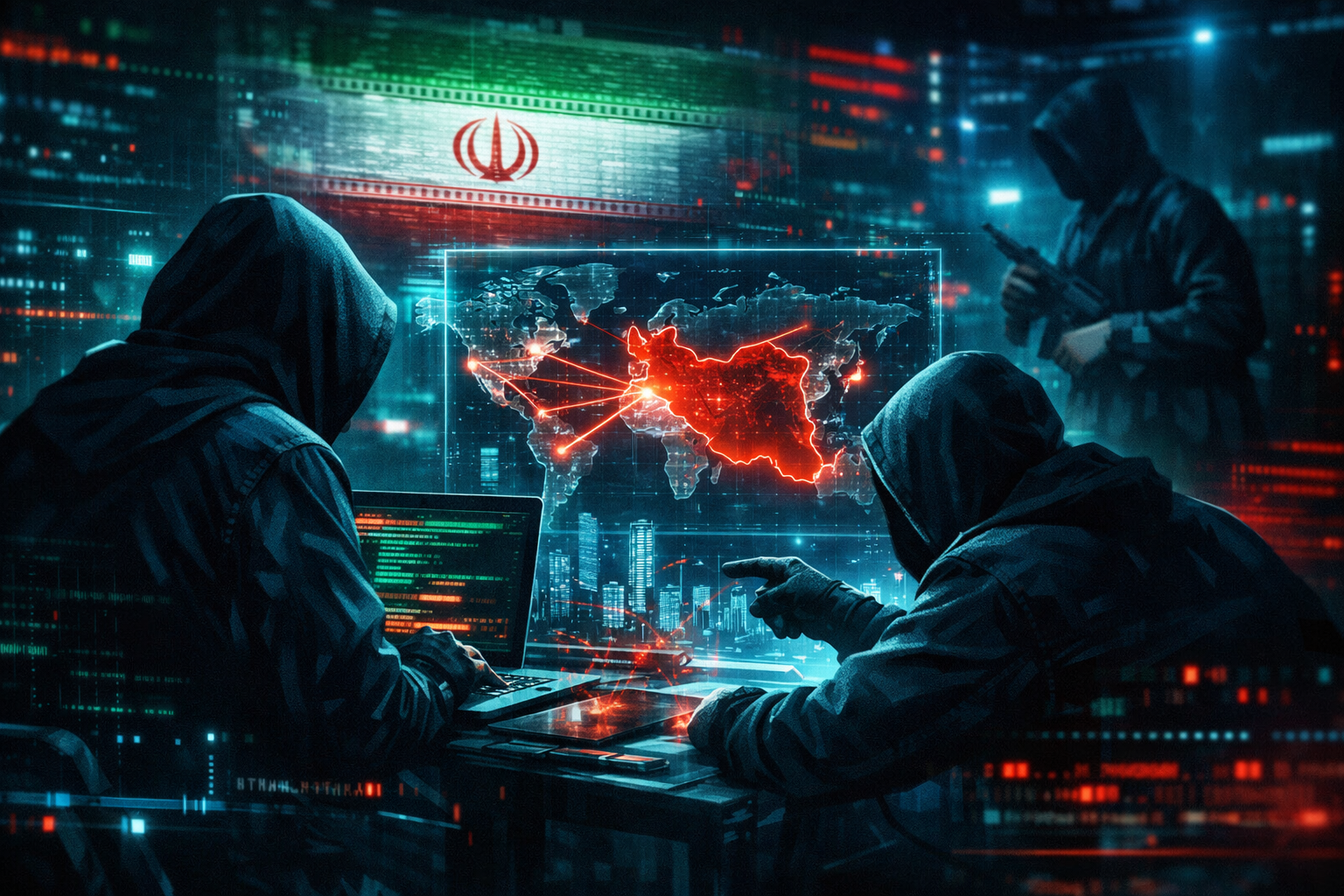
New reporting suggests Iran’s Ministry of Intelligence and Security (MOIS) is moving beyond a familiar tactic—posing as cybercriminals—and is instead leaning on actual criminal actors and infrastructure to expand its reach online. Dark Reading framed the shift clearly: Iranian state operators have long hidden behind ransomware-style branding, fake personas, and criminal-looking tradecraft, but the newer concern is direct collaboration with real cybercriminal ecosystems rather than simple imitation [Dark Reading].
That distinction matters. For years, public reporting from CISA, the FBI, NSA, Microsoft, Google Threat Analysis Group, Mandiant, and others has shown Iranian groups blending espionage, disruption, credential theft, and extortion. Groups tied to Iran, including APT42, MuddyWater, Fox Kitten, and Agrius, have repeatedly used phishing, fake login portals, compromised edge devices, and destructive malware disguised as ransomware [CISA; Google TAG; Microsoft; Mandiant]. What appears to be changing is the operating model: state-linked operators may now be drawing more directly from criminal access brokers, contractor networks, and shared infrastructure.
This is consistent with the broader structure of Iran’s cyber ecosystem. Unlike a single centralized force, Iranian cyber operations often appear as a web of intelligence agencies, military-linked units, contractors, and semi-independent operators. Researchers have long argued that this model gives Tehran flexibility, deniability, and lower costs compared with more formalized state programs [Recorded Future; Microsoft]. If MOIS is deepening ties with criminal actors, that ecosystem becomes harder to map and harder to disrupt.
Why this shift is significant
State actors pretending to be criminals is not new. Iranian operations have previously used fake ransomware notes, criminal-style extortion, and fabricated hacktivist personas to obscure attribution. Agrius, for example, has been linked to destructive campaigns that looked like ransomware but functioned more like wipers or sabotage tools [SentinelOne; Check Point]. APT42 and Charming Kitten operations have used fake journalist, researcher, and recruiter identities to lure targets into credential theft workflows [Google TAG; Mandiant].
What makes the alleged MOIS-criminal collaboration more serious is the operational upside. Criminal partners can offer ready-made infrastructure, stolen credentials, botnet access, malware delivery channels, and sometimes initial access into already-compromised networks. That reduces the time and effort needed for a state actor to get from targeting to intrusion. It also muddies incident response: defenders may initially classify an event as ordinary cybercrime when it has intelligence or geopolitical motives behind it.
This model is not unique to Iran. Russia has long benefited from overlap between intelligence services and cybercriminal groups, while North Korean operators have fused state objectives with financially motivated theft [U.S. government advisories; industry reporting]. But in Iran’s case, the blend of espionage, coercion, and disruptive activity gives the trend a different flavor. The same campaign can harvest credentials, steal internal mail, extort the victim, and support strategic messaging.
Technical details defenders should understand
The available public reporting does not point to a single defining exploit in this story. Instead, it fits a pattern of Iranian tradecraft that relies on common but effective intrusion methods.
First, phishing and social engineering remain central. Iranian operators have repeatedly built convincing login pages impersonating Microsoft, Google, NGOs, universities, and media outlets. They often target journalists, dissidents, policy experts, and government staff with tailored lures, sometimes over long periods [Google TAG; Mandiant]. If criminal partners are involved, those lures can be paired with stolen contact lists, breached email accounts, or commodity malware distribution networks.
Second, credential theft and account takeover are a major force multiplier. Iranian groups have used password spraying, session hijacking, and abuse of previously leaked credentials. Once inside a cloud account or mailbox, they often create forwarding rules, harvest contacts, and pivot to more targets [CISA; Microsoft]. This is one reason identity security often matters more than classic malware detection in these campaigns.
Third, exploitation of internet-facing devices is a recurring entry point. U.S. and allied advisories have repeatedly warned that Iranian actors exploit known flaws in VPN appliances, email servers, and edge devices. Publicly reported examples tied to Iranian activity over time include Citrix ADC/Gateway flaws such as CVE-2019-19781, Microsoft Exchange vulnerabilities including CVE-2020-0688 and ProxyLogon-related CVE-2021-26855, and F5 BIG-IP issues such as CVE-2022-1388 [CISA; NSA; vendor reporting]. In practical terms, that means unpatched perimeter devices remain a favored route into enterprise networks.
Fourth, post-compromise activity often mixes commodity and custom tooling. Iranian operators have used PowerShell downloaders, .NET loaders, web shells, remote administration tools, and living-off-the-land techniques to maintain access while minimizing noise [Microsoft; Mandiant; ESET]. Criminal collaboration could make this even more effective by supplying off-the-shelf malware, bulletproof hosting, proxy networks, or access sold on underground markets.
Fifth, some operations blur the line between ransomware and sabotage. Several Iranian-linked campaigns have used extortion-themed messaging while deploying destructive payloads or wiping systems rather than pursuing ordinary monetization [SentinelOne; Check Point]. That means a ransom note does not always mean the attackers are financially motivated. Sometimes the criminal appearance is the cover story.
From a defender’s point of view, the hybrid model produces a few recurring warning signs: suspicious MFA prompts, inbox forwarding rules, logins from odd geographies, web shells on public servers, archive-and-exfiltrate behavior before extortion, and malware that looks commodity-based but is deployed against unusual political or strategic targets [CISA; Microsoft].
Impact assessment
The immediate risk falls on organizations already common in Iranian targeting: government agencies, defense contractors, telecom firms, universities, think tanks, journalists, activists, and critical infrastructure operators [CISA; Google TAG; Microsoft]. Regional targets in the Middle East remain especially exposed, but U.S. and European entities are also regularly in scope.
The severity is moderate to high, depending on the victim profile. For civil society targets, the consequences can include surveillance, doxing, arrest risk for contacts in hostile jurisdictions, and long-term compromise of communications. For enterprises, the impact can include data theft, extortion, destructive disruption, and prolonged incident response if attackers maintain persistence through cloud accounts and edge devices. For critical infrastructure, even a limited intrusion can have outsized operational consequences.
There is also a broader policy impact. If state intelligence services are using criminal partners, sanctions and law-enforcement actions become harder to aim. Takedowns that hit only a malware crew may leave the state sponsor untouched, while diplomatic responses may struggle when evidence points to a mixed ecosystem rather than a single government unit. That ambiguity is part of the advantage for the attacker.
For ordinary users, the direct risk is lower than for strategic targets, but not absent. Consumer accounts can be swept up through credential reuse, phishing, and compromised email chains. People connected to diaspora communities, activism, academia, or journalism face a higher-than-average chance of targeted social engineering. Using strong account security and trustworthy privacy protection tools can reduce exposure, especially on untrusted networks.
How to protect yourself
Patch edge systems quickly. Internet-facing VPNs, email servers, and application gateways remain prime targets. Maintain an inventory of exposed services and apply security updates on an accelerated cycle, especially for Citrix, Exchange, F5, and remote access products [CISA].
Harden identity controls. Enforce phishing-resistant MFA where possible, review impossible-travel alerts, monitor for suspicious inbox rules, and disable legacy authentication. Many Iranian campaigns succeed through cloud account compromise rather than noisy malware [Microsoft; Google TAG].
Train high-risk users differently. Executives, journalists, researchers, diplomats, and IT admins need targeted awareness training focused on recruiter lures, fake collaboration requests, and impersonation attacks. Generic anti-phishing training is often not enough.
Watch for stealthy persistence. Hunt for web shells, PowerShell abuse, suspicious scheduled tasks, OAuth app abuse, and unusual remote admin tool usage. Commodity tools should not be dismissed as “just cybercrime” if the victim profile suggests espionage or coercion.
Segment and back up critical systems. Because some Iranian-linked campaigns have used destructive malware disguised as ransomware, offline backups and tested restoration plans matter as much as anti-ransomware controls [SentinelOne; Check Point].
Protect remote access. Limit exposed admin interfaces, restrict by IP where feasible, rotate credentials after suspicious activity, and consider using a reputable VPN service for secure remote administration paths rather than leaving management services broadly accessible.
Correlate motive with method. If an incident looks criminal but targets political, research, media, or strategic assets, treat state involvement as a live possibility. That changes containment, reporting, and evidence preservation decisions.
The bottom line
The reported MOIS collaboration with criminal actors points to a deeper state-crime convergence in Iranian cyber operations. That does not mean every Iranian intrusion is run by criminals, or that every ransomware-style event linked to Iran is secretly espionage. It does mean defenders should stop treating “nation-state” and “cybercrime” as cleanly separate categories. In this case, the overlap may be the point.
For security teams, the practical takeaway is simple: defend against the methods, not just the label. Iranian operators have shown they can pair patient social engineering with opportunistic exploitation, cloud account abuse, and criminal-style extortion. If they are now borrowing more directly from criminal ecosystems, their campaigns may become more scalable, more deniable, and more difficult to untangle after the fact [Dark Reading; CISA; Microsoft; Google TAG; Mandiant].