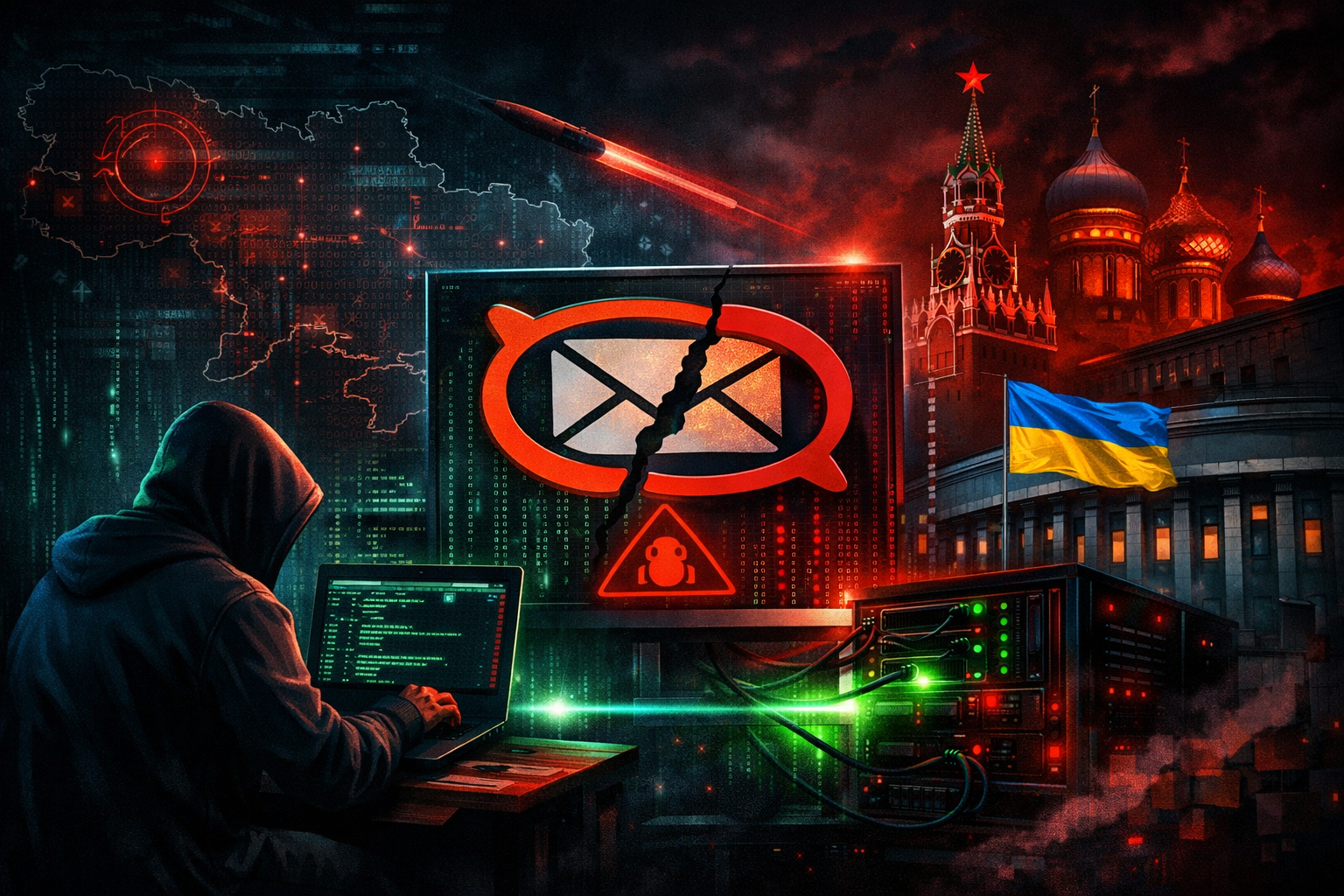
Russian state-linked hackers are once again using widely deployed enterprise software as an entry point into high-value government networks. According to reporting on a recent campaign, APT28 — the threat group broadly associated with Russia’s GRU military intelligence service and also tracked as Fancy Bear, Forest Blizzard, and Sednit — has been exploiting a vulnerability in Zimbra Collaboration Suite (ZCS) to target Ukrainian government organizations.
The activity underscores a familiar pattern in modern cyber conflict: state-backed operators move quickly to weaponize flaws in internet-facing email and collaboration platforms because they offer both strategic access and rich intelligence value. For defenders, the incident is another reminder that patch latency on externally exposed systems can translate directly into national security risk.
Background: Why APT28 and Zimbra Matter
APT28 has been one of the most closely watched espionage groups in the world for more than a decade. Security researchers and Western governments have repeatedly linked the group to Russia’s Main Intelligence Directorate, or GRU. Its operations have ranged from credential theft and spear-phishing to exploitation of zero-days and supply-chain compromise, often aligned with Russian geopolitical interests.
Zimbra, meanwhile, is a popular email and collaboration platform used by governments, universities, and enterprises. Because it often sits at the edge of an organization’s network and handles sensitive communications, it is a prime target for attackers. A successful compromise of a mail server can yield user credentials, mailbox contents, internal contact lists, authentication tokens, and a foothold for deeper movement inside an environment.
In the context of Ukraine, those benefits are especially valuable. Email systems inside government agencies can reveal diplomatic communications, military-adjacent coordination, procurement activity, and operational planning. That makes a Zimbra flaw far more than a routine software bug; in the hands of an intelligence service, it can become a strategic collection tool.
Technical Details of the Exploitation
The campaign highlighted by researchers involves the exploitation of a Zimbra vulnerability affecting ZCS deployments. While public reporting focused on the targeting of Ukrainian government entities, the broader lesson is that attackers continue to prioritize vulnerabilities in webmail systems that can be reached over the internet. These flaws are attractive because they can often be exploited remotely and, depending on the bug, may allow arbitrary code execution, account takeover, or unauthorized access to sensitive data.
In practical terms, exploitation of a vulnerable Zimbra server can enable an attacker to run commands on the server, deploy web shells, dump mailbox data, or harvest authentication material. Once inside, a threat actor may establish persistence, create rogue forwarding rules, exfiltrate email archives, and use the compromised server as a trusted launchpad for additional attacks against internal users.
APT28 is known for combining software exploitation with post-compromise tradecraft designed to blend into normal administrative activity. That can include the use of stolen credentials, abuse of legitimate services, and carefully scoped exfiltration intended to avoid triggering alerts. In a government setting, attackers may focus less on disruptive behavior and more on quiet intelligence collection over time.
The use of a Zimbra flaw also fits a broader trend seen across multiple threat groups: email infrastructure remains one of the most efficient paths to espionage. Unlike endpoint-only compromises, a mail server can centralize access to communications from many users at once. Even a single successful exploit may produce a disproportionate intelligence payoff.
Strategic Impact on Ukraine and Beyond
The immediate impact of these attacks is the potential compromise of sensitive Ukrainian government communications. That can affect policy discussions, interagency coordination, response planning, and any matter transmitted through the targeted email environment. In wartime or near-wartime conditions, intelligence gathered from email systems can have downstream consequences far beyond cyberspace.
There is also a broader geopolitical significance. Russian cyber operations against Ukraine have frequently served both immediate operational goals and longer-term testing grounds for techniques later seen elsewhere. Defenders in Europe, North America, and other regions should not assume this is a geographically isolated issue. Any organization running vulnerable Zimbra instances — especially public sector bodies, defense-adjacent firms, NGOs, and critical infrastructure entities — should treat this reporting as a warning.
Another concern is the persistence of edge-device and edge-application exploitation as a top-tier threat. Security teams have spent years hardening endpoints, deploying MFA, and improving identity monitoring, yet externally exposed collaboration tools remain under constant pressure. If patching, segmentation, and logging are weak at the application edge, sophisticated adversaries can bypass more mature internal controls.
Why Email Servers Remain High-Value Targets
Email servers are uniquely dangerous when compromised because they sit at the intersection of identity, communication, and workflow. They often contain years of archived messages, attachments, password reset links, and contact relationships. They may also integrate with directory services and single sign-on systems. For an attacker, that means one vulnerable service can unlock intelligence, lateral movement opportunities, and impersonation options.
Compromised mail servers can also be used to send convincing phishing emails from legitimate accounts or trusted infrastructure. That raises the risk of follow-on compromise inside the same organization and among partner agencies. In government ecosystems where ministries, departments, and external contractors communicate frequently, trust abuse can spread quickly.
How to Protect Yourself
Organizations using Zimbra should immediately verify whether their deployments are fully patched against the relevant vulnerability and review vendor advisories for all recent security updates. Internet-facing collaboration tools should be treated as emergency patch priorities, especially when active exploitation is reported.
- Patch fast: Apply Zimbra security updates as soon as possible and confirm that all nodes in clustered or distributed environments are covered.
- Audit for compromise: Check for suspicious web shells, unexpected admin activity, unauthorized mailbox forwarding rules, unusual login patterns, and anomalous outbound traffic.
- Restrict exposure: Limit direct internet access where feasible, place administrative interfaces behind allowlists or VPN access, and segment mail infrastructure from sensitive internal systems.
- Strengthen authentication: Enforce multi-factor authentication for administrators and users, and rotate credentials if compromise is suspected.
- Improve monitoring: Centralize logs from Zimbra, reverse proxies, identity systems, and endpoints to detect post-exploitation behavior.
- Protect remote access: Use reputable VPN services and secure tunnels for administrative access. Businesses and individuals looking to reduce exposure on untrusted networks often turn to privacy-focused VPN tools such as hide.me to encrypt traffic and reduce interception risks.
- Prepare incident response: Have a plan for mailbox review, token revocation, credential resets, forensic preservation, and stakeholder notification.
For individuals, the practical steps are simpler but still important: keep devices updated, use strong unique passwords with MFA, watch for suspicious emails, and avoid logging into sensitive accounts over unsecured public Wi-Fi unless you are using a trusted VPN connection.
The Bigger Picture
The latest APT28 activity is not just another vulnerability story. It is a case study in how software flaws in mundane business systems can become instruments of state espionage. Zimbra may be an email platform, but in the hands of a capable threat actor, a single unpatched server can become an intelligence gateway into government operations.
For defenders, the lesson is clear: edge-facing collaboration services deserve the same urgency as critical identity infrastructure. In an era of persistent cyber conflict, patch management is no longer just an IT hygiene issue — it is part of national resilience.