Background and context
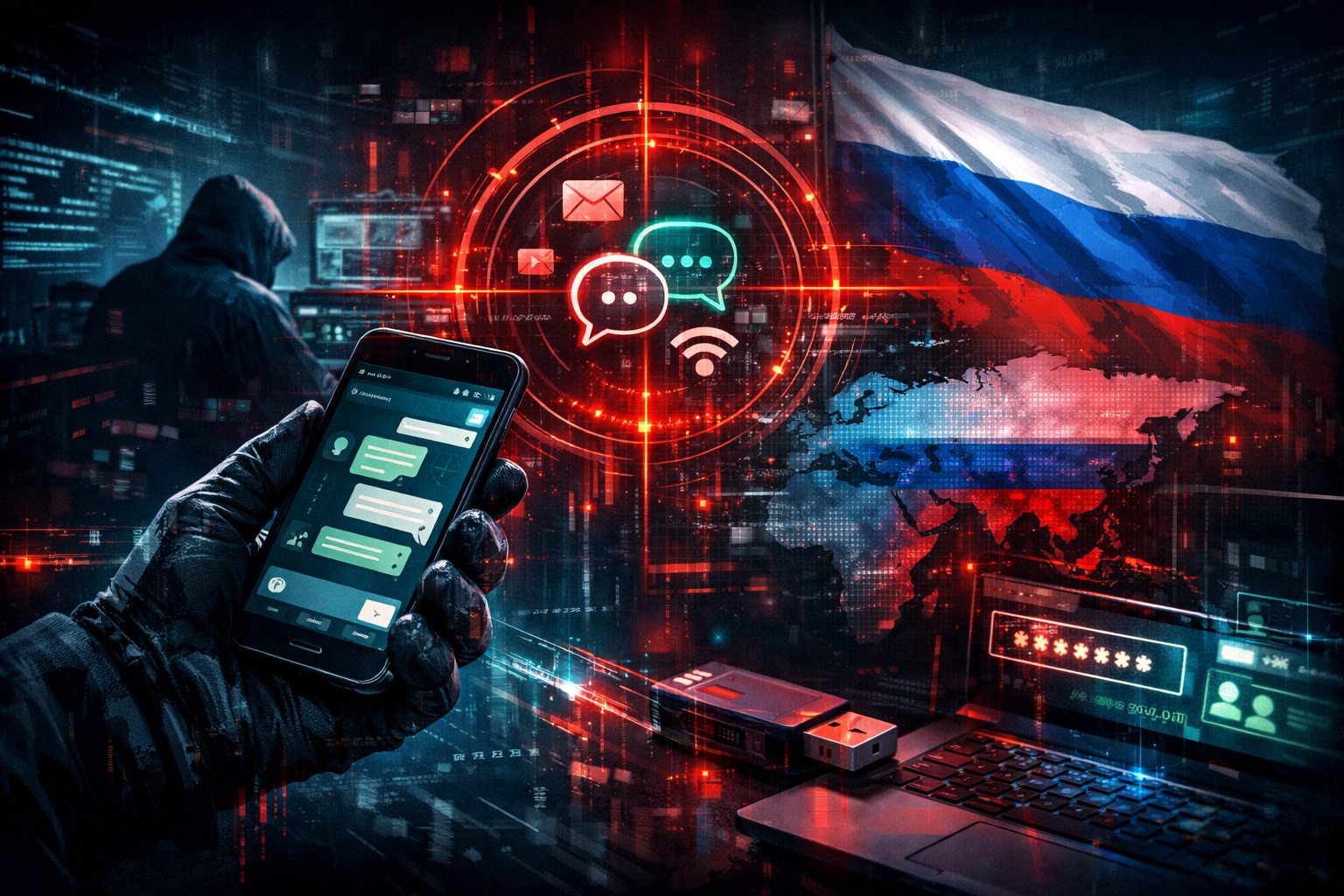
CISA and the FBI have issued a Public Service Announcement warning that cyber actors linked to Russian intelligence services are targeting accounts on commercial messaging applications (CMAs) through phishing and related social-engineering tactics rather than trying to defeat the underlying encryption protecting messages in transit CISA. The distinction matters. End-to-end encryption can protect message content on the wire, but it does little if an attacker can log into the victim’s account, register a new device, or hijack recovery channels.
The agencies say the campaign has focused on current and former U.S. government officials, military personnel, political figures, journalists, and other high-value targets CISA. That victim profile fits a long-established Russian intelligence pattern: pursue people with access to sensitive information, trusted networks, or influential communications channels. Previous U.S. and allied reporting has repeatedly tied Russian state-linked operators to spearphishing and credential theft aimed at email, cloud, and social media accounts used by diplomats, policy staff, media workers, and civil society groups CISA AA22-074A.
The larger lesson from this PSA is not that encrypted messaging is broken. It is that secure communications can still be undermined by account compromise. This is the same logic behind many modern espionage operations: if cryptography is hard to break, steal the password, intercept the one-time code, abuse device pairing, or take over the email account tied to recovery. For high-risk users, identity and account security now matter as much as encryption itself.
How the campaign works
CISA’s warning does not center on a software vulnerability or named CVE. Instead, it describes a phishing-led account takeover campaign. That means the attack path is likely built from familiar but effective steps: lure the target to a fake login page, capture credentials, prompt for a one-time authentication code, and use those details quickly before the victim realizes what happened CISA.
For messaging apps, there are several technically plausible routes. One is classic credential harvesting through spoofed security alerts or fake account verification pages. Another is adversary-in-the-middle phishing, where the attacker proxies the real login flow to capture both the password and the second factor in real time. A third is abusing linked-device workflows: the victim is tricked into scanning a malicious QR code or approving a new device session that silently gives the attacker access to future messages. Security agencies and researchers have increasingly warned that these user-approved actions can be just as dangerous as password theft because they look like normal app behavior CISA Secure Our World.
The PSA also points to bypassing encrypted communications by going after the individual account. In practical terms, that can include stealing session tokens, compromising the email inbox used for password resets, or taking over the phone number associated with the app. If a threat actor can control the recovery path, they may not need the original password at all. This is why many defenders now emphasize phishing-resistant multi-factor authentication, tighter recovery protections, and careful review of active sessions and linked devices CISA.
Another point worth stressing is that these campaigns do not need malware to succeed. A well-crafted spearphishing message sent to a journalist, staffer, or former official can be enough. The lure may reference current events, a meeting request, a security warning, or an urgent document. Russian intelligence operators have a long record of tailoring such messages to the target’s role and contacts, making them more believable than bulk phishing attempts U.S. Department of Justice.
Why messaging apps are attractive targets
Commercial messaging apps have become default communications tools for many professions because they are fast, mobile-friendly, and often viewed as safer than ordinary SMS or email. Officials use them for coordination, journalists use them for source communications, and political figures use them for sensitive outreach. That convenience creates concentration risk: a single compromised account can expose messages, contact lists, group memberships, profile data, and patterns of communication.
Even where message content remains partly protected, account access can still yield valuable intelligence. An attacker may learn who is talking to whom, when, and how often. They can impersonate the victim to target colleagues or sources. They can use the compromised account to send fresh phishing lures from a trusted identity. For journalists, that raises source-protection concerns. For government and military personnel, it raises counterintelligence concerns. For political figures, it opens the door to surveillance, manipulation, and strategic leaks.
This is why the CISA/FBI warning should be read as more than a narrow phishing alert. It reflects a broader intelligence trend: as secure apps become more common, attackers move to the account and endpoint layers. The weakest point is often not the cryptography but the human and administrative processes around it.
Impact assessment
The immediate impact of a successful compromise can range from private message exposure to full account takeover. Victims may lose control of their accounts, have unauthorized devices linked, or unknowingly continue conversations while an attacker reads along. In some cases, the attacker may delete alerts, alter recovery settings, or pivot into the victim’s email and cloud accounts.
The severity is high for the groups named in the PSA. Current and former U.S. officials may discuss policy, travel, contacts, or internal deliberations. Military personnel may expose scheduling, operational context, or personal information useful for targeting. Journalists may have source identities and unpublished reporting at risk. Political figures and campaign staff may lose strategic communications or donor and advisor networks CISA.
There is also a secondary impact. Once an attacker compromises one trusted account, they can launch follow-on attacks against the victim’s network. Contacts are more likely to click a link or approve a request if it appears to come from a colleague, editor, official, or friend. That makes messaging account compromise a force multiplier for espionage operations.
For organizations, the warning is a reminder that personal devices and third-party messaging platforms can become part of the threat surface even when they sit outside managed enterprise systems. Security teams may have limited visibility into these apps, especially when they are used informally. That gap can leave high-risk personnel exposed unless organizations provide training, account-hardening guidance, and incident reporting channels tailored to messaging platforms.
How to protect yourself
High-risk users should assume that phishing attempts may be tailored, patient, and convincing. The first defense is to treat unsolicited login links, QR code prompts, and account recovery notices with suspicion. If you receive a message claiming your account needs verification, do not use the embedded link. Open the app or service directly through a known-good path and check for alerts there CISA.
Use strong, unique passwords for your messaging app and, just as importantly, for the email account tied to it. If your email is compromised, password resets can hand over the messaging account soon after. Enable multi-factor authentication wherever the platform supports it, and prefer phishing-resistant methods when available over SMS-based codes CISA.
Regularly review linked devices, active sessions, and recent login activity inside the app’s security settings. Remove any device you do not recognize. If the platform supports additional protections such as a PIN for account registration or recovery, enable them. These controls can block some takeover attempts even when an attacker has part of the login information.
Be careful with QR codes. On many messaging platforms, scanning a code can link a new desktop or web client to your account. Only scan pairing codes that you initiated yourself on a trusted device. If someone sends you a QR code and asks you to scan it for verification, collaboration, or “secure access,” that should be treated as suspicious.
Keep your phone and apps updated, and secure the device itself with a strong passcode and biometric lock where appropriate. While this PSA focuses on phishing, device compromise remains another route to message access. For users concerned about exposure on public networks, a reputable VPN service can add privacy protection against local network snooping, though it will not stop phishing or account hijacking.
Finally, if you are a journalist, public official, campaign worker, or military member, establish an incident plan before something goes wrong. Know how to revoke sessions, alert contacts, preserve suspicious messages, and report the incident to your security team or the appropriate federal contact. Speed matters. A takeover caught in minutes is far less damaging than one discovered days later.
The bigger takeaway
The CISA/FBI advisory is a clear reminder that encrypted messaging is not a complete answer to espionage threats. Russian intelligence-linked operators are not necessarily trying to crack the math behind secure communications. They are going after the person using the app. That approach is cheaper, quieter, and often effective.
For defenders, the response is equally clear: secure the account, secure the recovery path, secure the device, and train users to recognize highly targeted social engineering. The strongest message in the PSA is simple: if attackers can steal the account, they do not need to break the encryption CISA.