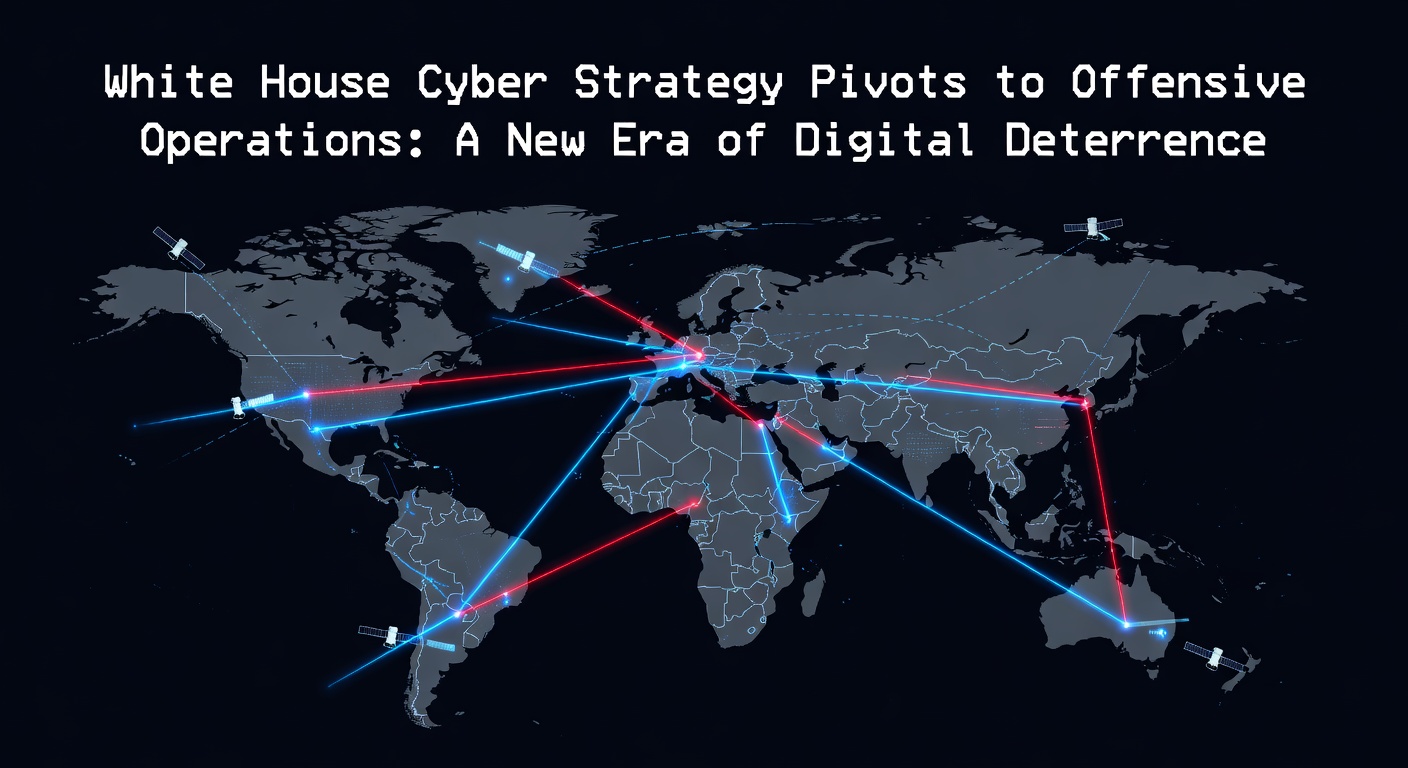
The Trump administration's 2018 National Cyber Strategy marked a pivotal shift in U.S. cybersecurity doctrine, explicitly embracing offensive cyber operations as a cornerstone of national defense. This seven-page document, released by the National Security Council, signaled a departure from the predominantly defensive posture that characterized previous administrations' approaches to cyber warfare.
Background: From Defense to Offense
For years, the United States maintained a largely reactive cybersecurity stance, focusing on protecting critical infrastructure and responding to attacks after they occurred. This approach proved increasingly inadequate as state-sponsored cyber campaigns from China, Russia, Iran, and North Korea escalated in frequency and sophistication. High-profile incidents like the 2014 Sony Pictures hack, the 2016 election interference operations, and numerous ransomware attacks exposed the limitations of purely defensive strategies.
The new strategy document explicitly states that the U.S. will "identify, counter, disrupt, degrade, and deter behavior in cyberspace that is destabilizing to the international order and contrary to national interests." This language represents a fundamental philosophical shift toward what cybersecurity experts term "persistent engagement" – the continuous deployment of offensive cyber capabilities to shape adversary behavior below the threshold of armed conflict.
Technical Implementation and Capabilities
The strategy's technical foundation rests on several key pillars. First, it emphasizes "forward defense," where U.S. Cyber Command proactively hunts threats in foreign networks rather than waiting for attacks to reach American systems. This approach requires sophisticated attribution capabilities, allowing operators to trace attack vectors back to their sources with high confidence.
The document also prioritizes "defend forward" operations, where cyber operators engage adversaries on their own networks to prevent attacks from launching. This requires advanced persistent access capabilities and real-time intelligence gathering. The strategy leverages existing legal authorities under Presidential Policy Directive 20 (PPD-20), which governs offensive cyber operations, while streamlining approval processes for time-sensitive operations.
Technical implementation involves close coordination between the Department of Defense, Department of Homeland Security, and intelligence agencies. The strategy emphasizes information sharing mechanisms that provide private sector entities with actionable threat intelligence derived from offensive operations. This creates a feedback loop where offensive capabilities inform defensive measures across critical infrastructure sectors.
Geopolitical Impact and International Response
The strategy's offensive posture has generated significant international debate about cyber norms and escalation risks. Allies have expressed both support for deterring adversaries and concern about potential collateral damage from offensive operations. The document attempts to address these concerns by emphasizing that operations will be "responsible" and conducted within established legal frameworks.
Adversaries have responded predictably, with Russia and China condemning the strategy as destabilizing while simultaneously expanding their own offensive capabilities. This has accelerated the militarization of cyberspace, with nation-states increasingly viewing cyber operations as extensions of traditional warfare rather than separate domains.
The private sector impact has been substantial. The strategy explicitly calls for enhanced public-private partnerships, recognizing that most critical infrastructure remains in private hands. This has led to increased information sharing requirements and new liability frameworks for companies that fail to implement adequate cybersecurity measures.
How to Protect Yourself
While the new cyber strategy operates primarily at the national level, individuals and organizations can take several steps to align with its principles and enhance their security posture:
- Implement Zero Trust Architecture: Assume that networks are already compromised and verify every user and device before granting access to systems and data.
- Deploy Advanced Threat Detection: Invest in behavioral analytics and machine learning-based security tools that can identify sophisticated attack patterns indicative of nation-state actors.
- Enhance Incident Response Capabilities: Develop rapid response procedures that include immediate threat hunting and forensic analysis to understand attack vectors and attribution.
- Participate in Information Sharing Programs: Join industry-specific Information Sharing and Analysis Centers (ISACs) to receive threat intelligence derived from government offensive operations.
- Implement Continuous Monitoring: Deploy 24/7 security operations centers that can detect and respond to threats in real-time, aligning with the strategy's emphasis on persistent engagement.
- Develop Cyber Insurance Strategies: Evaluate coverage options that account for nation-state attacks and potential collateral damage from government offensive operations.
Measuring Success and Future Implications
The strategy's success metrics remain largely classified, but publicly available indicators suggest mixed results. While some high-profile ransomware groups have been disrupted through international cooperation, nation-state actors continue to conduct sophisticated campaigns against U.S. targets. The 2020 SolarWinds breach and ongoing attacks against critical infrastructure demonstrate that offensive operations alone cannot solve the cybersecurity challenge.
Looking forward, the strategy's emphasis on offense is likely to persist across administrations, as the fundamental logic of deterrence remains compelling. However, implementation will require careful calibration to avoid unintended escalation while maintaining the flexibility to respond to emerging threats in an increasingly contested cyber domain.