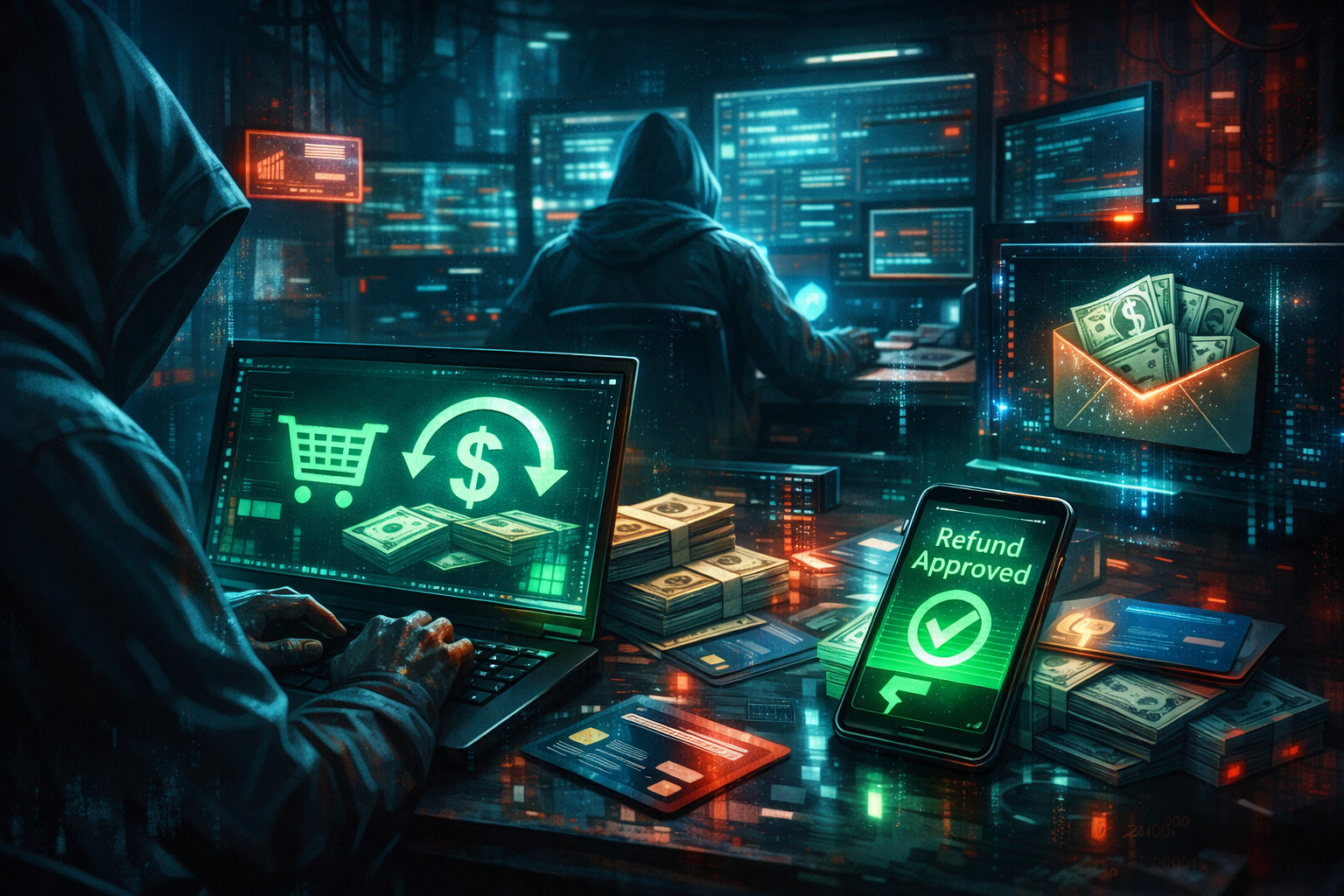
Refund fraud is being packaged and sold as a service, with tutorials and playbooks teaching criminals how to exploit retailer return policies, customer-support workflows, and payment-platform chargeback systems for profit. According to reporting by BleepingComputer citing Flare research, actors on underground channels are monetizing methods that let buyers keep goods while securing refunds, abuse dispute processes, or convert store credits into cash-like value.
The activity is less about a single technical flaw and more about process abuse at scale. Common tactics include account takeover, fake proof-of-return, manipulated tracking data, social engineering of support staff, and chargeback fraud disguised as unauthorized or undelivered purchases. Flare’s findings suggest these methods are now standardized enough to lower the barrier to entry for new fraudsters, turning what was once opportunistic abuse into a repeatable profit model.
The impact extends beyond major retailers. Payment platforms, online marketplaces, logistics providers, and smaller merchants can all absorb losses when fraudulent refunds or disputes succeed. Merchants may lose both the item and the payment, then pay added chargeback fees and investigation costs. Over time, those losses can push companies to tighten return windows, demand more identity checks, or slow down legitimate refunds.
For defenders, the warning is that cybersecurity controls alone will not solve the problem. Refund fraud sits at the intersection of identity abuse, account security, and business-process weakness. Retailers and platforms need stronger signals around account behavior, device patterns, shipping anomalies, and support-agent actions, along with better audit trails for refund approvals. Consumers may also feel the side effects as companies add more friction to returns and disputes.
The broader takeaway is that fraudsters are treating refunds the way other cybercriminals treat phishing kits or malware loaders: as a product with instructions, support, and repeatable returns. That makes refund abuse harder to dismiss as minor policy gaming and easier to see as a structured criminal economy.