Background and regional context
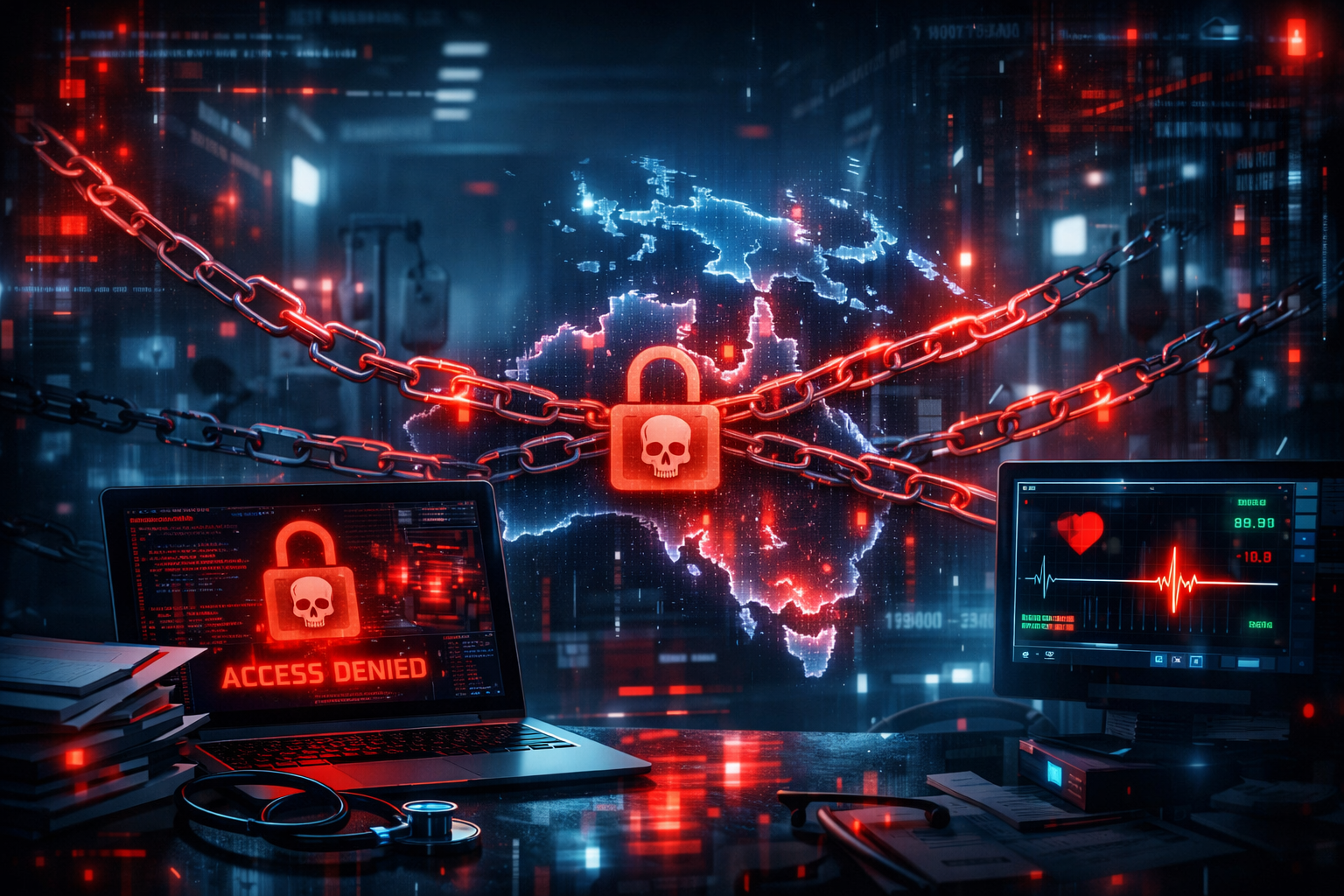
The INC Ransomware group has become a recurring name in extortion reporting since 2023, using a familiar but effective model: break in, steal data, encrypt systems, and pressure victims through a public leak site if payment is refused. Recent reporting shows that this activity has hit especially sensitive targets across Oceania, including healthcare providers, emergency clinics, and government-linked entities in Australia, New Zealand, and Tonga (Dark Reading).
That regional focus matters because healthcare and public services are among the worst possible ransomware victims. A manufacturer can sometimes pause production; an emergency clinic cannot easily pause care. When attackers target hospitals, clinics, health networks, or public-sector systems tied to service delivery, the damage goes beyond IT outages and enters patient safety, continuity of care, and public trust.
INC’s activity in Oceania also fits a larger trend documented by cyber agencies and incident responders: ransomware groups continue to favor sectors where downtime creates immediate pressure to negotiate. The US Cybersecurity and Infrastructure Security Agency, FBI, and HHS Health Sector Cybersecurity Coordination Center have repeatedly warned that healthcare remains a high-risk target because of legacy systems, large attack surfaces, and the operational cost of disruption (CISA) (HHS HC3).
For Oceania, the risk is amplified by uneven cyber maturity across the region. Australia and New Zealand have stronger national cyber institutions and more mature response ecosystems, but both still face sustained ransomware pressure. Smaller Pacific nations such as Tonga may have fewer dedicated defenders, tighter budgets, and greater dependence on external service providers, which can make recovery slower and the impact of a single intrusion more severe (ACSC) (CERT NZ).
How INC Ransomware operates
Public reporting does not point to one single exploit or “signature” vulnerability that defines every INC intrusion. Instead, the group appears to follow the standard modern ransomware playbook seen across many extortion crews. Initial access often comes through stolen credentials, exposed remote access services, phishing, or the exploitation of unpatched internet-facing systems (Dark Reading) (CISA Ransomware Guide).
In practice, that means organizations should look less for one magical indicator and more for a chain of weak points. A compromised admin password, a poorly secured remote desktop service, a neglected edge device, or a cloud identity account without hardened multifactor authentication can all open the door. Once inside, ransomware operators typically escalate privileges, move laterally, disable defenses, identify high-value systems, and exfiltrate data before encryption begins.
That exfiltration step is central to INC’s leverage. The group uses double extortion, meaning it does not rely on encryption alone. Even if a victim can restore from backups, stolen patient records, HR files, contracts, and internal communications can still be used as pressure material. This approach has become common across the ransomware economy because it raises the cost of refusing payment and increases reputational and regulatory exposure (HHS HC3).
Healthcare environments are especially vulnerable to this model. They often contain a mix of modern cloud services, aging on-prem systems, medical devices that are difficult to patch, third-party support tools, and busy staff who cannot tolerate long outages. Attackers do not need to understand medicine; they only need to understand dependency. If electronic records, imaging, scheduling, billing, or triage systems become unavailable, the organization is immediately under pressure.
Although incident-specific indicators for the Oceania cases have not been broadly published, defenders should expect the usual signs around ransomware staging: unusual remote logins, impossible-travel authentication events, new device enrollments in identity systems, privilege escalation, security tooling tampering, and large outbound data transfers before encryption. In many cases, the quiet data theft phase is where defenders have the best chance to catch an intrusion before operational disruption begins.
Why healthcare and government are attractive targets
INC’s reported victimology in Oceania is not random. Government agencies, emergency clinics, and healthcare-related organizations combine three things attackers want: sensitive data, low tolerance for downtime, and complex technology estates. A regional health service may have hundreds of interconnected systems and external partners. A government department may hold identity data, financial records, or operational details that increase extortion pressure.
Emergency and clinical settings are particularly exposed because downtime has immediate consequences. Staff may be forced into manual charting, appointments may be canceled, diagnostic workflows can slow down, and patients may be redirected elsewhere. Even when care continues, it often does so with reduced visibility, more administrative burden, and greater risk of error. That is why ransomware in healthcare is often described as a safety issue, not just a data-security issue (CISA/FBI advisory on healthcare ransomware threats).
For smaller states and island nations, the same attack can have wider systemic effects. A compromise at one ministry, hospital, or shared service provider can ripple across a much smaller national infrastructure base. Recovery may also depend on outside vendors or regional partners, lengthening response times and increasing public disruption.
Impact assessment
The most immediate victims are the organizations directly hit: hospitals, clinics, government offices, and their staff. But the practical harm spreads much further. Patients may lose access to care or face delays in treatment. Citizens may be unable to use public services. Employees may have payroll, HR, or identity data exposed. IT and security teams often face weeks or months of containment, restoration, legal review, and breach-notification work.
Severity is high even when the number of affected organizations appears limited. A single ransomware event in healthcare can disrupt scheduling, radiology, lab systems, e-prescribing, communications, and records access all at once. If data theft occurred, the incident also creates a long tail of privacy risk, including fraud, identity theft, social engineering, and blackmail concerns tied to sensitive health information.
The financial impact is also significant. Costs can include forensic investigation, system rebuilding, legal counsel, overtime, patient notification, regulatory reporting, public relations, and business interruption. For public-sector and nonprofit healthcare entities, those costs can divert money away from frontline services. For smaller organizations in Tonga or remote parts of Australia and New Zealand, the burden can be proportionally heavier because there may be less redundancy and less reserve capacity.
At a strategic level, these incidents reinforce a hard truth: geography offers little protection against ransomware. Groups like INC are profit-driven and opportunistic. If an exposed service is reachable and the victim seems likely to pay or suffer visible disruption, distance is largely irrelevant.
How to protect yourself
For organizations, the first priority is to reduce the chance of initial access. Exposed remote services should be minimized, patched, and placed behind hardened authentication. Any VPN service or remote-access portal should use phishing-resistant MFA where possible, with close monitoring for suspicious logins, MFA fatigue attempts, and new device enrollments. Disable unused accounts, rotate privileged credentials, and review third-party access paths.
Second, assume that prevention will sometimes fail. That means investing in segmentation, least privilege, and fast detection. Domain admin rights should be tightly controlled. Endpoint detection and response tools should be deployed broadly. Logging from identity platforms, firewalls, servers, and cloud services should be centralized so responders can spot unusual lateral movement or data exfiltration.
Third, backups must be tested, isolated, and prioritized around clinical and operational recovery. Many victims discover too late that backups are incomplete, reachable from the production network, or too slow to restore critical services. Healthcare providers should know in advance which applications must come back first to preserve patient care.
Fourth, plan for downtime. Paper procedures, emergency communications, and manual workflows are not old-fashioned in healthcare; they are part of resilience. Staff should know how to continue essential services when digital systems fail. Tabletop exercises should include ransomware scenarios that affect both IT and patient operations.
For individuals, the risk is mostly indirect but still serious. If your healthcare provider announces a breach, monitor your accounts, watch for phishing that references medical appointments or insurance, and change reused passwords. Consider using a trusted hide.me VPN on public Wi‑Fi when accessing patient portals or sensitive services, but remember that a VPN does not stop a provider from being breached. It mainly protects your connection privacy.
Finally, executives and public officials should treat ransomware as a continuity issue, not merely a technical one. The organizations hit by INC in Oceania show that cyber defense, patient safety, and public-service resilience are now tightly connected. When attackers can interrupt care and expose sensitive records at the same time, the cost of weak identity security and poor recovery planning becomes painfully clear.