Background and context
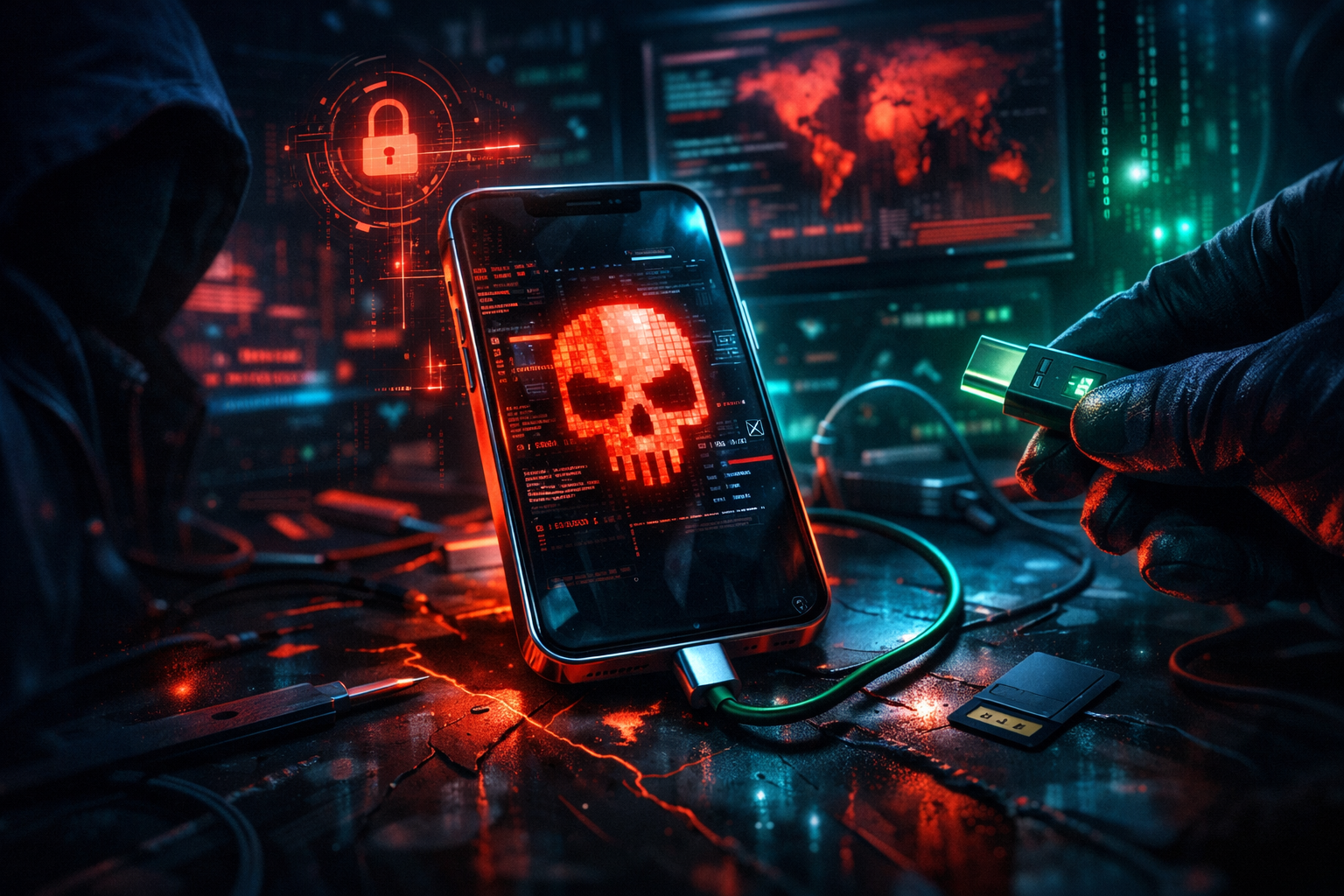
A newly reported iPhone exploitation campaign dubbed “DarkSword” adds to a growing body of evidence that high-end mobile attack chains are no longer confined to a narrow set of intelligence operations. According to Dark Reading, the campaign uses a sophisticated iOS exploit kit and has targeted users in Saudi Arabia, Turkey, Malaysia, and Ukraine, suggesting a selective, surveillance-oriented operation rather than indiscriminate malware distribution (Dark Reading).
The phrase “serves spies and thieves alike” captures an uncomfortable reality of the mobile exploit market. The exploit chain itself is only the entry mechanism; what happens next depends on the operator. The same initial access capability can support covert surveillance, credential theft, financial fraud, or account hijacking. That dual-use pattern has appeared repeatedly in the commercial spyware ecosystem, where tooling built for government customers can later be reused, copied, or adapted by criminal actors. Research from Citizen Lab, Amnesty International, and Google’s Threat Analysis Group has documented how mobile zero-days and spyware frameworks are often deployed against journalists, activists, political figures, and other high-value targets, especially in politically sensitive regions (Citizen Lab; Amnesty International Security Lab; Google TAG).
DarkSword also fits a broader trend in Apple’s security history. Over the past several years, Apple has repeatedly issued emergency fixes for in-the-wild iOS flaws affecting WebKit, the kernel, image parsing components, and other core subsystems. Apple advisories for actively exploited bugs such as CVE-2024-23296 and CVE-2024-23225 show that attackers continue to chain browser-level code execution with kernel privilege escalation to break through iPhone defenses (Apple security releases; Apple advisory on 2024 zero-days).
Technical details
Public reporting on DarkSword remains limited, and that is common for active iOS exploitation cases. Vendors and researchers often avoid disclosing the full exploit chain while victims may still be at risk or before all affected systems are patched. Even so, the available description strongly suggests a multi-stage attack rather than a single bug.
On modern iPhones, a serious compromise usually requires several linked vulnerabilities. A likely chain starts with initial code execution, often through malicious web content rendered by WebKit or by a crafted file processed by a message, image, or document parser. Apple has repeatedly warned that maliciously crafted web content can trigger arbitrary code execution in Safari and in-app browsers, making WebKit a frequent starting point for mobile intrusions (Apple).
That first foothold is typically not enough. iOS sandboxing limits what a compromised app or browser process can do, so attackers usually need a second-stage sandbox escape or privilege escalation. This often involves a kernel flaw, an IOKit issue, or another bug in a high-privilege service. Apple’s own advisories for in-the-wild exploitation repeatedly describe this pattern: one vulnerability for remote code execution, another to gain elevated privileges (Apple).
Post-exploitation is where the operator’s intent becomes clear. A spyware-oriented payload may harvest messages, call logs, contacts, photos, location data, authentication tokens, and app content; it may also activate the microphone or camera, depending on the level of access obtained. A theft-oriented payload may focus more narrowly on stored credentials, session cookies, banking app data, crypto-wallet material, or one-time passcode interception. In either case, the victim experiences the same core problem: a device assumed to be trustworthy is no longer trustworthy.
Historically, advanced iPhone campaigns such as FORCEDENTRY, BLASTPASS, and Operation Triangulation have shown how selective and stealthy these operations can be. Some required no visible interaction from the user, while others relied on low-click lures like a single malicious link. The DarkSword reporting does not yet confirm whether the campaign is no-click, one-click, or link-driven, but the geographic targeting and sophistication level are consistent with the sort of modular exploit delivery seen in mercenary spyware operations (Apple Lockdown Mode background; Kaspersky).
One important detail for informed readers: “exploit kit” in this context does not mean the old mass-market browser exploit kits once common on Windows. Here it more likely refers to a curated, reusable framework that can deliver one or more iOS exploits, profile the target device, choose the right chain for the iOS version, and then install a tailored payload. That modularity is what makes the same infrastructure useful to both espionage operators and financially motivated intruders.
Impact assessment
The immediate impact falls on iPhone users in the countries named in the reporting: Saudi Arabia, Turkey, Malaysia, and Ukraine. But the practical risk is not evenly distributed. Campaigns of this type usually focus on people whose devices contain politically sensitive, commercially valuable, or operationally useful information. That can include journalists, dissidents, civil society workers, diplomats, military personnel, executives, and researchers.
For those victims, severity is high. A fully compromised iPhone can expose years of communications, stored credentials, location history, cloud tokens, and intimate personal data. Because phones are used for messaging, authentication, and account recovery, one device compromise can cascade into email takeover, social account hijacking, banking fraud, and broader surveillance. This is why mobile compromise often has outsized consequences compared with a single desktop malware incident.
The wider impact is also significant. First, DarkSword reinforces that iOS remains a premium target despite Apple’s strong security architecture. Second, it highlights the spillover risk from the commercial spyware market into ordinary cybercrime. Once exploit techniques are discovered, patched, or reverse engineered, pieces of the chain can be copied or sold. Third, it raises human rights concerns. Citizen Lab and Amnesty have repeatedly documented mobile spyware use against civil society, and regional targeting in the Middle East, Eastern Europe, and parts of Asia has often carried political implications (Citizen Lab; Amnesty).
There is also a business and government angle. Bring-your-own-device policies mean a compromised personal iPhone can become a stepping stone into enterprise accounts, cloud services, and internal communications. Even without direct access to corporate systems, stolen session tokens, email contents, and MFA prompts can create openings for follow-on attacks. For organizations with staff in the affected regions, DarkSword is a reminder that mobile devices deserve the same threat modeling attention as laptops and servers.
How to protect yourself
For most users, the best defense is speed: install iOS and app updates as soon as they are available. Apple’s emergency patches often close exactly the kinds of bugs used in targeted attacks, and delaying updates extends the window in which known exploit chains remain effective (Apple).
If you believe you may be a high-risk target, enable Lockdown Mode. Apple designed it specifically to reduce the attack surface for mercenary spyware and similar advanced threats by restricting certain message attachments, web technologies, and inbound requests (Apple Lockdown Mode).
Be cautious with links delivered over SMS, iMessage, WhatsApp, Telegram, email, or social platforms, especially if they create urgency or reference political, legal, or financial matters. Even when campaigns use zero-click methods, link-based delivery remains common.
Review your device for unexpected configuration profiles, device management enrollment, or unknown certificates. On iPhone, check Settings for VPN and device management entries you do not recognize. If you use a VPN service on public networks, keep it updated and sourced from a trusted provider, but remember that a VPN does not stop a zero-day exploit on the device itself.
Separate high-risk activities when possible. Journalists, activists, executives, and officials should consider using a dedicated device for sensitive communications, minimizing app sprawl, and disabling unnecessary services. Reducing the number of installed apps and browser exposure can cut down the available attack surface.
Organizations should extend mobile threat monitoring to executive and travel-risk populations, enforce rapid patching, and prepare an incident-response path for suspected mobile compromise. Where legal and appropriate, forensic review with tools such as Amnesty’s Mobile Verification Toolkit can help identify signs of targeted spyware activity (MVT).
Finally, use strong account hygiene to limit damage if a phone is compromised: hardware-backed MFA where possible, unique passwords, and careful review of active sessions in Apple, Google, Microsoft, and major social accounts. Extra privacy protection helps, but no single tool offsets a fully compromised handset. In cases of suspected targeting, the right move is often to stop using the device for sensitive work and seek specialist assistance.
Why DarkSword matters
DarkSword matters because it shows how mature the mobile intrusion economy has become. iPhone exploit chains are expensive to build, but once developed they can be rented, reused, and redirected toward very different goals. That makes them valuable not only to state-linked surveillance operators, but also to criminals looking for a high-return way into a victim’s digital life. For users in the named countries, and for anyone whose phone holds sensitive data, the message is clear: mobile security is no longer a niche issue reserved for intelligence services. It is a frontline risk with personal, political, and financial consequences.