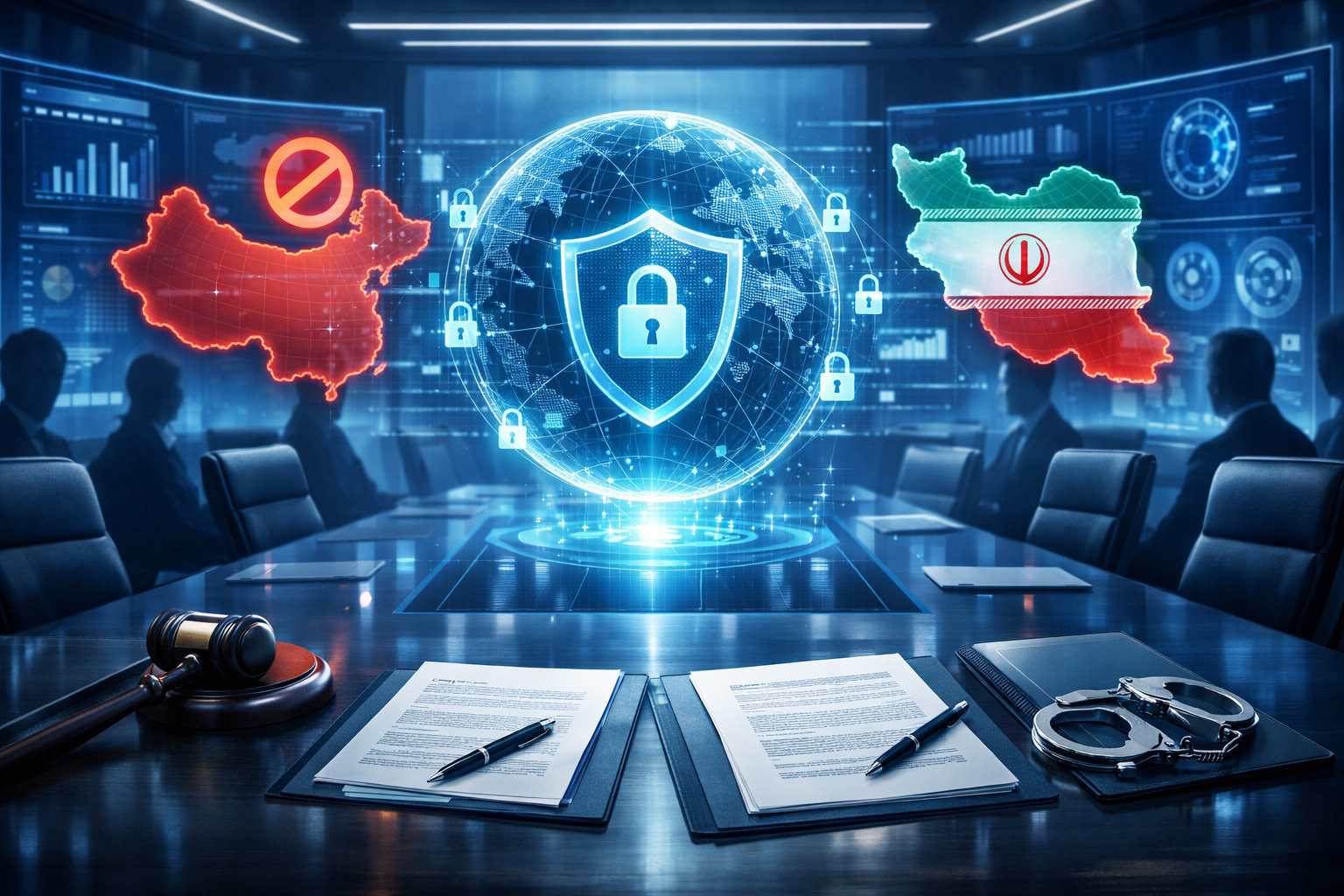
The European Union’s latest sanctions against companies in China and Iran for alleged involvement in cyberattacks mark more than a symbolic foreign-policy gesture. For security leaders, legal teams, and boards, the move is a reminder that cyber risk is now firmly embedded in trade policy, sanctions enforcement, and third-party governance. These rulings do not just name and shame. They prohibit the targeted entities from entering or doing business in the EU, raising immediate questions for procurement, supply chain due diligence, managed services relationships, and cross-border compliance programs.
From an industry and regulation perspective, the decision reflects a broader trend: governments are increasingly treating malicious cyber activity as a matter for economic coercion, not just criminal prosecution or diplomatic protest. That changes the operating environment for multinational organizations. A company can now face exposure not only from being hacked, but also from doing business with a party accused of enabling or conducting cyber operations.
Cyber sanctions are becoming a mainstream compliance issue
For years, sanctions screening was often viewed as a concern mainly for banks, exporters, and heavily regulated multinationals. That is no longer sufficient. As the EU expands its cyber sanctions toolkit, a far wider set of organizations may need to treat cyber-related designations as a core compliance issue. Technology distributors, cloud brokers, telecom providers, software resellers, industrial manufacturers, logistics firms, and professional services companies may all have direct or indirect exposure if sanctioned firms appear in their vendor, customer, or channel ecosystems.
The practical business impact is straightforward. Once an entity is sanctioned by the EU, organizations operating in the bloc may be prohibited from making funds or economic resources available to that entity, directly or indirectly. That means contracts may need to be suspended or terminated, payments blocked, shipments halted, accounts reviewed, and beneficial ownership structures re-examined. Firms that fail to identify those links risk regulatory penalties, reputational damage, and potential disruption if a critical supplier suddenly becomes unusable.
This is especially important in cybersecurity and IT procurement, where supply chains are layered and opaque. A sanctioned company may not be the prime contractor on an invoice. It could sit deeper in the stack as a subcontractor, component supplier, threat intelligence partner, infrastructure provider, or support vendor. The result is that sanctions screening can no longer stop at the legal entity named on a contract. It has to extend into ownership, control, and dependency mapping.
What this means for boards and executive teams
Boards should view the EU action as part of a larger convergence between cyber governance and enterprise risk management. The regulatory burden is growing on multiple fronts at once. Under frameworks such as NIS2, DORA, GDPR, and national critical infrastructure rules, organizations are already under pressure to improve resilience, incident reporting, vendor oversight, and operational continuity. Cyber sanctions add another layer: organizations must ensure that the parties they rely on are not themselves subject to restrictive measures tied to hostile cyber activity.
That has direct implications for board oversight. Directors should ask management whether sanctions screening covers cyber-related EU designations, whether the company can identify indirect exposure through resellers and subcontractors, and whether contingency plans exist for replacing a suddenly restricted provider. In many sectors, especially financial services, telecom, healthcare, energy, and manufacturing, the inability to switch vendors quickly can create both operational and compliance risk.
Executive teams should also recognize the strategic message behind the sanctions. The EU is signaling that attribution of cyberattacks can lead to commercial isolation. Even where enforcement details vary by member state, the policy direction is clear: organizations are expected to know who they are dealing with and to avoid supporting entities linked to malicious cyber conduct.
Supply chain risk moves closer to sanctions enforcement
One of the most significant implications is for third-party risk management. Many organizations still separate sanctions compliance, procurement, and cybersecurity into different silos. That model is becoming outdated. If a sanctioned entity provides software development, network services, vulnerability research, hosting, hardware integration, or managed security support, the issue is simultaneously legal, technical, and operational.
Companies should expect regulators and auditors to take a harder look at whether due diligence programs are capable of identifying these overlaps. Vendor onboarding should include sanctions checks, beneficial ownership review, geographic risk assessment, and scrutiny of cyber incident history. Contract clauses should give buyers rights to terminate for sanctions exposure, require prompt disclosure of subcontractor changes, and mandate cooperation in audits or investigations.
There is also a data governance angle. If an organization is using offshore providers with access to sensitive systems or personal data, sanctions can instantly turn a routine outsourcing arrangement into a crisis. A prohibited relationship may force emergency disengagement, accelerate migration projects, or interrupt support for critical systems. The more concentrated a company’s supplier base is, the harder that transition becomes.
Regulatory implications for EU and non-EU businesses
EU-based companies face the most immediate compliance obligations, but non-EU businesses should not assume they are unaffected. Any company with EU subsidiaries, customers, banking relationships, employees, or operations may be drawn into the scope of EU restrictions. Global firms often choose to align group-wide controls with the strictest applicable sanctions regime to reduce complexity and prevent accidental violations.
There is also the risk of regulatory spillover. Sanctions decisions can influence procurement policy, public-sector contracting, cyber insurance underwriting, and lender risk assessments. A company linked to sanctioned cyber actors, even indirectly, may find itself excluded from tenders, subjected to enhanced due diligence, or required to provide additional assurances to business partners. In practice, market access can narrow well beyond the legal minimum.
For compliance teams, this means updating internal controls now rather than waiting for a direct enforcement action. Screening tools should be refreshed to capture cyber-specific sanctions lists. Escalation procedures should be tested so finance, legal, procurement, and security teams know how to respond if a match is identified. Documentation matters too. Regulators increasingly expect firms to demonstrate not just that they have policies, but that those policies are operational, risk-based, and regularly reviewed.
The business impact on Chinese and Iranian technology ties
The sanctions also underscore a broader geopolitical challenge for companies with technology ties to higher-risk jurisdictions. Not every Chinese or Iranian company is sanctioned, and organizations should avoid overbroad assumptions. But the compliance burden around those markets is clearly increasing. Businesses sourcing hardware, software, engineering services, or cybersecurity support from firms in politically sensitive jurisdictions should expect more scrutiny from customers, investors, and regulators.
That scrutiny can affect deal timelines, valuation, integration planning, and customer trust. M&A teams may need deeper diligence on cyber exposure and sanctions history. Procurement leaders may need dual-sourcing strategies. CISOs may need stronger asset inventories to understand where foreign-developed components sit in the environment. In some cases, the cost of proving a relationship is safe and lawful may outweigh the short-term savings that motivated the partnership in the first place.
What organizations should do now
First, integrate sanctions compliance into cyber risk management. Treat cyber-related designations as part of third-party security review, not a separate legal checkbox. Second, map critical suppliers beyond tier one, especially for IT, cloud, telecom, and managed security services. Third, review contracts for sanctions termination rights, notification obligations, and business continuity support.
Fourth, align governance across legal, compliance, procurement, finance, and security teams so a sanctions hit can be handled quickly. Fifth, test resilience: if a restricted vendor had to be cut off tomorrow, how long would replacement take, what systems would break, and what reporting obligations would follow? Finally, monitor regulatory developments continuously. Cyber sanctions are not static, and the pace of geopolitical escalation can outstrip quarterly review cycles.
How to protect yourself
Organizations should strengthen both compliance and technical defenses. Keep an updated inventory of vendors, software components, and remote access dependencies. Screen counterparties and beneficial owners against relevant EU sanctions lists, and re-screen regularly as designations change. Limit third-party access to the minimum necessary, enforce multifactor authentication, and segment networks so a compromised supplier connection cannot become an enterprise-wide incident.
For employees and smaller businesses, basic cyber hygiene still matters. Use strong unique passwords, enable MFA, keep systems patched, and avoid exposing sensitive traffic on untrusted networks. When staff travel or work remotely, a reputable VPN can add a layer of privacy and reduce interception risks on public Wi-Fi. Tools such as hide.me are commonly used for encrypted connections, though organizations should choose services that fit their legal, security, and logging requirements.
The EU’s move against companies in China and Iran is a clear signal that cyberattacks now carry commercial consequences that ripple through supply chains and corporate compliance programs. For businesses, the lesson is simple: cyber resilience is no longer just about stopping intrusions. It is also about knowing who you do business with, how those relationships are governed, and whether geopolitical risk can suddenly turn a trusted partner into a prohibited one.