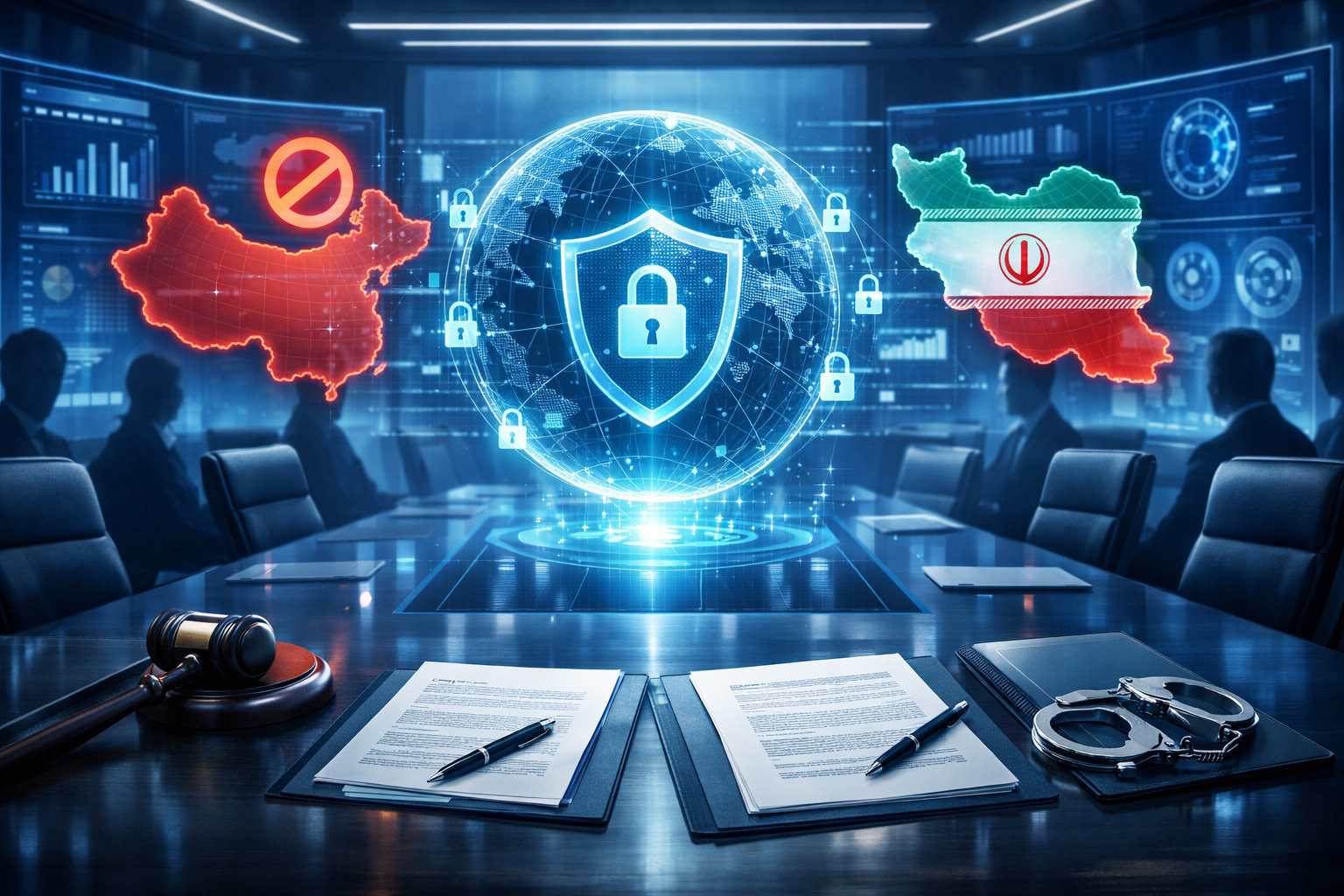
Stryker’s recent outage, reportedly tied to an Iranian cyberattack, is more than a headline-grabbing operational disruption. For regulated enterprises, especially those operating in healthcare and critical supply chains, it is a stark reminder that disaster recovery and business continuity planning can no longer assume isolated IT failures, short-lived ransomware events, or clean separations between cyber incidents and operational downtime. The business lesson is straightforward: modern resilience programs must be built for hostile, prolonged, and geopolitically motivated disruption.
From an industry and regulation standpoint, the incident underscores a widening gap between how many organizations document resilience and how they actually withstand systemic cyber stress. Traditional disaster recovery plans were often designed around data center outages, hardware failures, natural disasters, or accidental human error. But state-linked or state-aligned cyber operations introduce a different risk profile: coordinated attacks, uncertain attribution, extended recovery timelines, potential supply chain effects, and elevated legal and reporting obligations.
Why this matters beyond one company
Stryker sits in a sector where downtime is not merely inconvenient. Healthcare technology vendors and medical device manufacturers support environments where system availability, logistics continuity, and data integrity can affect patient care, hospital operations, procurement cycles, and regulatory exposure. Even if an attack does not directly compromise clinical systems, outages in enterprise platforms, order management, service operations, or customer support can ripple across providers that depend on timely maintenance, replacement parts, and product availability.
That is why this event should be viewed as an industry-wide warning. Many organizations still separate cyber incident response from business continuity planning, assigning security teams to contain threats while IT recovery teams focus on restoration. In practice, those functions now overlap. A destructive or disruptive cyberattack can simultaneously affect identity systems, cloud workloads, backups, network connectivity, third-party services, and communications channels. If those dependencies are not mapped and tested together, recovery plans may fail when they are needed most.
The business impact of cyber-driven outages
For public companies and regulated manufacturers, the direct cost of an outage is only the beginning. There are immediate revenue impacts from delayed orders, interrupted services, and lost productivity. Then come the secondary effects: contractual penalties, customer churn, overtime and incident response costs, forensic investigations, legal review, crisis communications, and potential increases in cyber insurance premiums. In sectors such as healthcare, there can also be reputational damage tied to trust, reliability, and safety expectations.
Boardrooms should also pay attention to the duration of disruption. The most dangerous assumption in many disaster recovery programs is that restoration can occur within previously modeled recovery time objectives. Cyber incidents often break that assumption because organizations must validate system integrity before bringing operations back online. Recovery is no longer just about switching to backups; it is about proving those backups are clean, ensuring identity infrastructure is trustworthy, and confirming that restored systems will not reintroduce the threat.
This changes the economics of resilience. Investments in immutable backups, segmented networks, secure out-of-band communications, and alternate operating procedures may appear expensive until compared with the cost of a multi-day or multi-week outage. Stryker’s experience reinforces that resilience spending is not simply an IT line item; it is operational risk management.
Regulatory pressure is intensifying
Incidents like this land in a regulatory environment that is becoming less forgiving. In the United States, the SEC’s cyber incident disclosure rules have raised the stakes for public companies that must assess and disclose material cyber events promptly. A major outage tied to a cyberattack can trigger difficult judgments about materiality, timing, and the adequacy of governance disclosures around cyber risk management.
Healthcare-adjacent organizations also face overlapping expectations from the Department of Health and Human Services, the Food and Drug Administration, and, depending on their role, HIPAA-related obligations. While not every outage will involve protected health information, the operational consequences of disruptions in healthcare ecosystems draw scrutiny from customers, regulators, and potentially lawmakers. Medical device and healthcare technology firms are increasingly expected to demonstrate secure development, vulnerability management, incident handling, and lifecycle resilience.
Outside the US, the direction of travel is similar. The EU’s NIS2 Directive expands cybersecurity and incident reporting expectations across essential and important entities, while DORA imposes stringent operational resilience requirements in financial services. Even where these rules do not directly apply to a given company, they are influencing procurement standards and third-party risk expectations globally. Large enterprises increasingly expect suppliers to show tested continuity capabilities, not just policy documents.
Compliance is no longer enough
One of the clearest lessons from major outages is that passing audits does not guarantee recoverability. Many compliance programs still emphasize control existence over operational proof. Organizations may have a business continuity plan, a disaster recovery policy, and annual tabletop exercises, yet still be unprepared for a destructive cyber event that compromises identity systems, management tools, and backups at the same time.
That is why regulators and customers are moving toward evidence-based resilience. They want to see recovery testing, backup validation, dependency mapping, vendor contingency planning, privileged access controls, and executive-level accountability. In practical terms, organizations should expect tougher questions from auditors, insurers, and enterprise customers about whether they can recover core operations under adversarial conditions.
For healthcare manufacturers and service providers, this means aligning multiple disciplines: cybersecurity, quality systems, legal, communications, supply chain, and operations. The goal is not merely to contain an incident, but to preserve critical business functions safely and credibly. That includes predefining manual workarounds, understanding which systems are truly mission-critical, and establishing crisis decision-making processes that do not depend on the very infrastructure that may be unavailable.
What organizations should do now
First, treat cyber resilience as a board-level business continuity issue, not just a security operations matter. Boards and executives should ask whether current recovery assumptions account for hostile disruption, compromised identity infrastructure, cloud dependency failures, and extended downtime. If the answer is unclear, the organization likely has a planning gap.
Second, test disaster recovery plans against cyber-specific scenarios. Tabletop exercises are useful, but they should be paired with technical recovery drills that simulate loss of domain controllers, SaaS administration consoles, endpoint management tools, and production data. Recovery objectives should be revalidated under realistic attack conditions rather than ideal assumptions.
Third, harden and diversify backups. Offline, immutable, and regularly tested backups are now baseline requirements. Equally important is ensuring recovery infrastructure is segmented from production and protected with strong identity controls. Too many organizations discover during an incident that their backup environment is reachable, alterable, or dependent on the same compromised credentials.
Fourth, map critical dependencies across suppliers, cloud services, and internal business processes. A company may restore a core application only to find that authentication, integrations, billing, logistics, or support systems remain unavailable. Dependency mapping helps prioritize recovery sequencing and informs contract negotiations with third parties.
Fifth, update disclosure, notification, and communications playbooks. Legal, investor relations, compliance, and security teams should coordinate in advance on how to assess materiality, meet reporting obligations, and communicate with customers and partners during prolonged outages. Silence or inconsistency during a crisis can deepen reputational harm.
How to protect yourself
Organizations should start with the basics: enforce phishing-resistant multifactor authentication, segment networks, maintain immutable backups, patch internet-facing systems quickly, and continuously monitor privileged access. Remote access pathways deserve special attention, particularly during a crisis when staff may need to operate from alternate locations or use contingency workflows. Using reputable VPN services can help secure remote administrative and employee connections; tools such as hide.me may be part of a broader secure access strategy, provided they are deployed with strong authentication, logging, and access control policies.
Individuals affected by service disruptions should verify communications carefully, since attackers often exploit outages with phishing messages, fake support notices, and credential theft campaigns. Use official company channels, avoid clicking unsolicited links, and consider a trusted VPN on untrusted networks to protect sensitive sessions while traveling or working remotely.
The bigger lesson for industry
Stryker’s outage should be understood as a resilience stress test for the broader market. The era when disaster recovery could be treated as a back-office IT exercise is over. Cyber-driven outages now sit at the intersection of operational continuity, regulatory accountability, investor expectations, and customer trust. Organizations that continue to plan for routine failures while ignoring adversarial disruption are exposing themselves to avoidable business risk.
The companies that emerge stronger will be those that move beyond paper compliance and build measurable recovery capability. In today’s threat environment, resilience is not just about getting systems back online. It is about restoring operations safely, proving integrity, meeting disclosure obligations, and maintaining trust when disruption is deliberate rather than accidental.