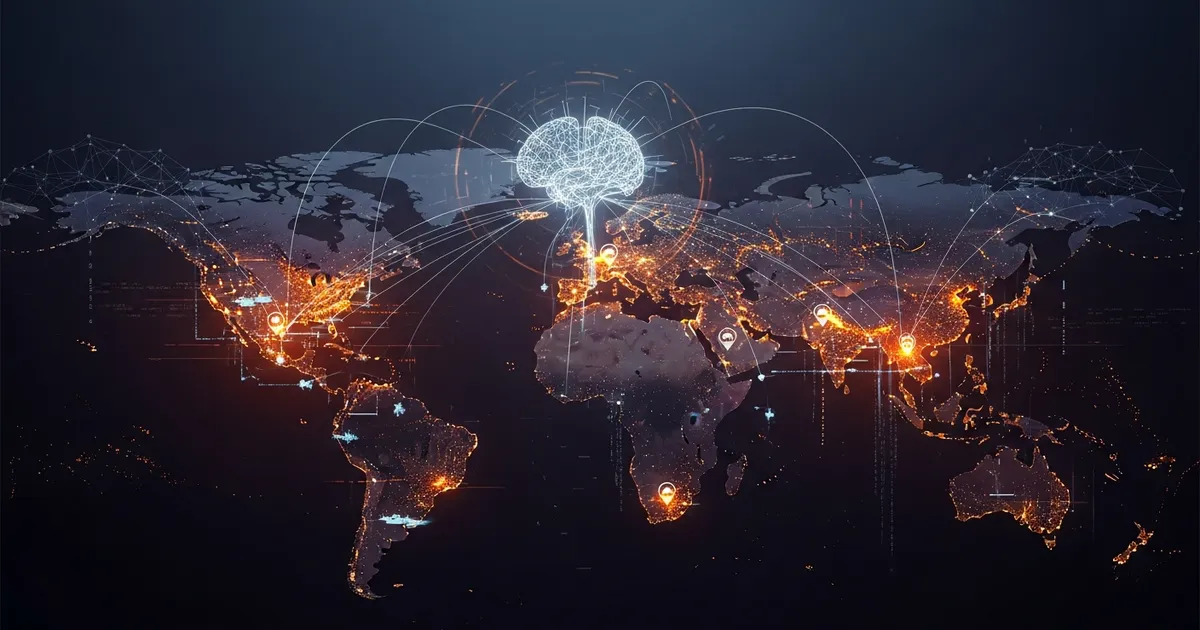
Cloud resilience meets physical reality
The Dark Reading report on cloud resilience in the Middle East points to a problem security teams have discussed for years but often treat as secondary: cloud services still depend on physical infrastructure that can be damaged, isolated, or destroyed during conflict (Dark Reading). Data centers, carrier hotels, internet exchanges, power substations, and fuel supply chains are part of the same operational stack as the software running inside them. When regional conflict expands, those assets can become direct targets or suffer collateral damage.
That changes the usual cloud risk model. Many organizations plan for outages caused by software bugs, misconfigurations, or cyberattacks. Fewer plan for missile strikes, drone attacks, prolonged power loss, staff evacuation, border closures, or fiber cuts that isolate a cloud region. The result is a resilience gap: workloads may be technically redundant within a provider, but still exposed to the same geography, the same telecom backbone, and the same political risk.
This is particularly relevant in the Middle East, where governments, militaries, banks, healthcare providers, logistics firms, and media organizations increasingly rely on cloud or colocation infrastructure for core operations. As CISA has repeatedly stressed in broader critical infrastructure guidance, resilience depends on continuity planning across cyber and physical domains, not just on perimeter defense (CISA).
Why this is not a typical vulnerability story
This is not a CVE-driven incident. There is no single software flaw at the center of the issue. Instead, the risk comes from a chain of dependencies that can fail together. A cloud region may have multiple availability zones, but that does not guarantee meaningful separation if those zones share utility feeds, metro fiber routes, fuel logistics, or a national telecom chokepoint.
Cloud providers often document redundancy at the region or zone level, but they also note that customers remain responsible for architecting for high availability and disaster recovery across regions where needed. Amazon Web Services, Microsoft Azure, and Google Cloud all advise customers to design for regional failure when business impact warrants it (AWS Well-Architected) (Microsoft Azure) (Google Cloud). In conflict zones, that recommendation stops being theoretical.
The concern is not only direct destruction of a data-center building. Loss of utility power, cooling failures, damage to backup generators, telecom outages, sanctions-related parts shortages, and restricted staff access can all force shutdowns. Even if servers remain intact, the service may become unreachable or unsafe to operate.
Technical failure modes security teams should watch
The most useful way to understand the risk is to break it into failure modes.
First, kinetic attacks on facilities or nearby infrastructure. A strike on a telecom node, power substation, fuel depot, or transportation corridor can have the same effect on availability as a direct hit on a data center. Uptime Institute has long warned that data-center outages often stem from power and network dependencies rather than compute failure alone (Uptime Institute).
Second, conflict-linked cyber operations. Regional crises often trigger DDoS campaigns, phishing, credential theft, wiper attacks, and intrusions against government and commercial targets. Cloud tenants may be hit through exposed administrative interfaces, weak identity controls, or compromised remote access systems. ENISA has noted that availability attacks and supply-chain stress are recurring features of conflict-related cyber activity (ENISA).
Third, dependency failure. This is the most underappreciated category. A provider may not be hacked and a facility may not be destroyed, yet services can still fail because of grid instability, internet routing disruption, DNS issues, fuel shortages, or the inability of engineers to reach the site. Internet observability groups such as Cloudflare and NetBlocks have repeatedly documented how routing anomalies, connectivity drops, and telecom outages can disrupt entire regions during unrest or military operations (Cloudflare Radar) (NetBlocks).
Fourth, control-plane concentration. Some organizations replicate data but keep identity, orchestration, logging, or key management tied to one region or jurisdiction. That can block recovery even when backup infrastructure exists elsewhere. If your identity provider, secrets store, or management APIs are unreachable, failover may stall at the exact moment it is needed.
What the Middle East conflict reveals about cloud assumptions
The core lesson is that “multi-zone” is not the same as geo-resilient. If all zones sit within one country, one metro area, or one interconnected utility and telecom system, a single regional crisis can defeat the design. For organizations with data residency requirements, that tradeoff is especially difficult: keeping data local may support compliance, but it can also increase exposure to regional disruption.
This matters for public-sector and defense workloads, but also for ordinary business systems. Banking portals, hospital systems, customs platforms, airline operations, media publishing, and emergency communications all depend on continuous access. A cloud outage in a conflict setting is not just an IT inconvenience; it can interrupt public services, delay logistics, and complicate emergency response.
There is also a strategic misconception at work. Many enterprises assume that moving to cloud transfers resilience to the provider. In practice, resilience is shared. The provider secures and operates the underlying platform, but the customer decides whether applications are single-region, whether backups are immutable, whether failover is tested, and whether data can be restored under degraded conditions. Encryption and privacy controls still matter, but they do not solve regional unavailability; they are one layer in a broader continuity strategy that may also include off-region replication and secure remote administration through a trusted VPN service.
Impact assessment
Governments and militaries face the highest consequence. Cloud and hybrid systems are now used for logistics, communications, records, intelligence workflows, and citizen services. If local hosting becomes unavailable, operational tempo can slow and public-facing services may disappear.
Critical infrastructure operators such as energy, telecom, transport, and healthcare providers are also exposed. Their cloud dependencies may include monitoring platforms, customer portals, identity services, and backup environments. Outages can ripple into physical operations.
Enterprises in the region face financial and legal risk. A single-country deployment may satisfy residency rules but leave the business with no practical failover path. Multinationals with regional hubs are especially vulnerable if they assumed provider redundancy was enough.
Journalists, activists, and civil society groups can be hit in two ways: service disruption and heightened surveillance or intrusion risk during conflict. If local infrastructure degrades, secure communications become harder to maintain, making strong authentication and protected connectivity more important.
Severity depends on architecture. For organizations already running active-active or warm-standby deployments across separate countries and networks, the risk is manageable. For those concentrated in one local region, the severity can be existential: prolonged outage, data inaccessibility, missed regulatory obligations, and inability to serve customers or citizens.
How to protect yourself
1. Map your real dependencies. Identify where applications, backups, identity systems, DNS, key management, and logging actually reside. Include power, telecom, and third-party managed services in the map.
2. Distinguish zone redundancy from regional resilience. If all recovery options sit inside one country or on one backbone, treat that as a single failure domain.
3. Replicate across jurisdictions when the business impact justifies it. Critical workloads should have tested failover to a separate region, ideally on different power grids and telecom paths. If legal restrictions apply, work with counsel on compliant cross-border recovery options.
4. Protect the control plane. Ensure identity providers, privileged access workflows, secrets, and key recovery mechanisms remain available during a regional outage. Use phishing-resistant MFA for administrators.
5. Maintain offline and immutable backups. Backups help only if they can be restored independently of the affected region and are protected from destructive malware or account compromise.
6. Test under wartime assumptions. Run exercises where a whole region is unreachable, staff cannot access the facility, fuel is delayed, and telecom routes are unstable. Measure recovery time against those assumptions, not ideal conditions.
7. Monitor internet health signals. Track BGP anomalies, latency spikes, DNS resolution failures, and provider status changes using internal telemetry plus external observability sources.
8. Secure remote administration. During unrest, administrators may need to work from alternate locations. Use tightly controlled remote access, hardware-backed MFA, and, where appropriate, encrypted connectivity such as hide.me VPN for trusted operational access.
9. Review provider contracts and architecture documents. Ask direct questions about fuel autonomy, route diversity, spare parts logistics, and whether failover depends on any in-country control systems.
10. Bring geopolitical risk into architecture reviews. Security, continuity, legal, and executive teams should jointly decide whether sensitive workloads belong in conflict-prone jurisdictions.
The bigger lesson
The Middle East conflict underscores a simple but uncomfortable truth: cloud resilience is bounded by geography. Software redundancy cannot fully compensate for damaged power systems, severed fiber, inaccessible facilities, or regional instability. For CISOs and infrastructure leaders, the lesson is not to abandon cloud. It is to stop treating cloud availability as automatic and start designing for the possibility that a whole region can go dark.